

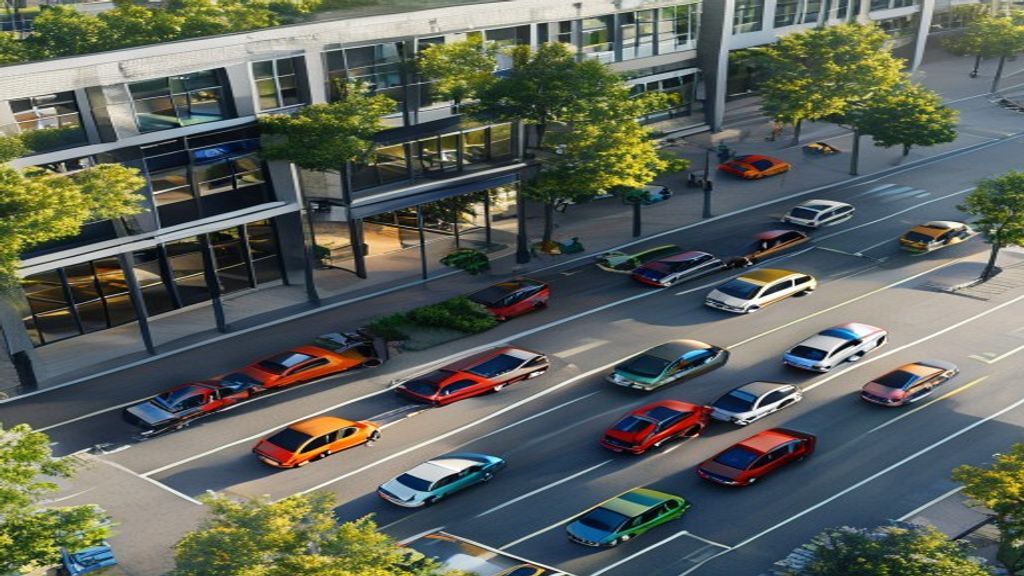
reduce school carline wait times
Carline congestion is the #1 parent complaint about K-12 schools according to numerous parent satisfaction surveys. The good news: most of the delay is addressable. Here are 9 proven methods schools use to cut carline wait times — from free, same-week changes to technology investments that pay for themselves in staff time savings.
1. Stagger Dismissal Times by Grade
Staggered dismissal is the single most impactful free change most schools can make. Instead of releasing all grades at 3:00 PM, release kindergarten and 1st grade at 2:50, 2nd through 4th at 3:00, and 5th through 8th at 3:10.
The result: peak vehicle arrivals spread over 20–30 minutes instead of 5 minutes, reducing maximum queue length by 40–60%. Many schools report cutting average wait times by 15–20 minutes with staggered release alone.
Trade-off: older students wait in a supervised area for 5–10 minutes. In practice, most parents prefer a slightly longer walk-in window over a 45-minute carline.
2. Improve Lane Design
Most carline delays are caused by lane bottlenecks, not student release speed. Common design problems:
- Single-lane entry — if vehicles can only merge into the carline from one direction, you’re creating a queue before anyone has even reached the school
- Short stacking lanes — if the lane can only hold 8 cars, the 9th car blocks the street while waiting to enter
- No dedicated exit — vehicles leaving the release zone should not pass through incoming lanes
Many schools can add a second entry lane, extend stacking with painted lanes, or improve exit flow without any construction — just cones, signage, and a staff member directing traffic.
3. Eliminate Manual ID Checks
The biggest speed bottleneck in most carlines is the manual ID verification step. Staff checking paper tags, reading names off a clipboard, or calling into a radio can typically process 3–4 cars per minute. Automated systems that pre-queue students before the car reaches the front can process 8–12 cars per minute.
Even a simple improvement — replacing paper tags with barcoded tags scanned by a handheld reader — can cut individual car processing time from 20–30 seconds to 5–8 seconds.
💡 Quick tip: Use PLACA.AI’s School Pickup Wait-Time Estimator to see how much time your school could save with automated LPR dismissal.
4. Implement LPR Technology
License plate recognition cameras mounted at the carline entrance read incoming vehicle plates automatically, match them to student records, and queue students in real time — before the car reaches the front. Staff see a live dashboard showing who is arriving and which students to call.
This eliminates the stop-check-release cycle for every car and replaces it with a continuous flow: students are already walking to the release zone when the car pulls up. Schools using PLACA.AI’s LineCam consistently report 40–60% reductions in total dismissal time.
Use the PLACA.AI wait-time estimator to calculate what this reduction would mean for your school specifically.
5. Train Staff on Traffic Flow Principles
Carline efficiency is as much about staff behavior as it is about systems. Specific behaviors that consistently reduce wait times:
- Maintain vehicle spacing — staff should prevent gaps from opening in the line, which cause following vehicles to stop-and-go rather than flow continuously
- Pre-position students — students should be at the release zone before their vehicle reaches the front, not called after the car arrives
- Use clear hand signals — consistent, unambiguous signals for stop, move forward, and loading complete eliminate confusion and hesitation
6. Communicate Expectations to Parents
Parent behavior is a significant driver of carline delays. Common issues and how to address them:
- Early arrivals — parents who arrive 30+ minutes early clog the lane before staff are even in position. Publish an arrival window; enforce it with signage and staff direction.
- Lingering at the curb — some parents stop for extended conversations or wait for a child who isn’t ready. Staff should keep vehicles moving; a separate pull-out spot for late students helps.
- Wrong lane use — parents unfamiliar with the carline pattern enter from the wrong direction. Wayfinding improvements and a parent orientation email for new families address this.
7. Use a Digital Dismissal System
Paper-based dismissal systems require staff to cross-reference names against paper rosters, hand-write logs, and communicate via radio. Digital systems give staff a shared, real-time view of the queue — who is arriving, who is waiting, and who has been released.
App-based digital systems (where parents check in via mobile) are an improvement over paper, but introduce a dependency on parent adoption. LPR-based systems eliminate that dependency by detecting vehicles automatically.
8. Add a Second Egress Route
If your school has a single exit, departing vehicles returning to wait for a second child, or vehicles blocking the exit to take a call, can back up the entire release zone. A second exit — even a temporary one during dismissal hours — allows the release zone to operate continuously rather than waiting for each vehicle to fully clear before the next one advances.
9. Track and Measure Outcomes
Schools that measure dismissal time see faster improvement than schools that don’t. Simple tracking:
- Record the time the first car enters the carline and the time the last student is released
- Count the number of staff on duty
- Note any incidents (unauthorized pickup attempts, weather delays, etc.)
Monthly review of this data reveals whether changes are working and where the remaining bottlenecks are. PLACA.AI’s dashboard automatically logs vehicle arrival times and student release times, giving you this data without any manual recording.
For a comprehensive look at all the components of an efficient dismissal process, see the guide to automating school student dismissal and the LineCam product page for technical specifications.
Ready to Cut Your School’s Carline Wait Time?
PLACA.AI’s LineCam reads parent license plates as they pull in — no app, no paper tags, no manual checking. Students are queued and called before the car even reaches the front.
Book a Free 15-Min Demo
Or calculate your school’s wait time first
No commitment required. Most demos are 15 minutes.
Internal Resources
- How Front Office Staff Can Avoid Substitute Teacher Dismissal Gaps With Better Vehicle-Based Workflows
- How K-12 Schools Can Separate Bus And Carline Traffic With Better Vehicle-Based Workflows
Related Resources
Data source: National Center for Education Statistics