

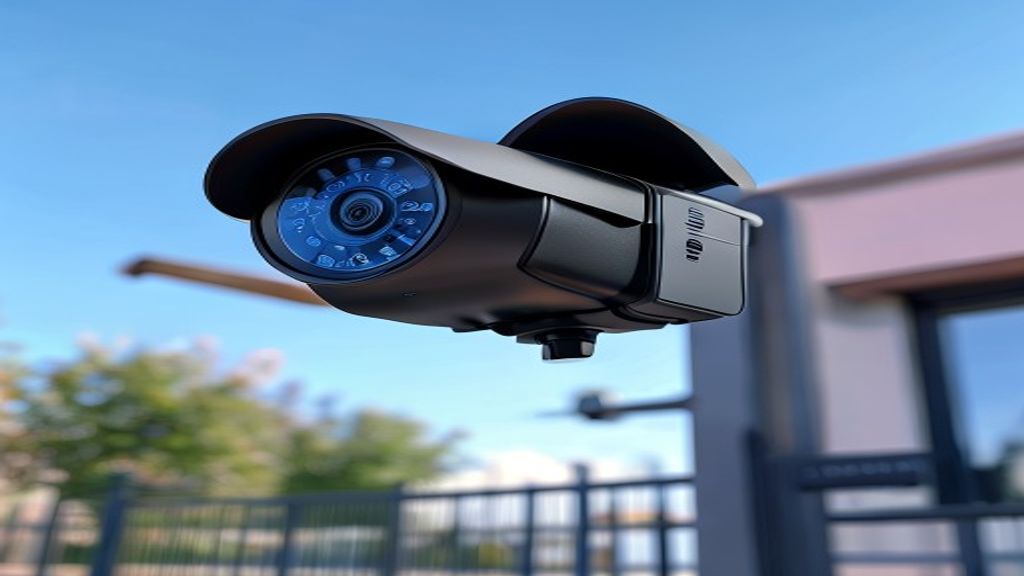
lpr cameras for schools
Not all license plate recognition cameras are the same, and the differences matter significantly in a school environment. A camera designed for highway toll collection operates at 70+ mph in controlled lighting conditions. A camera designed for a school carline operates at 5–15 mph, in variable weather, often mounted on a temporary pole by school staff rather than a civil engineering team.
This guide covers what to look for when evaluating LPR cameras specifically for K-12 school use.
What to Look For in a School LPR Camera
Purpose-Built vs. General Security Camera
The most important question to ask any LPR vendor: is the camera purpose-built for license plate recognition, or is it a general security camera with LPR software added on top?
Purpose-built LPR cameras have:
- A fixed focal length optimized for plate reading at 10–30 feet
- Infrared (IR) illumination matched to plate reflectivity
- High shutter speed to eliminate motion blur
- Processing power on-camera for real-time OCR, rather than sending raw video to a server
General security cameras with LPR software often read plates poorly in non-ideal conditions — low light, rain, direct sun glare, or dirty/damaged plates — because they were not designed for the specific optical requirements of plate reading.
Solar vs. Wired
For school carlines, solar-powered cameras offer a significant practical advantage: no electrician, no trenching, no network cabling, no facilities permit in most cases. The camera arrives pre-configured, mounts on a standard pole or fence, and connects to its cloud platform via built-in 4G.
Wired cameras have some advantages in high-traffic or low-sunlight environments (northern states in winter, heavily shaded locations). But for the majority of school deployments, solar is faster to install, lower in total cost, and easier to relocate if your carline layout changes.
PLACA.AI’s LineCam is solar-powered with a battery backup that maintains operation through multiple consecutive cloudy days.
💡 Quick tip: Use PLACA.AI’s School Pickup Wait-Time Estimator to see how much time your school could save with automated LPR dismissal.
4G vs. Wi-Fi
School LPR cameras can connect via Wi-Fi or 4G cellular. The trade-offs:
- Wi-Fi — lower ongoing data cost, but requires reliable network coverage at the carline entrance (often a coverage dead zone), and any network disruption during dismissal takes the system down
- 4G cellular — independent of the school network; continues operating even if the school’s Wi-Fi goes down; involves a monthly data cost but provides far more reliable uptime during the critical dismissal window
For mission-critical dismissal operations, 4G is the recommended approach. Network dependencies are the most common cause of system failures on go-live days.
Read Accuracy Requirements
LPR accuracy is typically expressed as a percentage of plate reads that are correct. For school dismissal, the relevant accuracy question is not just “what percentage of plates are read correctly?” but “what happens when a plate is misread or unreadable?”
A well-designed school LPR system has:
- High read accuracy (95%+ in standard conditions)
- A defined fallback workflow when a plate is not read: staff alert, manual verification option, no automatic hold on the student
- Confidence scoring — the system should flag low-confidence reads for staff review rather than acting on them
Integration with Student Information Systems
A standalone LPR system that does not connect to your SIS requires staff to manually maintain two separate databases — the SIS roster and the LPR authorized pickup list. This creates drift: when a student enrolls, withdraws, or has an authorized contact change, only one database gets updated.
Look for direct integrations with the major SIS platforms in your district: PowerSchool, Skyward, Infinite Campus, or Aeries. Ask specifically whether the integration syncs authorized pickup contacts and custody restrictions, not just student enrollment data.
Pricing Models
School LPR camera systems use several pricing structures:
- Hardware purchase + software subscription — high upfront cost for cameras; lower annual software fee; you own the hardware
- All-in subscription — cameras included in the monthly/annual fee; no upfront purchase; hardware is replaced/upgraded by the vendor if it fails
- Per-student pricing — annual fee scales with enrollment; predictable but can get expensive for large schools
PLACA.AI uses an all-in subscription model that includes the cameras, installation guidance, platform access, and support — no separate hardware purchase required. See full pricing.
Top Questions to Ask Vendors
- Is this a purpose-built LPR camera or a general security camera with OCR software?
- What is the read accuracy rate in your school deployments specifically (not highway or parking lot deployments)?
- What happens when a plate is not recognized — what does the staff see, and what is the student impact?
- Is the camera solar-powered? What is the battery backup duration?
- Does it use 4G or Wi-Fi? What is the uptime SLA?
- Which SIS platforms do you integrate with, and what data fields sync?
- What is the total cost including hardware, setup, training, and annual subscription?
- What is the typical go-live timeline from order to first use?
For PLACA.AI’s specific answers to these questions: LineCam product page | complete LPR guide | pricing.
Ready to Cut Your School’s Carline Wait Time?
PLACA.AI’s LineCam reads parent license plates as they pull in — no app, no paper tags, no manual checking. Students are queued and called before the car even reaches the front.
Book a Free 15-Min DemoCalculate your wait time firstNo commitment required. Most demos are 15 minutes.
Related Resources
Data source: National Center for Education Statistics