

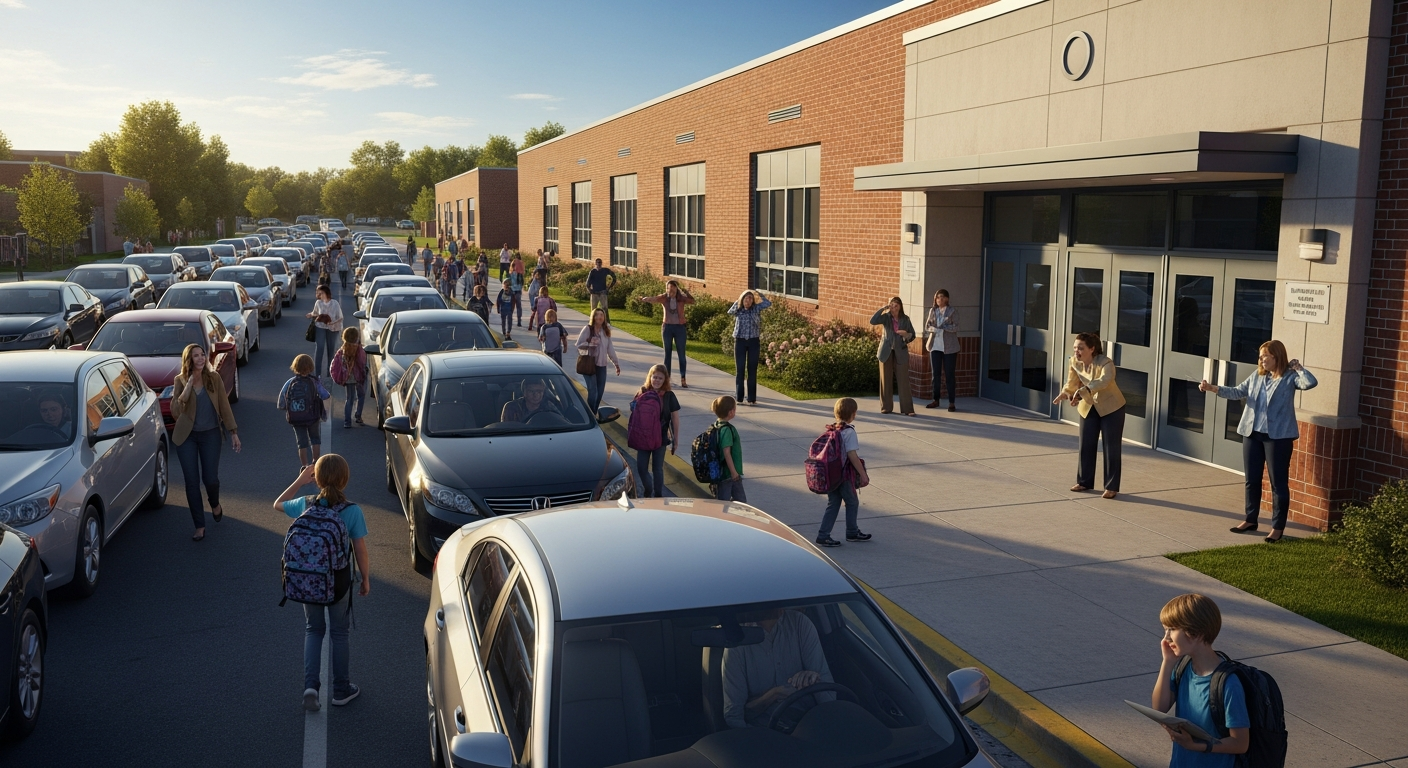
school pickup line needs better system
If any of these signs sound familiar, your school pickup line may be costing parents time, staff energy, and safety visibility it doesn’t need to lose.
10 Signs Your School Pickup Line Needs a Better System
1. Dismissal regularly takes more than 25 minutes
A well-coordinated dismissal for a 400-student school should complete within 15-25 minutes. If your average is 35-45 minutes or longer, the process has a systemic bottleneck – not just a busy day.
2. Staff is making 20+ radio calls per dismissal
Every radio call during dismissal is a delay in the making. If your team is constantly broadcasting student names and lane positions, a student pickup line app with pre-notification could eliminate most of those calls.
3. Paper tags are lost or forgotten at least weekly
If parents show up without their tag multiple times a week, staff spends valuable dismissal time on individual verification instead of managing the flow. There’s no fallback system for forgotten paper.
4. Grandparent and neighbor pickups require a front office call every time
If a grandparent pickup always means a parent phone call and front office verification, there’s no digital authorization system. Parents should be able to pre-authorize trusted people without calling the school.
5. You have no record of who picked up which student last Tuesday
When a parent asks about a specific pickup, can you answer? If the honest answer is “we don’t know exactly,” your school has no pickup audit trail – a real accountability gap.
6. Rainy days are unpredictable chaos
Weather-dependent dismissal suggests the system depends on physical elements (paper tags, clear windows, outdoor visibility) rather than digital authorization that works in any condition.
7. You’ve had an unauthorized pickup concern in the last year
If an unfamiliar person has shown up claiming authorization and your staff couldn’t quickly verify it, you’ve experienced the core safety gap that a car rider dismissal system is designed to close.
8. Temporary pickup changes require a parent phone call or written note
If the only way to authorize a temporary pickup is to call the front office or send a written note, there’s no digital authorization layer. This creates daily friction and authorization delays.
9. Parents regularly complain about pickup to the PTA or principal
Persistent parent complaints about pickup time and confusion are a signal that the problem has reached a visible threshold. See the PTA guide for how to bring this to the school’s attention constructively.
10. Staff leave dismissal exhausted and frustrated
Dismissal should not be the most draining part of the school day for teachers and aides. If it consistently is, the process is not designed for the volume it’s handling.
Ready to nominate your school for a pickup line review?
Free assessment. No commitment. Staff stays in control.
What to Do Next
If your school shows more than 3 of these signs, a one-lane or one-grade pilot program can give you real data on how much the system can improve in 30 days. Most schools start without any campus-wide commitment.
Student Pickup Line App • Parent Advocacy Guide • Pilot Program • FAQ • Privacy Options
Source: National Center for Education Statistics
Signs Your School Pickup Line Needs a Better System
Schools that still rely on paper car tags, hand signals from staff, and radio announcements face daily congestion that extends pickup times by 15 to 30 minutes beyond what is operationally necessary. A better pickup system addresses the root cause: lack of vehicle identification automation.
What does a modern school pickup system include?
Modern school pickup systems combine digital parent registration, license plate recognition or QR code scanning, and real-time student staging software. When a parent’s vehicle is identified at the entry point, the student’s name appears on the staging screen and staff begin bringing the child forward before the car reaches the loading zone.
How much faster is LPR-based school pickup?
Schools using LPR-based dismissal systems report average car-to-student wait times of under 90 seconds compared to 4 to 6 minutes for paper tag systems. Across a 300-vehicle dismissal, the cumulative time savings eliminate the tail of the pickup line that extends onto public streets and creates neighborhood traffic complaints.
Can schools use LPR for early dismissals and special pickups?
Yes. LPR systems support guardian management, allowing schools to register multiple authorized adults per student. Early dismissal records can be flagged in the system so the pickup app notifies staff to hold a student at the office or direct the guardian to a separate area rather than the main pickup lane.
What is the typical setup time for a school pickup LPR system?
Camera installation takes one school day or less. Parent plate registration is completed through an invitation-based enrollment portal, typically over one to two weeks before the system goes live. Staff training is remote and takes under two hours for standard operations.
Schools that upgrade to a data-driven dismissal system routinely reduce pickup time, eliminate paper tag distribution overhead, and improve safety accountability for every student departure.
Elementary Pickup Line Best Practices
After identifying the warning signs, schools can use these best practices for elementary school pickup lines to improve daily dismissal.
Related planning resource: small one-lane pickup pilot.