


hoa parking enforcement methods
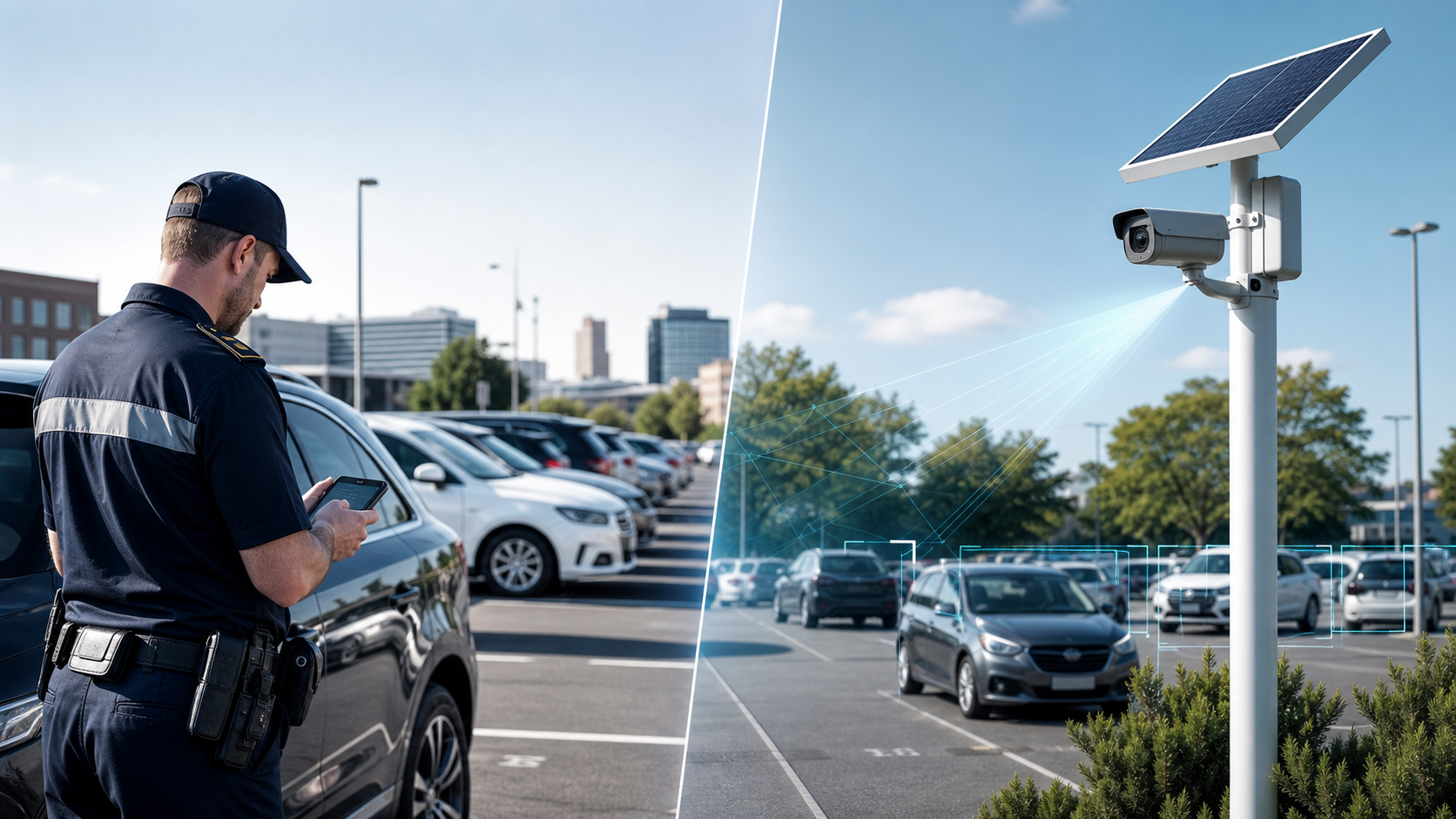
License plate recognition (LPR) technology delivers the highest violation reduction — 60-80% within 30 days of deployment. It automates continuous scanning, instantly alerts management to unauthorized vehicles, and creates timestamped photo evidence that eliminates disputes. PLACA.AI GuardCam is solar-powered and wire-free at one-time plus /month for unlimited cameras.
Parking disputes are the #1 complaint at HOA annual meetings according to the Community Associations Institute. If your community is struggling with unauthorized vehicles, permit violations, or guest parking abuse, this guide covers every enforcement method available — from the simplest to the most automated.
Method 1: Warning Letters and Notices
Best for: First-time violations, minor infractions
Cost: Near zero
Effectiveness: Low long-term
Warning letters are the traditional first step. Send a formal notice citing the specific CC&R or rule violated, the date, and the vehicle description. Many HOAs require documented warnings before escalating to fines or towing.
Method 2: Fines and Graduated Penalties
Best for: Repeat violators, serious infractions
Cost: Near zero (administrative time)
Effectiveness: Moderate
Most HOA governing documents allow the board to fine residents for CC&R violations. A graduated fine schedule — $50 first offense, $100 second, $250 third — creates escalating consequences. Fines must be properly noticed and allow the resident a hearing opportunity under most state laws.
Method 3: Towing Unauthorized Vehicles
Best for: Persistent unauthorized vehicles, non-residents in reserved spaces
Cost: $0 to HOA (tow company charges the vehicle owner)
Effectiveness: High deterrent once established
Towing is the strongest deterrent but carries legal risk if done incorrectly. Requirements vary by state but typically include: visible signage at all entrances, proper authorization process, use of a licensed towing company, and notification of local law enforcement. Approximately 20 million vehicles are towed annually in the US. (Towing Industry Statistics, 2025)
Method 4: Physical Barriers and Bollards
Best for: Reserved spaces, fire lanes, loading zones
Cost: $200–$800 per space
Effectiveness: High (passive enforcement)
Removable bollards, parking posts, and wheel locks physically prevent unauthorized use of specific spaces. No staff required, no disputes about whether enforcement was warranted. Works best for individual reserved spots rather than large parking areas.
Method 5: Permit Systems and Hang Tags
Best for: Communities with defined resident and guest parking
Cost: Low (printing + administration)
Effectiveness: Moderate — subject to permit sharing and fraud
Physical permit systems assign spaces or lots to residents and require visible display. The weakness: permits get shared, lost, or forged. Studies show manual permit systems lose 5–10% of potential revenue to fraud annually. (HONK, 2024)
Method 6: Gate and Access Control
Best for: Communities with defined entrances
Cost: $1,000–$5,000+ for gate systems
Effectiveness: High for entry control
Gate systems control who can enter the community but don’t address internal parking violations or vehicles that tailgate through. License plate-based gate control (like PLACA.AI’s GateCam) eliminates the need for keycards or fobs — registered residents’ plates automatically open the gate while unauthorized plates trigger an alert.
Method 7: License Plate Recognition (LPR) Technology
Best for: Communities wanting automated, documentation-backed enforcement
Cost: $899/camera one-time + $99/month software
Effectiveness: Highest — 60–80% violation reduction
LPR cameras automatically scan every vehicle entering or parked in the community, cross-reference plates against your permit database, and instantly alert management to unauthorized vehicles — with timestamped photo evidence. This creates an objective, defensible record that eliminates “I didn’t know” disputes.
PLACA.AI’s GuardCam is solar-powered and 4G LTE connected, requiring no wiring or electrical work. A 100-unit HOA typically covers its entrance and guest lot with 2–3 cameras. The PLACA.AI Standard plan at $99/month covers unlimited cameras.
Method Comparison
| Method | Upfront Cost | Monthly Cost | Effectiveness | Staff Required |
|---|---|---|---|---|
| Warning letters | $0 | $0 | Low | Yes |
| Fines | $0 | Low (admin) | Moderate | Yes |
| Towing | $0 | $0 | High | Yes |
| Physical barriers | $200–$800/space | $0 | High (passive) | No |
| Permit system | Low | Low | Moderate | Yes |
| Gate control | $1,000–$5,000+ | Varies | High (entry only) | Minimal |
| LPR Technology | $899/camera | $99 | Highest | Minimal |
Frequently Asked Questions
Can an HOA tow a car without warning?
In most states, HOAs can tow without prior warning if proper signage is posted at all community entrances and exits. However, many HOA governing documents require written notice before towing a resident’s vehicle. Always review your CC&Rs and consult local law before implementing a tow-without-notice policy.
How do I enforce parking rules against non-residents?
Non-residents who park in your community can typically be towed without warning if signage is properly posted. LPR systems are especially effective here — they automatically flag any plate not on your permitted list and can alert staff or a towing company immediately.
What is the most effective HOA parking enforcement method?
LPR (license plate recognition) technology consistently produces the highest results — studies show 60–80% violation reduction within 30 days of deployment. It eliminates the manual work required by other methods, creates defensible documentation, and removes the confrontational element that staff enforcement often involves.
How much does HOA parking enforcement technology cost?
PLACA.AI’s HOA Starter bundle includes 2 GuardCam cameras ($1,798 one-time) plus the Standard cloud plan ($99/month for unlimited cameras and 7-day storage). Most HOAs recover this cost through a single avoided legal dispute or by recapturing lost parking fee revenue.
Automate Your HOA Parking Enforcement
PLACA.AI’s solar-powered cameras install wire-free in under an hour. No electrician. No IT setup. Start with a free trial.
Start Free TrialTalk to PLACA.AI
Need help choosing the right LPR workflow?
Send your property, parking, or access-control question through the PLACA.AI contact form. Dr. Suhayb and the team can help map the right camera, software, and enforcement setup.
Open contact formData reference: U.S. Department of Transportation
When an HOA Works With a Towing Company
If an HOA uses a towing vendor, plate-based documentation can reduce manual patrol friction and help the board review enforcement activity. TowCam is the Placa.ai parking enforcement software layer for towing companies serving apartments, HOAs, and private properties.