

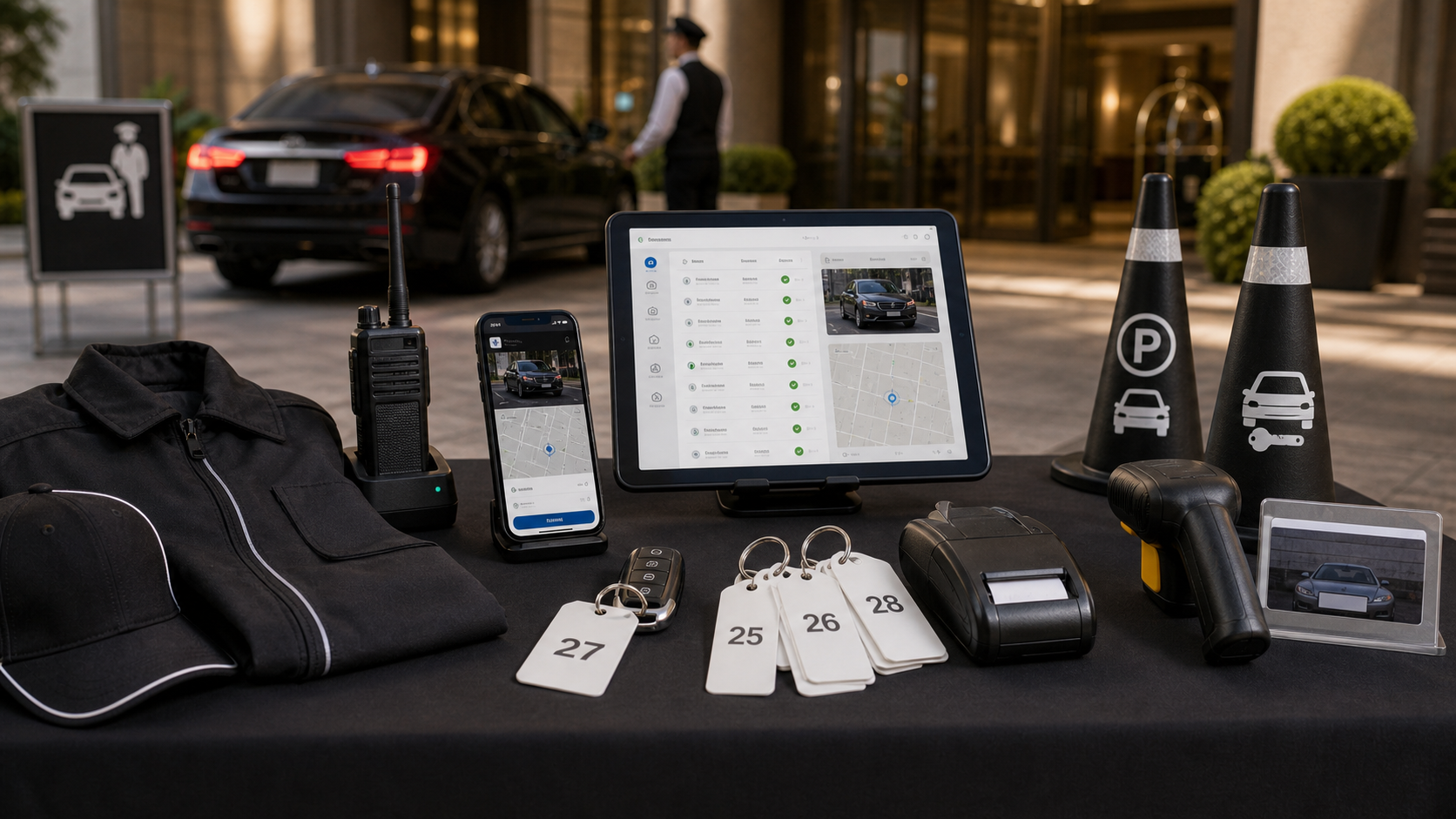
what equipment is needed for valet
Valet operator guide
Valet operations usually need phones or tablets, key control, uniforms, signs, cones, insurance documentation, parking access, and a system for tracking vehicles.
Short Answer
Valet operations usually need phones or tablets, key control, uniforms, signs, cones, insurance documentation, parking access, and a system for tracking vehicles.
Why This Matters for Revenue
Better tools reduce mistakes, speed arrivals, and make each valet team look more professional than competitors.
PLACA.AI helps valet companies increase revenue potential by improving guest experience, reducing slow handoffs, keeping pickup requests organized, and creating more digital tip moments.
Valet Revenue Analysis
Use this planning model: monthly cars x tip participation x average tip. Example: 3,120 cars/month at 35% participation and average tip equals ,368/month. If better service and digital tipping move participation to 55% at average, estimated tips become ,296/month. Possible lift: ,928/month.
This is an example model, not a guaranteed result. Actual outcome depends on location, staff quality, guest mix, event volume, and tip policy.
How PLACA.AI Helps
- Phone-based plate scan check-in.
- Returning guest recognition.
- SMS pickup request link.
- GPS parked location for runners.
- Ready SMS notification.
- Digital tipping.
Related
Read next guide or visit Valet Parking Knowledge Hub.
Equipment Needed for Valet Parking
What are the basic supplies?
A valet operation requires pre-numbered ticket stock, a podium or stand for the attendant station, a secure key cabinet or key hooks, traffic cones for the drop-off zone, and staff uniforms. For operations handling more than 40 vehicles per shift, a digital management platform replaces paper tickets and automates the matching process during retrieval. Mobile apps allow attendants to issue and scan tickets from a phone, eliminating the need for dedicated hardware at the podium.
What technology do modern valet companies use?
Modern valet operations use text-to-retrieve apps, digital ticket platforms, and license plate recognition cameras. LPR cameras at the entrance photograph each arriving plate and link it automatically to the issued ticket. At retrieval, the system confirms the correct vehicle is being returned. This photographic log protects the operator in damage disputes and eliminates the manual reconciliation step at shift end. LPR systems integrated with valet software – such as Placa.ai – replace a significant portion of the paper and manual entry workflow.
About Placa.ai
Placa.ai is a license plate recognition platform used by parking operators, valet companies, and property managers who need automated vehicle identification. The platform pairs LPR cameras with cloud software that delivers real-time plate reads, vehicle logs, and alert notifications. Valet operations using Placa.ai gain a digital record of every vehicle, with timestamped photos of each plate, eliminating manual ticket logging and speeding customer retrieval. To learn more or schedule a demo, visit placa.ai.
Industry reference: International Parking and Mobility Institute
Placa.ai supports valet operators who want to add LPR to their existing equipment stack. The system connects to ONVIF-compatible IP cameras, requires no on-site server, and begins logging plates within hours of installation. Contact the Placa.ai team to discuss camera placement recommendations for valet drop-off zones.