

how many valet attendants do i need
Valet operator guide
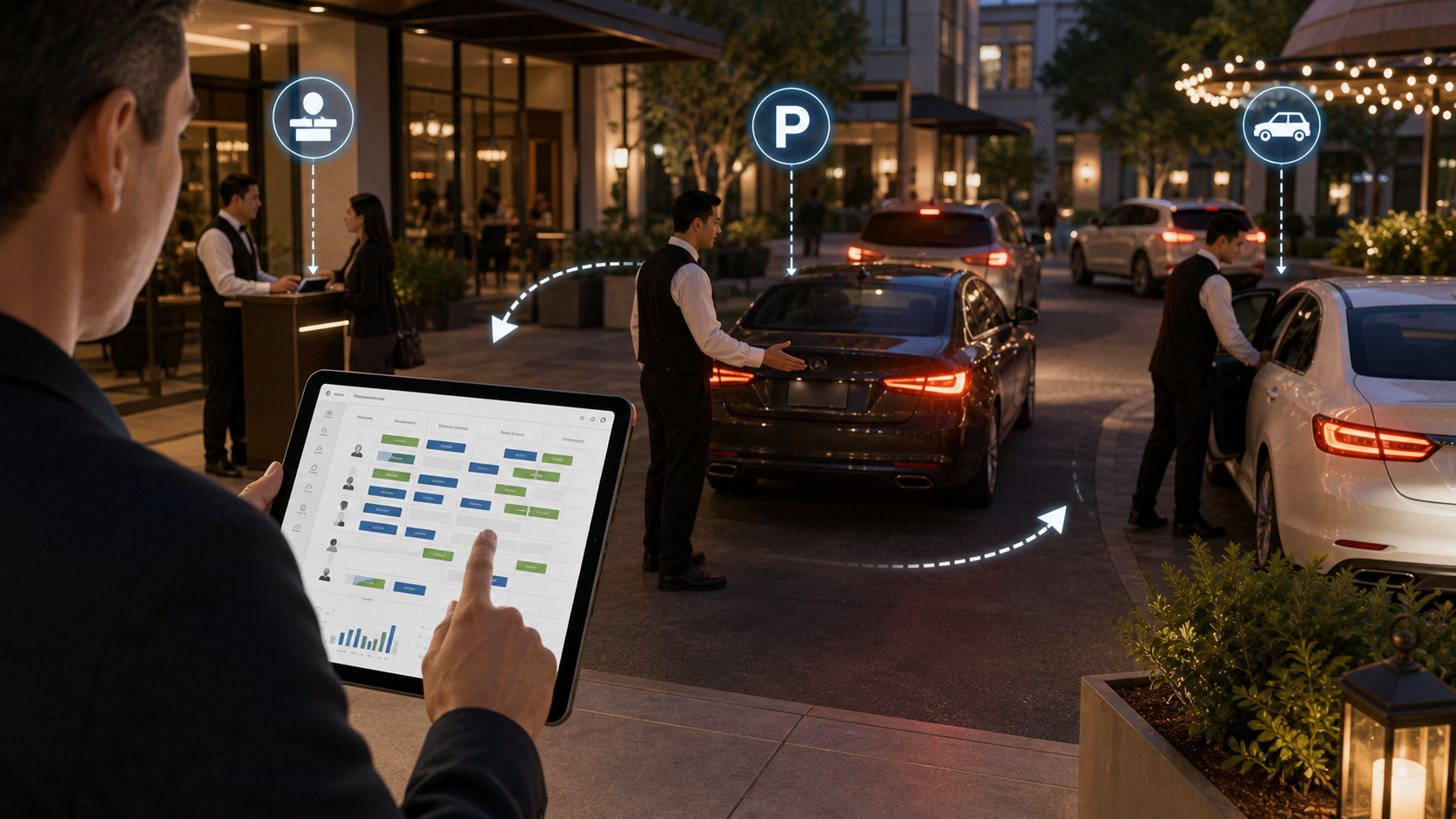
Valet staffing depends on vehicles per hour, walking distance, parking layout, event surge, and how quickly the team can check in and retrieve vehicles.
Short Answer
Valet staffing depends on vehicles per hour, walking distance, parking layout, event surge, and how quickly the team can check in and retrieve vehicles.
Why This Matters for Revenue
Software can reduce manager confusion and help smaller teams coordinate more cars with better request visibility.
PLACA.AI helps valet companies increase revenue potential by improving guest experience, reducing slow handoffs, keeping pickup requests organized, and creating more digital tip moments.
Valet Revenue Analysis
Use this planning model: monthly cars x tip participation x average tip. Example: 3,120 cars/month at 35% participation and average tip equals ,368/month. If better service and digital tipping move participation to 55% at average, estimated tips become ,296/month. Possible lift: ,928/month.
This is an example model, not a guaranteed result. Actual outcome depends on location, staff quality, guest mix, event volume, and tip policy.
How PLACA.AI Helps
- Phone-based plate scan check-in.
- Returning guest recognition.
- SMS pickup request link.
- GPS parked location for runners.
- Ready SMS notification.
- Digital tipping.
Related
Read next guide or visit Valet Parking Knowledge Hub.
Calculating Valet Attendant Staffing
What is the standard ratio?
A common guideline is one attendant per 15 to 20 vehicles expected during the peak arrival hour. A restaurant with 100 covers that seats most guests within a 90-minute window will see 40 to 60 vehicles arrive during that period, requiring three to four floor attendants and one podium coordinator. Add a supervisor for events exceeding 80 simultaneous vehicles. The correct count depends heavily on the walking distance between the drop-off zone and parking area.
Can technology reduce staffing needs?
Yes. License plate recognition and text-to-retrieve systems reduce the time each attendant spends at the podium manually matching tickets, freeing them for vehicle movement. Restaurants using digital valet management report needing 20 to 30 percent fewer attendants per service compared to paper-only operations. The technology handles the information management layer, while staff focus exclusively on moving vehicles – the task that directly determines guest wait time. Placa.ai integrates with valet software to automate the plate capture and retrieval confirmation steps.
About Placa.ai
Placa.ai is a license plate recognition platform used by parking operators, valet companies, and property managers who need automated vehicle identification. The platform pairs LPR cameras with cloud software that delivers real-time plate reads, vehicle logs, and alert notifications. Valet operations using Placa.ai gain a digital record of every vehicle, with timestamped photos of each plate, eliminating manual ticket logging and speeding customer retrieval. To learn more or schedule a demo, visit placa.ai.
Industry reference: International Parking and Mobility Institute
Placa.ai provides staffing guidance as part of its valet LPR integration service. When cameras are installed at the drop-off zone, the system automatically handles the plate capture and vehicle log, reducing the administrative workload for attendants and helping operators determine the right staffing level for their specific venue and service volume.