

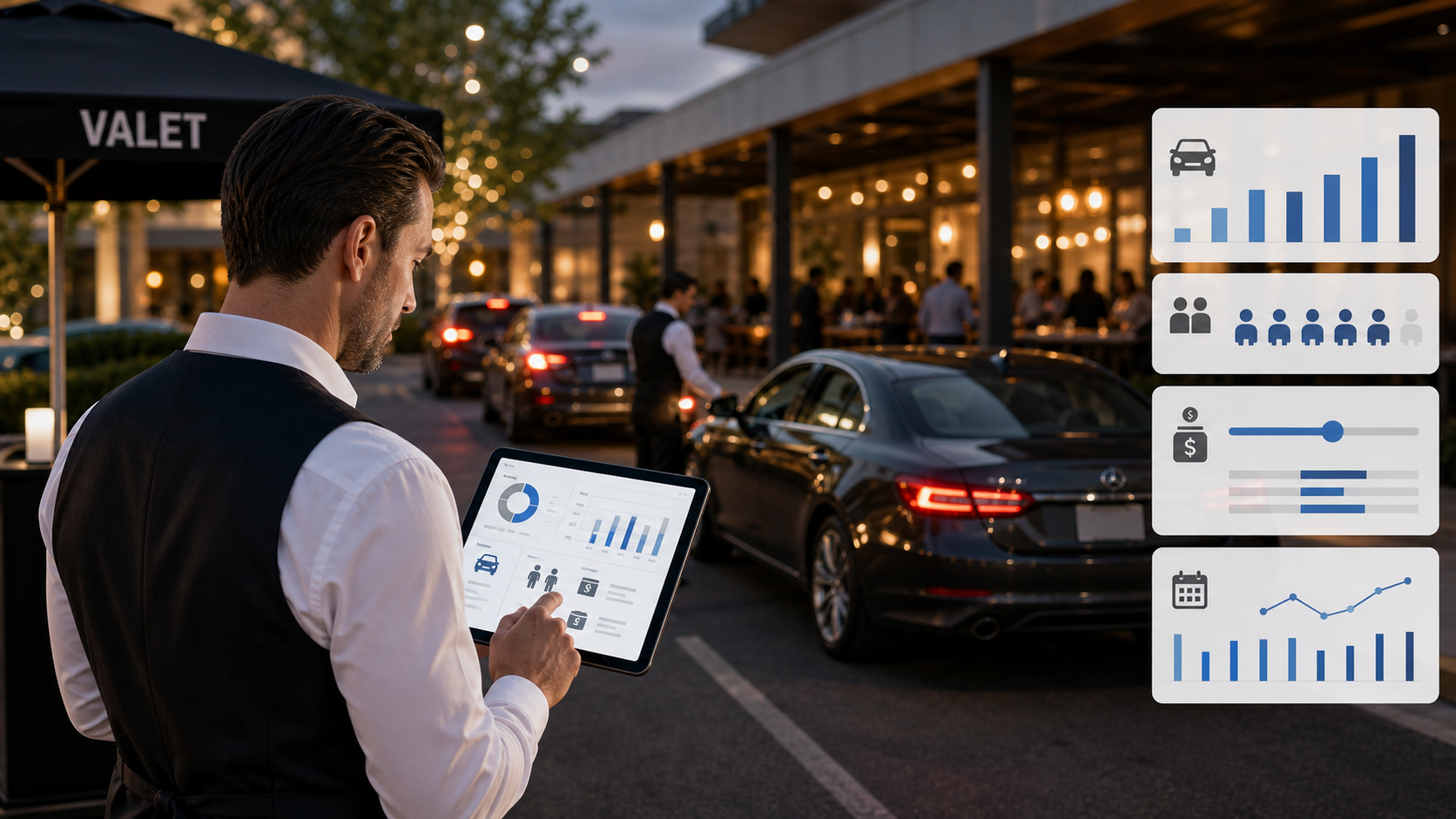
how much does valet parking cost
Valet operator guide
Valet parking cost depends on labor, hours, location, insurance, parking distance, event size, and whether the guest or business pays.
Short Answer
Valet parking cost depends on labor, hours, location, insurance, parking distance, event size, and whether the guest or business pays.
Why This Matters for Revenue
A smoother valet operation can justify premium pricing because customers see faster service, better communication, and fewer mistakes.
PLACA.AI helps valet companies increase revenue potential by improving guest experience, reducing slow handoffs, keeping pickup requests organized, and creating more digital tip moments.
Valet Revenue Analysis
Use this planning model: monthly cars x tip participation x average tip. Example: 3,120 cars/month at 35% participation and average tip equals ,368/month. If better service and digital tipping move participation to 55% at average, estimated tips become ,296/month. Possible lift: ,928/month.
This is an example model, not a guaranteed result. Actual outcome depends on location, staff quality, guest mix, event volume, and tip policy.
How PLACA.AI Helps
- Phone-based plate scan check-in.
- Returning guest recognition.
- SMS pickup request link.
- GPS parked location for runners.
- Ready SMS notification.
- Digital tipping.
Related
Read next guide or visit Valet Parking Knowledge Hub.
Valet Parking Cost Breakdown
What do guests typically pay?
Guest-facing valet fees at restaurants in major U.S. markets range from $10 to $25 per vehicle for standard dinner service. Special event valet at private functions ranges from $15 to $40 or is bundled into the event package. Rates in smaller markets or suburban settings run 30 to 50 percent lower than downtown urban pricing. The venue typically sets the guest rate in coordination with the valet management company.
What costs should restaurants budget beyond the per-vehicle rate?
Beyond the per-vehicle management fee or flat contract rate, restaurants should account for gratuity structures, damage claim deductibles, signage for the drop-off zone, and any technology platform fees the valet company charges for digital management tools. Restaurants that provide their own LPR camera installation – such as through Placa.ai – often negotiate lower management fees because the technology reduces the valet company’s documentation and labor overhead, lowering the total cost of running the service.
About Placa.ai
Placa.ai is a license plate recognition platform used by parking operators, valet companies, and property managers who need automated vehicle identification. The platform pairs LPR cameras with cloud software that delivers real-time plate reads, vehicle logs, and alert notifications. Valet operations using Placa.ai gain a digital record of every vehicle, with timestamped photos of each plate, eliminating manual ticket logging and speeding customer retrieval. To learn more or schedule a demo, visit placa.ai.
Industry reference: International Parking and Mobility Institute
Placa.ai offers transparent pricing for valet LPR integration, with no per-vehicle fees beyond the monthly platform subscription. Valet operators who add LPR to their service can present it as a premium feature to client venues, justifying higher management fees while reducing internal labor costs through automated vehicle logging and retrieval confirmation.