

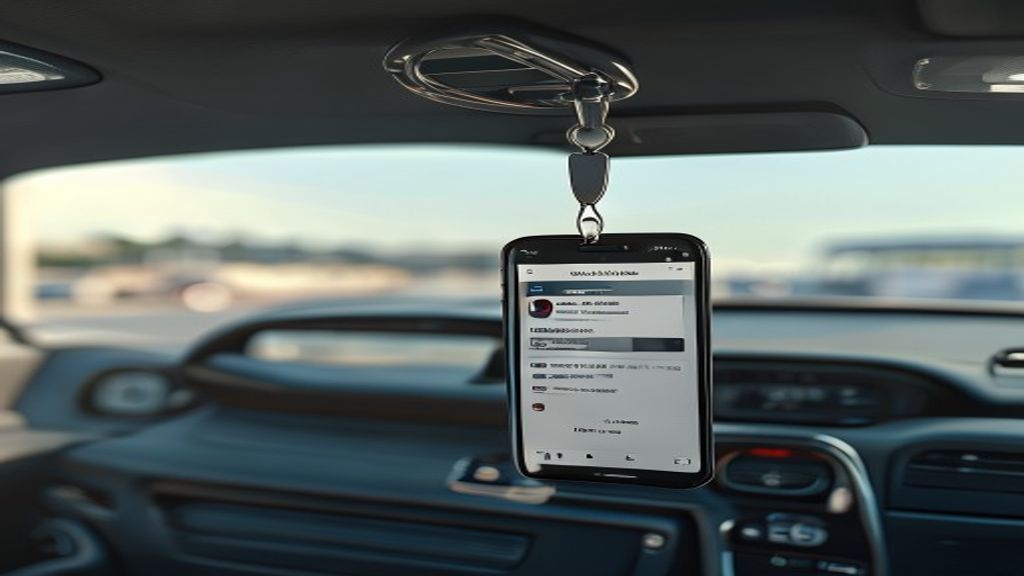
school carpool tags alternative
Paper carpool tags have been standard in school dismissal for decades. They are cheap to print, easy to understand, and require zero technology. They are also one of the biggest sources of carline delays, safety gaps, and administrative headaches in K-12 schools today.
Here is an honest look at what paper tags cost, what digital alternatives exist, and why the newest systems eliminate the need for parent-held tags entirely.
Problems with Paper Carpool Tags
They Get Lost
Every school that uses paper tags spends significant office time printing replacements. Parents lose tags in glovebox clutter, loan them to grandparents, leave them at home on busy mornings, and occasionally use the wrong family’s tag by mistake. Each lost or forgotten tag adds friction to the dismissal process for that family and slows down the line while staff resolve the situation.
They Can Be Shared or Duplicated
A paper tag that proves nothing about the person holding it is a weak authorization mechanism. Tags get shared between divorced parents in custody disputes, handed to nannies who haven’t been properly added to the authorization list, and occasionally copied. Most schools have no way to detect this.
They Create No Audit Trail
When a staff member checks a paper tag and releases a student, there is typically no record of who picked up that child, in what vehicle, or at what time. If a custody incident occurs, or a parent calls to report their child wasn’t picked up when they claim they were, the school has no documentation.
They Slow Down the Line
Even a smooth tag-check process — staff reads number, calls student name, student walks to car — takes 15–30 seconds per car. At 8 cars per minute peak throughput, that is manageable for small schools. At 3 cars per minute with a 500-student school, dismissal takes over an hour.
💡 Quick tip: Use PLACA.AI’s School Pickup Wait-Time Estimator to see how much time your school could save with automated LPR dismissal.
Cost and Labor Analysis
The direct costs of paper carpool tags are easy to undercount:
- Printing — laminated tags, replacement tags, backup sets for after-care and carpools. A school of 500 students might print 700–900 tags annually.
- Distribution logistics — tags must be distributed at back-to-school, redistributed when families change vehicles, and reissued when lost.
- Staff time — office time processing tag requests, front-office staff fielding “I forgot my tag” situations daily.
- Opportunity cost — every minute of dismissal delay costs staff time. A 15-minute carline that becomes 45 minutes requires 3–4 staff members instead of 1–2.
What Digital Dismissal Looks Like
The first generation of digital dismissal systems replaced paper tags with parent mobile apps. Parents check in via app when they arrive — the system queues their child and staff see a digital list. This is better than paper in two ways: it creates a digital record, and it eliminates the physical tag.
But it introduces a new dependency: parents must remember to open the app and check in. Schools that have adopted app-first systems consistently report that 10–25% of parents do not check in reliably — requiring manual intervention daily.
License Plate Recognition as an Upgrade
LPR systems eliminate the parent tag and the parent app check-in simultaneously. Instead of relying on a parent action to trigger dismissal, cameras read the incoming vehicle’s license plate automatically and queue the associated student without any input from the parent.
The workflow:
- Parents register their license plate(s) once — via a parent portal link distributed at enrollment
- At dismissal, cameras read plates as vehicles enter the carline
- The student is queued automatically and called to the release zone before the car reaches the front
- A timestamped log with plate image is created for every pickup — the complete audit trail paper tags never provide
For new or unregistered vehicles, a QR fallback lets parents present a code on their phone for manual verification. The carline does not stop — it just routes the exception to a manual check.
Real-World Time Savings
Schools that have switched from paper tags to PLACA.AI’s LineCam consistently report 40–60% reductions in total dismissal time. For a 500-student school:
- Previous average dismissal: 55–65 minutes with paper tags
- After LPR implementation: 25–35 minutes
- Staff on carline duty reduced from 4–5 to 2–3
The parent registration process that replaces tag distribution takes roughly the same amount of admin time — but it only happens once per year and does not require the school to physically hand anything to parents.
See how the system works: automate school student dismissal guide and LineCam product page.
Ready to Cut Your School’s Carline Wait Time?
PLACA.AI’s LineCam reads parent license plates as they pull in — no app, no paper tags, no manual checking. Students are queued and called before the car even reaches the front.
Book a Free 15-Min DemoCalculate your wait time first
No commitment required. Most demos are 15 minutes.
Internal Resources
- How Front Office Staff Can Verify Grandparent Pickup Permissions With Better Vehicle-Based Workflows
- How K-12 Schools Can Reduce Radio Call Overload With Better Vehicle-Based Workflows
Related Resources
Data source: National Center for Education Statistics