

State of Apartment Parking Management 2026
Apartment operators, regional managers, multifamily property managers, and parking operations teams.
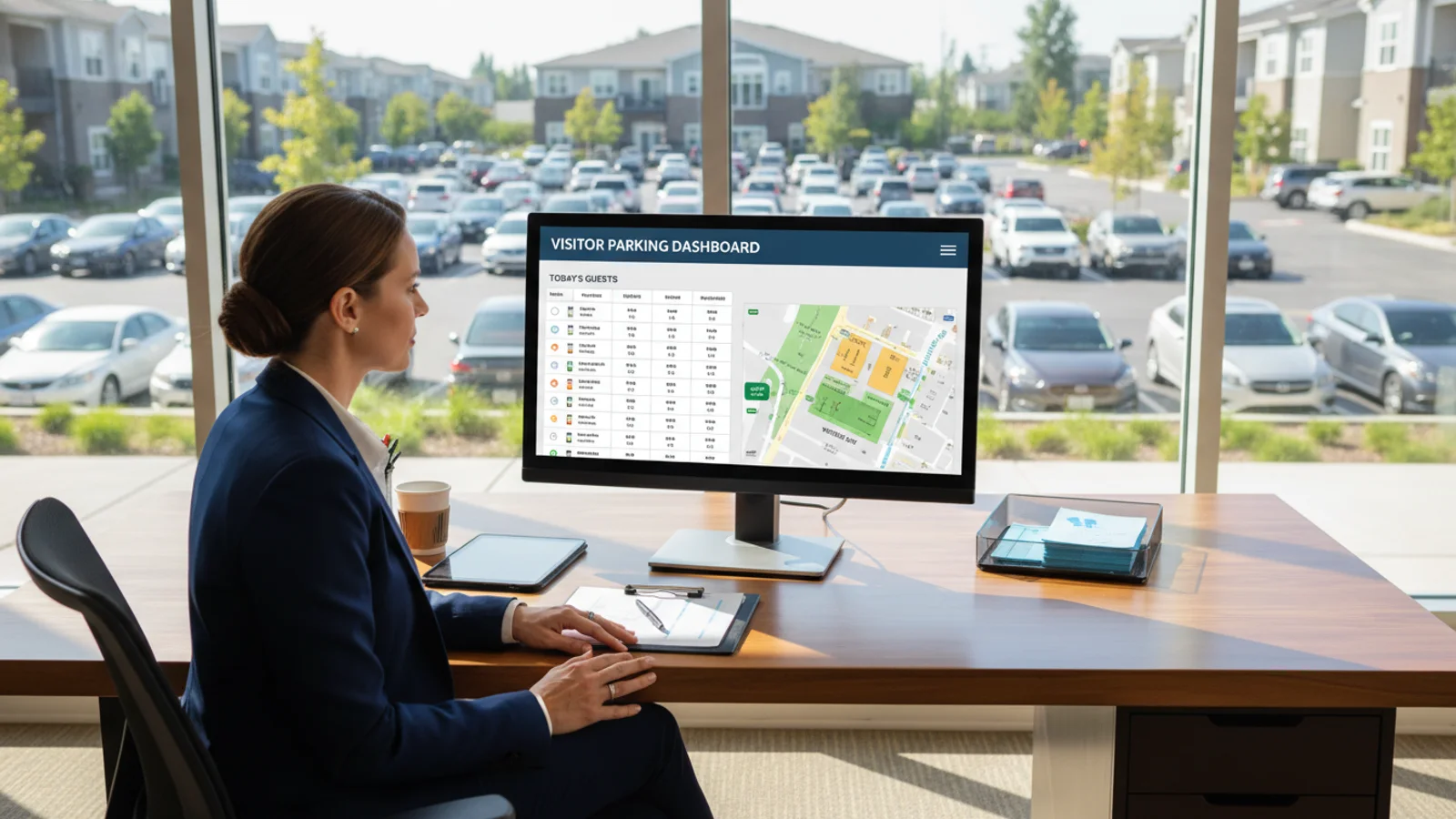
What This Report Covers
Apartment parking problems usually look like resident complaints, guest confusion, and enforcement disputes. Underneath, they are often data problems: incomplete resident vehicle records, visitor access that never expires, and parking rules that are hard to apply consistently.
This report helps multifamily operators evaluate parking management as a connected workflow rather than a patchwork of decals, fobs, complaints, and manual patrols.
Short answer: Apartment parking management works best when resident registration, visitor parking, permit validation, gate access, and enforcement review are connected to one vehicle record.
Key Findings
Vehicle data comes first
Parking decisions are weaker when the property does not know which vehicle belongs to which resident or visitor.
Visitor access needs expiration
Guest parking abuse often comes from permissions that last longer than the visit.
Permit-only systems create blind spots
Decals and hangtags can be transferred, lost, or ignored without a searchable event record.
Compliance needs context
Managers need plate, rule, location, account, and timestamp context before enforcement decisions.
Data Snapshot
These report cards use operational counts and decision points rather than unverified market claims. External statistics should be added only after source verification.
Operational records to align: resident, visitor, vendor, permit, and gate events.
Primary parking audiences: residents who need convenience and managers who need compliance.
Unified vehicle registry should support gate access and parking review.
Problem / Solution
The Old Workflow
Traditional apartment parking management often splits vehicle registration, visitor parking, gate access, and towing decisions across separate tools or spreadsheets.
The Modern Workflow
A connected vehicle workflow uses LPR to identify vehicles, apply resident and visitor rules, document exceptions, and support property-manager review.
Comparison Table
| Workflow | Common Manual Method | Operational Risk | LPR-Supported Method |
|---|---|---|---|
| Resident registration | Move-in form or spreadsheet | Stale records after lease changes | Plate registry connected to active resident records |
| Visitor parking | Paper pass or guest code | Passes can be reused | Time-limited guest plate permission |
| Permit validation | Decal or hangtag | Transfer and misuse | Plate matched to active parking permission |
| Enforcement | Manual patrol photos | Inconsistent context | Searchable plate events with timestamps |
Buyer Decision Framework
| Decision Area | What To Check | Why It Matters | Related Resource |
|---|---|---|---|
| Resident turnover | How fast can a vehicle permission be added or revoked? | Move-ins and move-outs are where parking lists go stale. | Review the related PLACA.AI resource cards below. |
| Visitor rules | Can visitor parking expire automatically? | Temporary permissions reduce long-term guest abuse. | Review the related PLACA.AI resource cards below. |
| Gate integration | Can approved vehicles enter without sharing codes? | Gate access and parking compliance should reinforce each other. | Review the related PLACA.AI resource cards below. |
| Dispute review | Can managers see the evidence before escalation? | Better documentation supports fair enforcement. | Review the related PLACA.AI resource cards below. |
Implementation Roadmap
Clean resident vehicle records
Use this step to move from broad interest to a measurable, reviewable vehicle workflow.
Define visitor parking windows
Use this step to move from broad interest to a measurable, reviewable vehicle workflow.
Connect gate access and parking rules
Use this step to move from broad interest to a measurable, reviewable vehicle workflow.
Pilot plate validation in one lot or entry
Use this step to move from broad interest to a measurable, reviewable vehicle workflow.
Review exception reports weekly
Use this step to move from broad interest to a measurable, reviewable vehicle workflow.
State Relevance
For state and local relevance, PLACA.AI should expand existing state assets rather than create doorway pages. Existing regional resources include Florida LPR and gate access, Texas and DFW license plate recognition, and Phoenix/Arizona gate access control.
Related PLACA.AI Resources
Apartment License Plate Recognition
Commercial pillar for apartment LPR and vehicle management.
Access Control
Gate and vehicle access workflows across property types.
Parking Scanner for Apartments and HOAs
Supporting content for parking enforcement scanner workflows.
Smart Apartment Gate Automation
Apartment gate automation support page.
Cloud Visitor Management
Visitor access without shared codes.
FAQ
What is apartment parking management?
Apartment parking management is the process of registering resident vehicles, managing guest parking, applying permit rules, reviewing violations, and supporting access or enforcement workflows.
How do apartments manage visitor parking?
Apartments can manage visitor parking with time-limited guest permissions, plate-based approvals, guest rules, and searchable event logs.
Why do apartment parking permits fail?
Permits fail when they are transferable, outdated, hard to audit, or disconnected from resident and visitor records.
How does LPR help apartment parking compliance?
LPR identifies plates, checks them against active rules, and creates an event record managers can review before enforcement.
Can LPR connect to apartment gate access?
Yes. Plate-based access can support resident entry, visitor authorization, and gate event logs when the camera and gate workflow are properly configured.
Turn this report into a working vehicle access plan.
Share your current workflow and PLACA.AI can help map the cameras, rules, permissions, and review process that fit your property or operation.