

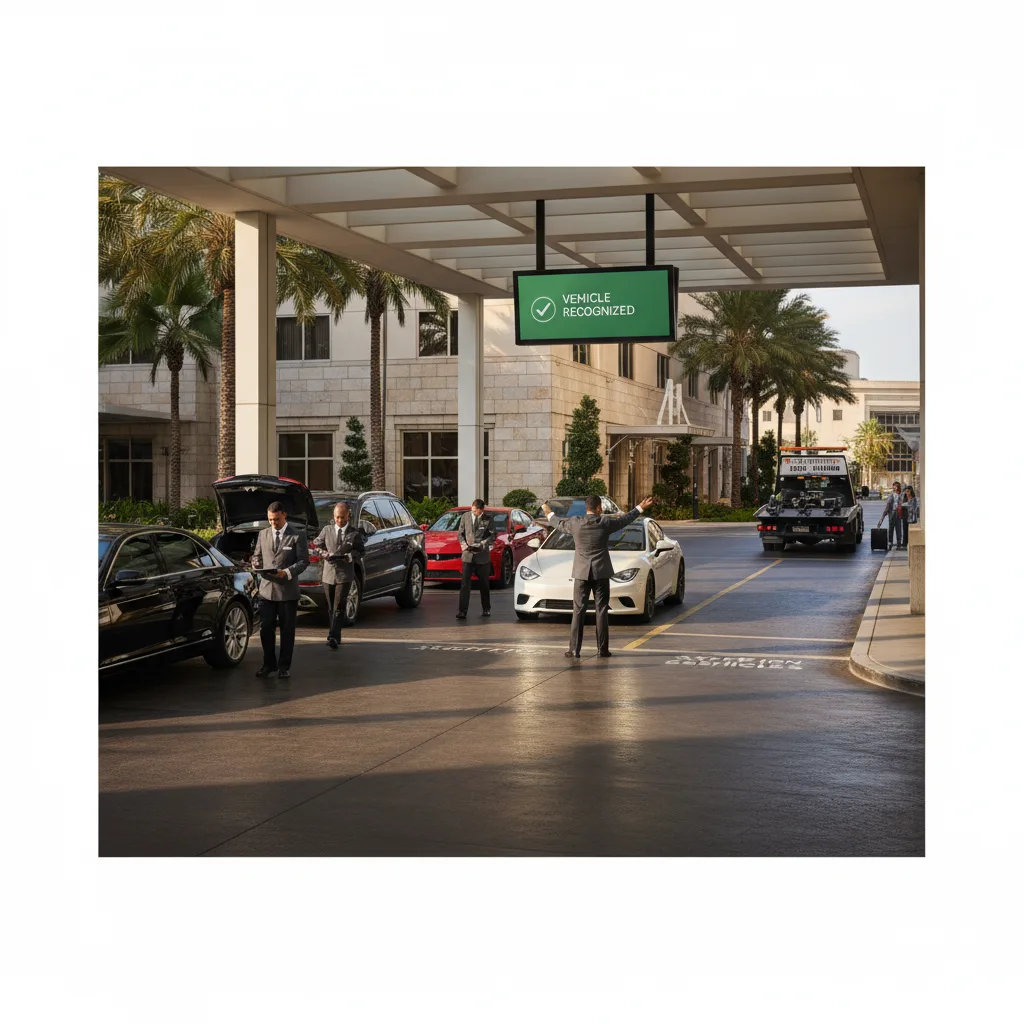
Direct answer: Design the arrival surge around a single vehicle record created at curbside, a clearly assigned key location, visible queue states, and an exception lane. Ticketless recognition helps only when the operating team agrees who owns each transition.
This guide is for hotel operators, valet owners, podium leads, runners, dispatchers, and guest-service teams and focuses specifically on managing hotel valet peak-arrival surges. Keep the scope narrow enough to test. Contracts, local rules, governing documents, and technical constraints still control the final implementation.
Why the current approach breaks
At peak arrival, attendants may write partial tickets, move keys before records are complete, and stack vehicles without a shared status. Retrieval problems later are created during the first ninety seconds of arrival.
Example: When three vehicles arrive together, the second car should not disappear into the garage before its key and vehicle record are linked. The podium lead should be able to see which arrival is waiting for intake, parking, or exception review.
Peak-arrival service blueprint
| Decision point | Evidence or control | Required response |
|---|---|---|
| Curb greeting | Confirm guest and vehicle; create the arrival record | Vehicle accepted or directed to exception lane |
| Condition and key intake | Record the agreed intake details and key identifier | Complete record before movement |
| Parking assignment | Dispatcher assigns destination and runner | Status changes from waiting to parked |
| Guest request and retrieval | Match request to vehicle, key, and runner | Handoff confirmed or incident escalated |
A practical operating sequence
- Step 1. Measure arrivals in fifteen-minute blocks before changing staffing.
- Step 2. Create one intake sequence that every attendant can complete under pressure.
- Step 3. Separate oversized vehicles, missing details, damage questions, and no-space situations from the normal lane.
- Step 4. Rehearse the surge with empty vehicles and a timed dispatch board.
For managing hotel valet peak-arrival surges, the named owner should document the approved rule, baseline, and result of each test. Acceptance evidence should come from real users and conditions. Treat the vendor demonstration as discovery, not final proof.
Exceptions that need a human decision
Condition disputes, lost keys, inaccessible parking areas, guest identity questions, and retrieval mismatches require a named supervisor path and a recorded outcome.
A correction, temporary approval, denial, or escalation should be visible in the record so a later reviewer can understand what happened.
How to test the workflow
Use one location or operating window first. Compare it with the pre-launch process and stop if the exception load grows.
- arrival-to-intake completion time
- vehicles waiting without a complete record
- key-location exceptions
- retrieval requests requiring manual search
- handoff incidents during peak windows
Record the starting value and review date beside every measure.
Verification before rollout
- Write the purpose and non-goals for managing hotel valet peak-arrival surges and name the accountable owner.
- Verify the process with the actual hotel operators, valet owners, podium leads, runners, dispatchers, and guest-service teams who will use, administer, or review it.
- Test a correction, an unavailable-system path, and the exception described on this page.
- Confirm current pricing, contract terms, support, integrations, and data handling directly with each provider.
- Use arrival-to-intake completion time as one acceptance signal and record what evidence can stop the rollout.
Related PLACA.AI planning resources
- valet operations knowledge hub
- ticketless valet system guide
- vehicle recognition for valet operations
Questions this page should answer
Does ticketless valet eliminate every physical identifier?
Not necessarily. Operators should choose the identifiers and backups that fit their key-control and guest-handoff process.
Where should a pilot begin?
Use one predictable arrival window and one podium team so the workflow can be observed and corrected.
What if the camera does not read a plate?
Create the vehicle record manually and continue through the same intake controls.
Map a hotel peak-arrival pilot
Bring the rules, current process, known exceptions, and success criteria for managing hotel valet peak-arrival surges. PLACA.AI can help evaluate a limited pilot without presuming that another property’s hardware or workflow is the right answer.
Editorial refresh: July 22, 2026. Before using this framework for managing hotel valet peak-arrival surges, independently confirm current product capabilities, third-party features, pricing, contracts, governing requirements, and local rules.
Data source: U.S. Department of Transportation