

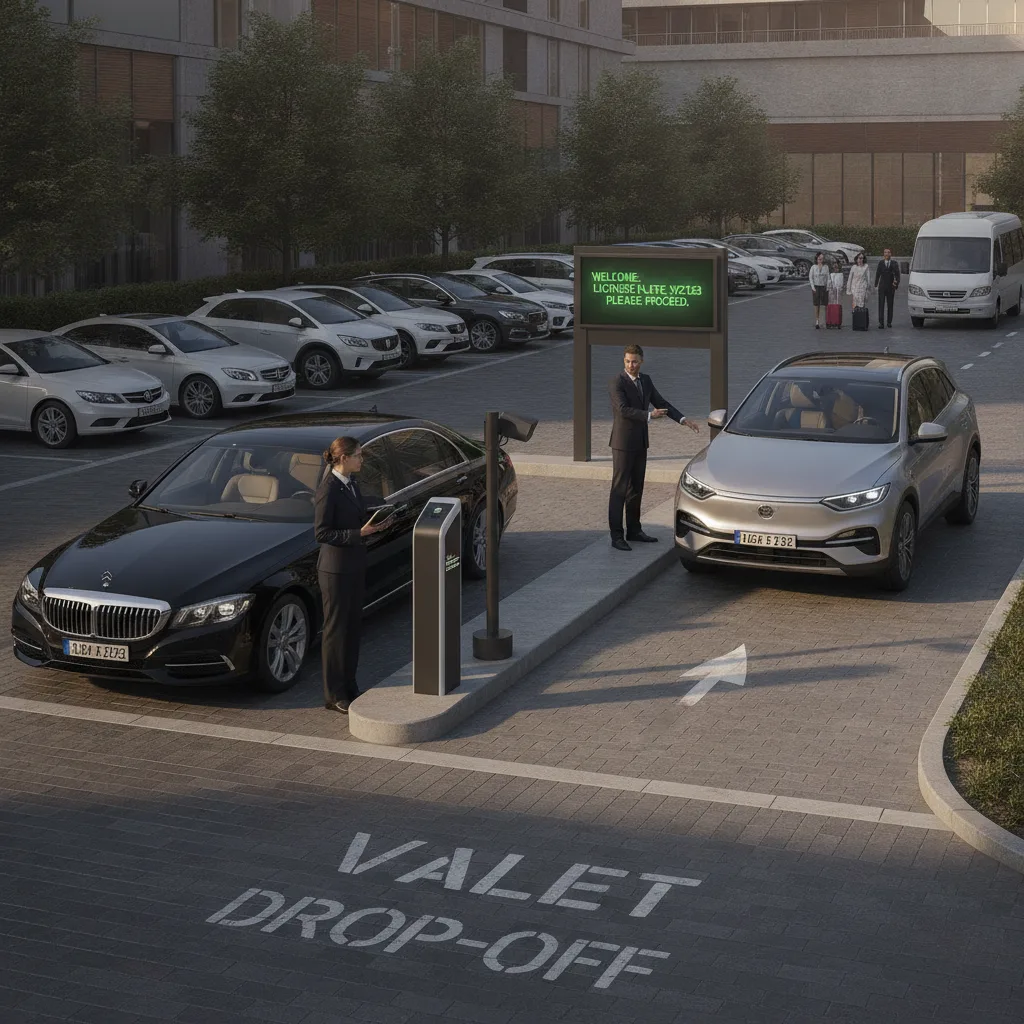
Direct answer: Replace paper tickets in stages: establish a trusted vehicle record, key-control location, guest request channel, runner assignment, identity check, and outage procedure before removing the paper fallback.
This guide is for hotel valet managers, front-office leaders, IT teams, runners, and guest-service staff and addresses moving a hotel valet operation from paper tickets to ticketless valet. The goal is a repeatable decision, not a generic technology recommendation.
Define the operating failure
A paper ticket may be inefficient, but it also provides a visible handoff token. Removing it before digital identity and outage controls are proven creates a new failure point.
Example: During check-in, staff create the vehicle record and key position. At retrieval, the guest request must resolve to the same vehicle and authorized recipient even if the original phone is unavailable.
Paper-to-ticketless transition map
| Decision point | Evidence or control | Required response |
|---|---|---|
| Arrival intake | vehicle, guest, damage note, key position | create one authoritative record |
| Claim method | phone, room context, or approved alternative | verify authorized requester |
| Runner dispatch | queue and named assignment | prevent duplicate action |
| Outage handling | offline lookup and supervisor approval | preserve controlled handoff |
Build the controlled workflow
- Step 1. Review arrival intake: vehicle, guest, damage note, key position; then create one authoritative record.
- Step 2. Review claim method: phone, room context, or approved alternative; then verify authorized requester.
- Step 3. Review runner dispatch: queue and named assignment; then prevent duplicate action.
- Step 4. Review outage handling: offline lookup and supervisor approval; then preserve controlled handoff.
Document the owner and outcome at every handoff.
Handle the exception
Keep a controlled fallback until the hotel has tested unavailable phones, unreadable plates, lost connectivity, guest corrections, and shift handoffs.
Correct the record, approve a bounded exception, deny under the documented rule, or escalate to the named authority; do not leave the case open-ended.
Run a bounded field test
Expand only when the failure cases are understood.
- arrivals captured without duplicate records
- retrievals matched to authorized guests
- key-location corrections
- outage handoffs completed safely
- paper exceptions remaining by reason
Define who counts each measure, the observation period, and the result that prevents expansion.
Acceptance checklist
- State the purpose and non-goals for moving a hotel valet operation from paper tickets to ticketless valet.
- Assign owners for the normal path, correction, exception, and final approval.
- Test live conditions with the people who administer and experience the workflow.
- Confirm contracts, pricing, integrations, support, data handling, and governing requirements independently.
- Retain the evidence needed to reproduce an approval, denial, correction, or escalation.
Related PLACA.AI planning resources
- valet operations knowledge hub
- ticketless valet system guide
- vehicle recognition for valet operations
Questions decision-makers ask
What should be approved first for moving a hotel valet operation from paper tickets to ticketless valet?
Approve the purpose, responsible owner, decision rule, required evidence, and exception path before selecting a broad rollout.
What should the pilot prove?
The pilot should reproduce the normal path and the exception described above, while collecting arrivals captured without duplicate records and the other named measures.
When should implementation stop?
Stop when the required evidence is unavailable, ownership is unclear, a serious exception has no safe route, or the actual result conflicts with the approved rule.
Plan a limited workflow review
Bring the current rule, process, exceptions, and success criteria for moving a hotel valet operation from paper tickets to ticketless valet. PLACA.AI can help evaluate a bounded pilot without assuming another property’s workflow is the right answer.
Editorial refresh: July 22, 2026. Independently confirm current product capabilities, third-party features, pricing, contracts, governing requirements, and local rules before acting.
Data source: U.S. Department of Transportation