

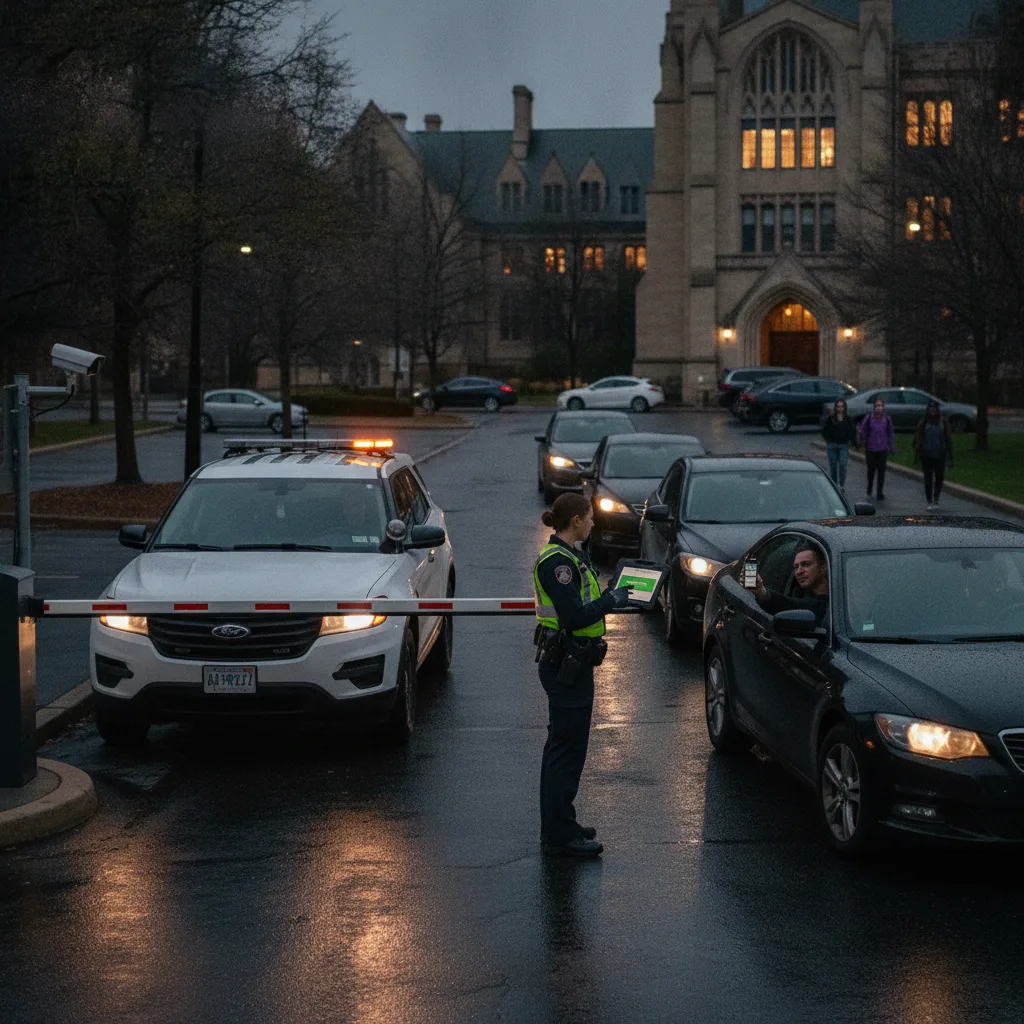
Short answer: Night patrol teams verify permits faster by scanning plates with mobile LPR instead of relying on a flashlight and a paper list, syncing the permit database before the shift starts (since there’s usually no property office open to call), and building a strict rule for what gets flagged for morning review instead of decided alone in the dark. Speed at night comes from removing the guesswork that low light and a solo patrol create — not from moving faster through checks that still need a second set of eyes.
Night shift is where permit verification is hardest and where mistakes are most likely, because the two things that normally back up a quick decision — good lighting and a person to call — are usually both missing.
What makes night verification different
A day-shift officer can walk up, read a sticker in daylight, and if something looks off, call the leasing office fifty feet away. A night patrol officer is often working alone, reading a faded hangtag under a streetlight or headlamp, on a property where the office closed hours ago and won’t answer a call until morning. Any workflow built for day shift and just handed to night patrol without changes will either slow the officer down badly or push them toward guessing.
Building a verification process that works without daylight or a live contact
Lead with the camera, not the eyes
A mobile LPR scan reads the plate itself rather than relying on the officer to correctly read a hangtag number in poor light. This matters more at night than at any other shift — a “4” and an “A” or a “0” and a “D” look a lot more alike under a sodium streetlight than they do at noon. The scan also keeps a photo record, so if a resident disputes the stop the next morning, there’s evidence of exactly what the camera saw and when.
Load the full permit list and the exception list before the shift, not during it
Because there’s no one to call for a same-night correction, the device needs everything it’s going to need for the whole shift synced before the officer leaves the vehicle: the current permit roster, any manager-flagged guest passes, and a list of open exceptions (new move-ins, recently issued temporary passes) with their expiration dates. A permit list that’s a day old is a much bigger risk overnight than during business hours, because there’s no fallback if it’s wrong.
Separate “no match” from “violation”
At night more than any other shift, a no-match result needs to default to documentation, not action. Vehicles get swapped, permits get issued same-day and not synced, and guests arrive late without a pass being entered yet. Build the workflow so a clean no-match logs a timestamped photo and location and queues it for the morning reviewer, rather than putting the decision to tow entirely on one officer standing alone in a dark lot at 2am.
The safety dimension nobody puts in the checklist
Verification speed on night patrol isn’t only about the software — it’s about how long an officer has to stand next to an unfamiliar vehicle in a low-visibility area. A scan-and-move workflow where the officer captures the plate from a normal walking distance and gets a result in a couple of seconds is safer than one that requires standing directly at the windshield squinting at a sticker. If your process has the officer lingering at the vehicle to manually search a list on a slow app, that’s a safety cost as much as a productivity one. Build in:
- A route plan so officers aren’t patrolling the same isolated area alone at the same predictable time every night.
- A check-in cadence with dispatch or a supervisor, independent of the permit-scanning workflow.
- A clear rule that any encounter with a person present overrides the permit check entirely — document and disengage rather than debate a tow decision at night.
What to log for the morning handoff
Night patrol rarely closes its own cases — it hands them to a day-shift supervisor or the property manager to review. Make the handoff simple: every flagged vehicle should carry a plate photo, a location note, a timestamp, and the specific reason it was flagged (no match, expired permit, unreadable plate, person present). A reviewer going through overnight flags in the morning should be able to make a call in seconds, not have to reconstruct what happened from a vague note.
Common night-shift verification mistakes
- Trusting a stale list because there’s no way to check it. If the list hasn’t synced, treat every no-match as unverified rather than confirmed, and flag it instead of acting on it.
- Manually retyping plates under bad lighting. This is where most read errors happen on any shift, and it’s worse at night. Scan it.
- Skipping documentation on “obvious” cases. The obvious 2am case is exactly the one most likely to get disputed the next day by someone who says they just forgot to move their car.
FAQ
Can mobile LPR read plates reliably in low light?
Modern mobile LPR tools are built to handle low-light and headlight-glare conditions reasonably well, but no camera performs like daylight. Pair the scan with a manual photo of the plate as backup documentation when the read confidence is low, rather than forcing a decision on an uncertain match.
Should a night patrol officer ever tow without any way to verify?
No. If the permit system is down and there’s no way to confirm status, the safer default is to document and flag for morning review rather than tow on an unverifiable basis.
How often should the permit list sync for overnight shifts?
As close to shift start as possible, and ideally again mid-shift if connectivity allows, since same-day permit changes made during the evening are the most common source of an overnight false no-match.
For more on building out the scanning layer itself, see our mobile LPR planning guide, and for how this fits into a broader towing enforcement setup, see our towing enforcement software guide. If you want help designing a night-shift-specific verification workflow, reach out and we’ll walk through it with you.
Data source: U.S. Department of Transportation