

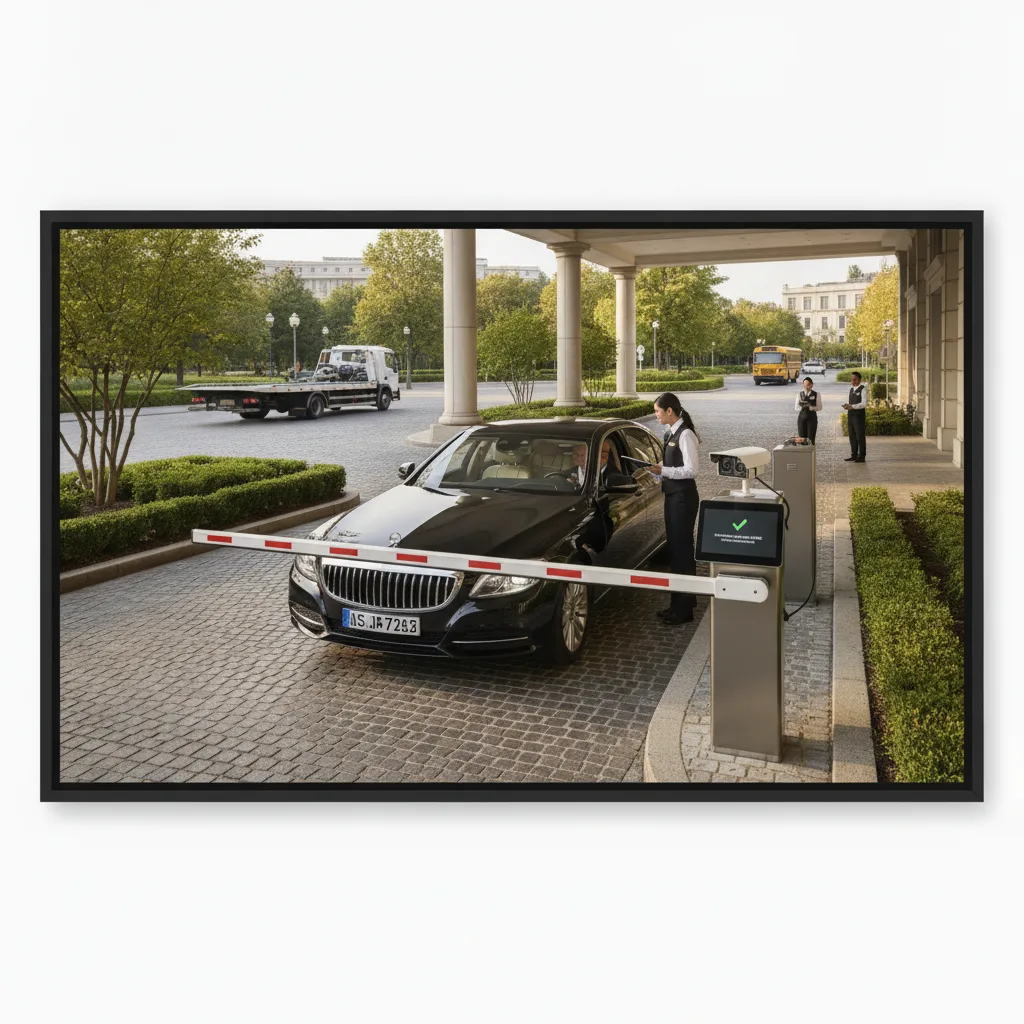
Direct answer: Venue parking managers track repeat VIP vehicles by tying vehicle recognition to that specific event’s credential list — season-ticket holders, sponsors, suite owners, artists, and production staff — rather than a permanent VIP roster, because at most venues “who counts as VIP” resets with every event. Ticketless vehicle recognition speeds up matching a car to the right access level at the gate; the venue still needs a clear process for building and expiring each event’s credential list.
Venue parking is structurally different from hotel, restaurant, or residential valet: you’re rarely serving the exact same 200 people night after night. A Tuesday concert and a Saturday playoff game can have almost entirely different VIP populations — different sponsors in the suite level, different artists’ tour vehicles, different season-ticket holders depending on the sport or series. “Repeat” at a venue usually means recognizing someone across multiple events over a season, not recognizing the same face every single night the way a restaurant would.
Why event-scoped credentials matter more than a permanent VIP list
A permanent, never-expiring VIP list is a liability at a venue for two reasons. First, access changes constantly — a sponsor’s parking allocation might be tied to a specific suite lease that ends at season’s end, a season-ticket holder’s VIP lot access might depend on their specific ticket package, and tour or production vehicles are only “VIP” for the run of that show. Second, a stale list creates a real security exposure: a vehicle that had backstage or VIP-lot access for one event shouldn’t retain that access automatically for an unrelated event just because it was recognized before.
The reliable pattern is to build the VIP/credentialed list fresh for each event (or each homestand, for season-ticket holders), tie every recognized plate to that specific event’s authorization, and let the credential expire automatically when the event or season window closes.
The three VIP populations venues actually manage
Season-ticket holders and premium members
These are the closest thing venues have to true “repeat” VIPs — the same vehicle showing up across a season’s worth of home games or performances. Their lot or level access is usually tied to a season package, so the credential should be scoped to the season or series, not left open-ended indefinitely.
Sponsors and suite holders
Corporate sponsors and suite lease holders often have designated parking that needs to match a list the venue’s sales or partnerships team maintains — and that list changes as sponsorship deals turn over. Vehicle recognition here is only as good as how current that list is; a lapsed sponsor whose plate still triggers VIP-lot access is both a revenue leak and a control problem.
Artists, talent, and production vehicles
For touring shows, this population changes with literally every event — different trucks, different tour vehicles, different artist transport. Recognition here is less about “repeat” tracking and more about fast, accurate credentialing for a one-time list handed off by the promoter or production manager, often with very tight security requirements around backstage or loading-dock access.
Building the gate-to-lot workflow
Match the plate to today’s event, not history alone
A plate recognized from a prior event should prompt a check against the current event’s active credential list — not an automatic grant of access based on the fact that the system has seen the car before. This keeps a sponsor whose contract lapsed, or a former season-ticket holder who didn’t renew, from retaining lot access they no longer have.
Keep the credential list synced with whoever owns it
Season-ticket and premium-seating credentials typically come from box office or ticketing; sponsor credentials from partnerships or sales; artist and production credentials from the promoter. Vehicle recognition is only useful if it’s checking against a list that’s actually current — build a simple update process (even a same-day upload before doors) rather than relying on a list from three events ago.
Route uncertain matches to a named person on shift
When a plate doesn’t clearly match the current event’s list — an unfamiliar car in a season-ticket holder’s usual spot, for instance — have one identified staff member with authority to verify and resolve it on the spot, rather than leaving gate staff to make judgment calls under pressure during a compressed arrival window.
FAQ
How is this different from a general parking access-control system?
Standard access control usually just checks whether a credential is valid. Vehicle recognition adds speed and a smoother arrival experience for the people you most want to fast-track — season-ticket holders, sponsors, and talent — without them needing to present anything at the gate.
Should season-ticket holder credentials carry over automatically to the next season?
No — renewal should be a deliberate step tied to the new season’s ticket package, not an automatic carryover, since packages, seating, and parking allocations often change year to year.
What’s the biggest risk of not scoping VIP credentials to a specific event?
Access creep — vehicles retaining elevated lot or backstage access from a past event or expired relationship, which is both a security concern and, for sponsor parking specifically, a lost-revenue issue.
For more on venue parking operations, see the valet operations knowledge hub, valet parking software for venues, and the ticketless valet system guide.
Streamline VIP and sponsor access at your venue
Talk to PLACA.AI about setting up event-scoped vehicle recognition for season-ticket holders, sponsors, and production credentials.
Data source: U.S. Department of Transportation