

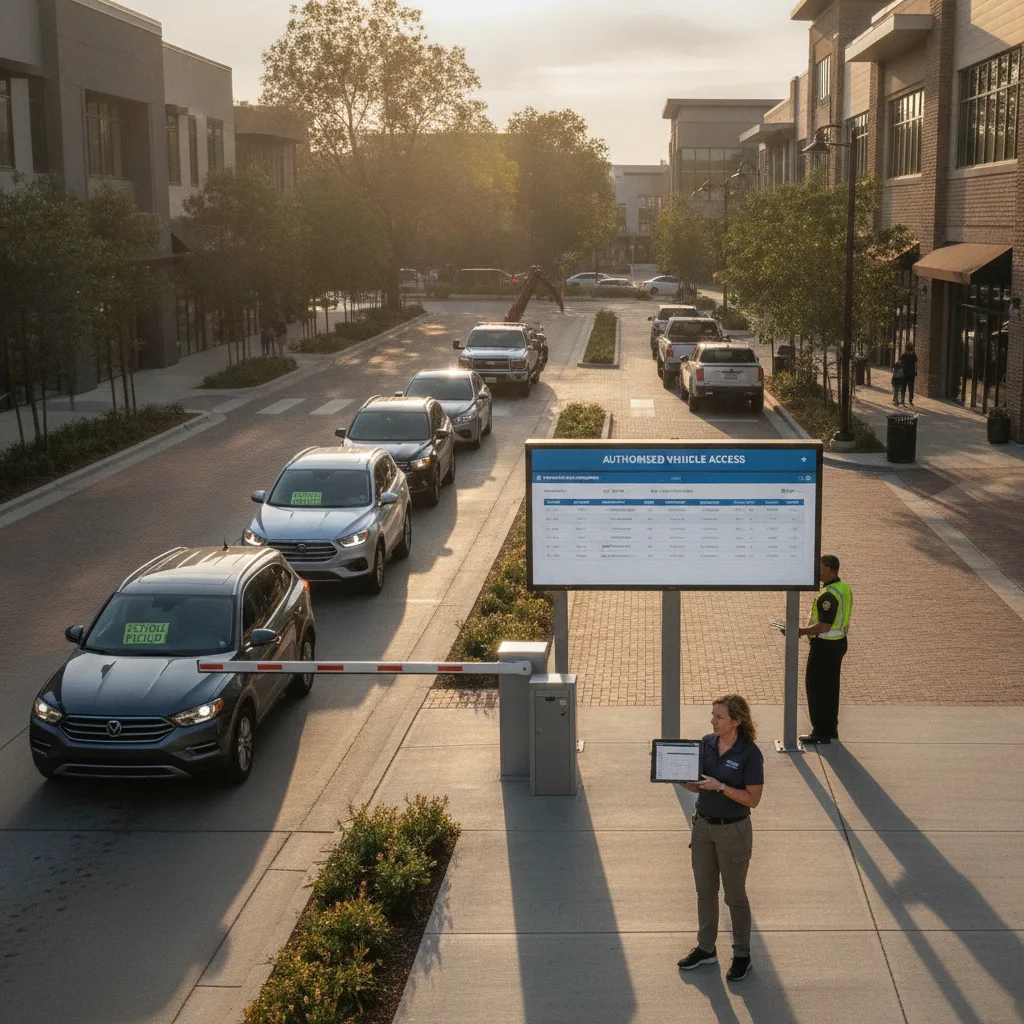
Direct answer: Move routine sessions to clear web or QR paths while retaining a dependable alternative for cash, device, accessibility, language, payment, and connectivity needs. Map each use type and validation source before reducing kiosk capacity. For reducing kiosk dependence at mixed-use properties, record the responsible owner, the accepted outcome, the reason for each correction, and the measured result for sessions completed off kiosk before expanding the process.
This guide is for mixed-use owners, parking operators, tenants, visitors, accessibility reviewers, and finance teams and addresses reducing kiosk dependence at mixed-use properties. The scope is deliberately narrow so the difficult cases can be tested before rollout.
Start with the failure
Removing kiosks can shift cost and confusion to guests or tenants when digital signs, rates, validation, and support are not aligned.
Example: A clinic visitor without a compatible phone still needs a way to identify the medical tenant, apply validation, and receive proof of parking.
Kiosk-dependence transition plan
| Decision point | Evidence or control | Required response |
|---|---|---|
| Demand study | transactions by use, payment, device, time | size alternatives |
| Digital route | property, tenant, zone, plate, payment | create session |
| Fallback | cash, accessibility, no signal, staff support | retain access |
| Reduction decision | usage, failures, support load, notice | change capacity |
Assign the handoffs
- Step 1. For demand study, verify transactions by use, payment, device, time and then size alternatives.
- Step 2. For digital route, verify property, tenant, zone, plate, payment and then create session.
- Step 3. For fallback, verify cash, accessibility, no signal, staff support and then retain access.
- Step 4. For reduction decision, verify usage, failures, support load, notice and then change capacity.
A reviewer should be able to reproduce the decision later.
When the normal path stops
Do not remove the only usable path for a protected, contracted, or materially affected user group.
Correct the record, approve a bounded exception, deny under the written rule, or escalate to the named authority; do not leave the case unresolved.
Field test
Run a limited test long enough to observe the recurring pattern and at least one correction or fallback.
- sessions completed off kiosk
- fallback usage by reason
- wrong-use selections
- support demand
- failed payments recovered
Define who counts each measure, the observation window, and the result that blocks expansion.
Proof before rollout
- State the purpose and non-goals for reducing kiosk dependence at mixed-use properties.
- Assign owners for the normal path, correction, exception, and final approval.
- Test live conditions with the people who administer and experience the workflow.
- Confirm contracts, pricing, support, integrations, data handling, and governing requirements independently.
- Retain enough evidence to reproduce each approval, denial, correction, or escalation.
Related PLACA.AI planning resources
Operational FAQs
What must be approved first for reducing kiosk dependence at mixed-use properties?
Approve the purpose, owner, evidence standard, decision rule, and exception path before scaling.
What should the pilot reproduce?
Test the normal process and the named exception while collecting sessions completed off kiosk and the other listed measures.
When should rollout stop?
Stop when ownership is unclear, required evidence is missing, a serious exception lacks a safe route, or the result conflicts with the approved rule.
Plan a limited workflow review
Bring the current rule, process, exceptions, and success criteria for reducing kiosk dependence at mixed-use properties. PLACA.AI can help evaluate a bounded pilot without assuming another property’s workflow is the right answer.
Editorial refresh: July 22, 2026. Independently confirm current product capabilities, third-party features, pricing, contracts, governing requirements, and local rules before acting.
Data source: U.S. Department of Transportation