

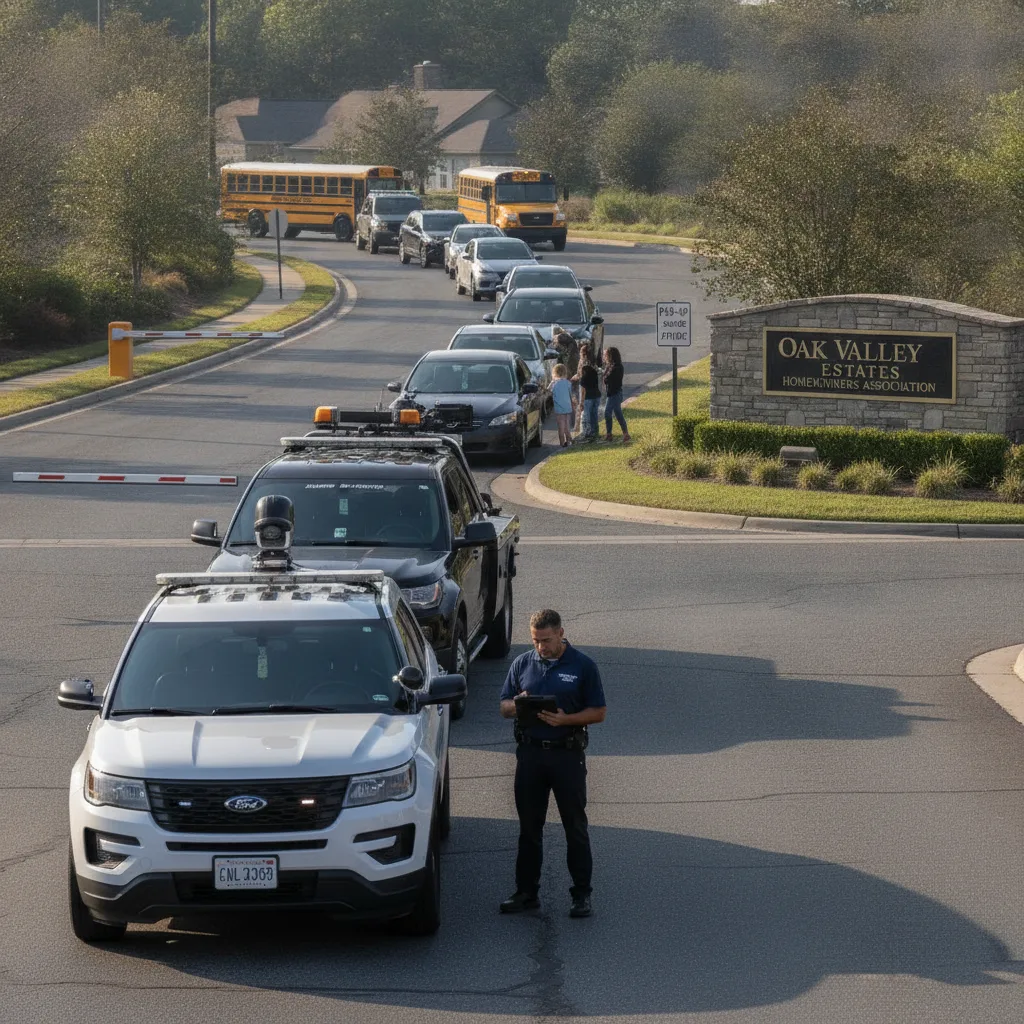
Short answer: HOA patrol operators prioritize high-risk lots by tracking which streets, guest lots, or amenity areas generate repeat board complaints and fire-lane or safety violations, and weighting patrol time there over quiet residential streets that rarely have an issue. In most communities, risk isn’t spread evenly across the property — it clusters around the clubhouse and pool during peak hours, a handful of narrow streets where overflow parking blocks access, and guest lots during holidays and events.
An HOA community is usually spread across a much larger footprint than a single commercial lot, and patrol staff or hours are almost always limited relative to that footprint. Deciding where to spend the next patrol pass matters as much as how fast any one check gets done.
Where risk actually concentrates in an HOA
- Fire lanes and emergency access routes. These carry safety and liability weight that a routine permit violation doesn’t, and they should always outrank a garden-variety expired-guest-pass case regardless of where either sits on a normal schedule.
- Narrow streets with limited curb space. Older or townhome-style communities with tight streets are where overflow parking most often blocks a lane down to one car width, creating both an access problem and the most common source of neighbor-to-neighbor complaints.
- Amenity lots during peak hours. Clubhouse and pool lots that are fine most of the day can overflow badly on weekend afternoons in season, pushing guest vehicles onto residential streets they’re not supposed to be on.
- Guest and overflow zones during predictable spikes. Holidays, graduation season, and community events reliably produce more vehicles than the designated guest area can hold.
Building a priority list the board will actually agree with
Separate safety issues from convenience issues
A blocked fire lane is not the same category of problem as an expired guest pass, and a priority system that treats them the same will either over-react to minor cases or under-react to genuinely dangerous ones. Give safety and access complaints an automatic top-priority flag that bypasses the normal ranking.
Use complaint history plus scan data, not just whichever resident calls the loudest
Board complaints are useful signal, but they skew toward whoever is most bothered on a given day, not necessarily the biggest actual problem. Pairing complaint history with mobile LPR scan data — which streets or lots keep showing repeat unregistered or no-match vehicles across multiple passes — gives a more balanced picture than complaints alone.
Plan ahead for predictable spikes instead of reacting after the fact
If the pool lot overflows every warm Saturday, or the guest lot fills every major holiday weekend, that’s not a surprise the second or third time it happens. Build a seasonal or recurring-event calendar into the patrol plan so those windows get extra coverage proactively, rather than the board hearing about it only after residents are already upset.
Managing a geographically spread-out patrol route
Unlike a single lot, an HOA community often means a patrol officer covering multiple streets, cul-de-sacs, and amenity areas on foot or by cart across a much wider area. A few practical adjustments help:
- Group the route by section so the officer isn’t backtracking across the community — high-priority sections get visited more often within an efficient loop, not as separate special trips.
- Rotate coverage timing on higher-risk streets so presence isn’t perfectly predictable to residents or guests who might otherwise time around it.
- Keep a simple log by street or section so patterns show up over weeks, not just from whichever complaint is freshest in memory.
What to report back to the board
Boards generally want two things from a prioritization system: evidence that enforcement effort is going where the actual problems are, and a documented reason when a specific street or resident asks why they got extra attention. A simple recurring report — which areas were flagged, why, and what happened — covers both without turning into a data project the board doesn’t have time to read.
FAQ
Should fire-lane and safety violations always come before permit violations?
Yes. Safety and emergency-access issues should be handled as an immediate priority regardless of where they’d otherwise rank, separate from the routine permit-priority list.
How do we handle a resident who complains that their street gets checked more often than others?
Show the underlying data — complaint volume and scan history for that street versus others — so the answer is based on evidence rather than perception.
How far in advance should we plan for predictable overflow events?
As soon as the community calendar is set for the season. Holidays and known high-attendance events are foreseeable, so build the extra coverage into the schedule rather than responding after residents start complaining.
For the underlying scanning workflow, see our mobile LPR planning guide, and for a broader look at enforcement software across property types, see our towing enforcement software guide. If your community wants help turning complaint and scan history into a documented priority system for the board, reach out.
Data source: Community Associations Institute