

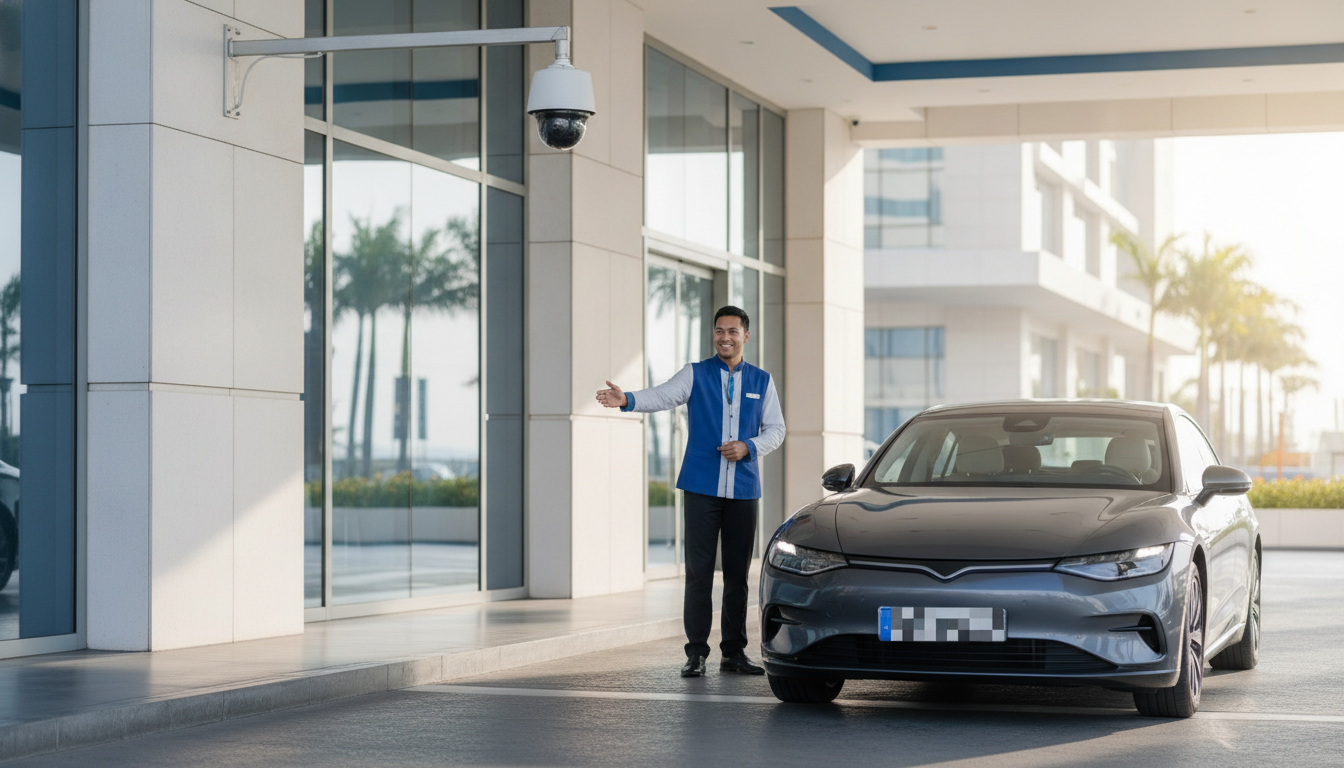
Direct answer: Moving an entire hospitality portfolio off paper valet tickets isn’t a single decision — it’s a phased rollout, property by property, with a standardized vendor evaluation, an IT integration plan for however your properties handle guest data, and a training program that works whether a property has five valet staff or fifty. Pilot at two or three representative properties first, prove the operational and cost case, then use that evidence to build the rollout plan for the rest of the portfolio.
Why this is a program, not a project
A single hotel switching from paper to ticketless valet is a straightforward operational change. A portfolio doing the same thing across a dozen, fifty, or hundreds of properties is a different kind of undertaking — it touches procurement (who’s the approved vendor, and under what contract terms), IT (how does this integrate with whatever property management or guest data systems you already run), and training (how do you get consistent execution from property staff who report to different general managers and may never interact with each other). Treating it as a single project that gets executed once and is done undersells how much coordination it actually takes to land well across diverse properties.
Structuring a portfolio-wide migration
1. Choose pilot properties that represent your real diversity, not your easiest case
Don’t pilot only at your newest, best-staffed flagship property — pick a mix that includes a higher-volume urban hotel, a resort with remote valet parking, and a smaller or older property with less existing infrastructure. What works cleanly at your flagship may reveal real gaps somewhere else in the portfolio, and you want to find those gaps during the pilot, not during full rollout.
2. Standardize the vendor and contract terms once, at the corporate level
Letting individual properties select and negotiate their own vendors leads to inconsistent capabilities, inconsistent data handling, and inconsistent pricing across the portfolio. Run vendor evaluation and contracting centrally, then let properties execute against a standard agreement — this also gives you real leverage in negotiation that a single property wouldn’t have on its own.
3. Define the IT integration requirement before you pilot, not after
Decide early whether plate-based guest identification should tie into your existing property management system for guest contact and stay information, or run as a standalone tool. Retrofitting integration after several properties have already gone live independently is considerably more work than defining the requirement up front and building the pilot around it.
4. Build a training program that doesn’t depend on corporate staff being on-site
You won’t have a corporate trainer physically present at every property’s go-live. Build training materials — a short video walkthrough, a one-page quick reference, a checklist for the property’s own GM or valet manager to run their team through — that a local team can execute themselves, with corporate available for support rather than required for every launch.
Sequencing the rollout
Once your pilot proves out, sequence the remaining properties in manageable waves rather than a single big-bang conversion across the whole portfolio at once. A reasonable approach: group properties by similarity (urban hotels together, resorts together, smaller properties together) and roll out wave by wave, incorporating lessons from each wave into the next. This also spreads out the support burden on whatever corporate team is managing the transition, rather than fielding launch-week issues from every property simultaneously.
What corporate should track during rollout
- Time to full adoption per property. How long does it take a newly converted property to stop relying on its paper fallback? Properties that take much longer than others may be surfacing a training or setup gap worth investigating.
- Staff-reported friction. Direct feedback from valet teams at converted properties tells you more about real-world usability than adoption metrics alone.
- Guest-facing issues. Complaints related to the new process (confusion, unreadable plates, retrieval delays) should be tracked centrally so patterns across properties are visible, not scattered across individual property logs.
- Cost and operational impact versus the pilot’s projections. Compare each wave’s actual results against what your pilot properties showed, and adjust the plan for later waves if reality diverges.
FAQ
How long should a realistic portfolio-wide rollout take?
This depends heavily on portfolio size and property diversity — there’s no single number that applies broadly. Building in a genuine pilot phase, followed by sequenced waves rather than a single conversion date, is what tends to produce a smoother rollout regardless of overall timeline.
Should smaller, franchise-operated properties in our portfolio follow the same process as corporate-owned ones?
The core standard (vendor, data handling, training materials) should be consistent, but franchise agreements may require the standard to be offered as a recommendation with contract-level backing rather than a mandate — check your specific franchise agreements.
What’s the most common reason a portfolio-wide rollout stalls?
Skipping the pilot phase or piloting only at an easy, well-resourced property — issues that would have surfaced in a representative pilot instead show up mid-rollout at properties with less bandwidth to absorb them.
See PLACA.AI’s valet parking software for hotels page, the ticketless valet system overview, and the valet parking knowledge hub for more on planning a rollout across multiple properties.
Planning a portfolio-wide move to ticketless valet? Talk to PLACA.AI about a phased rollout built for a multi-property operation.
Data source: U.S. Department of Transportation