

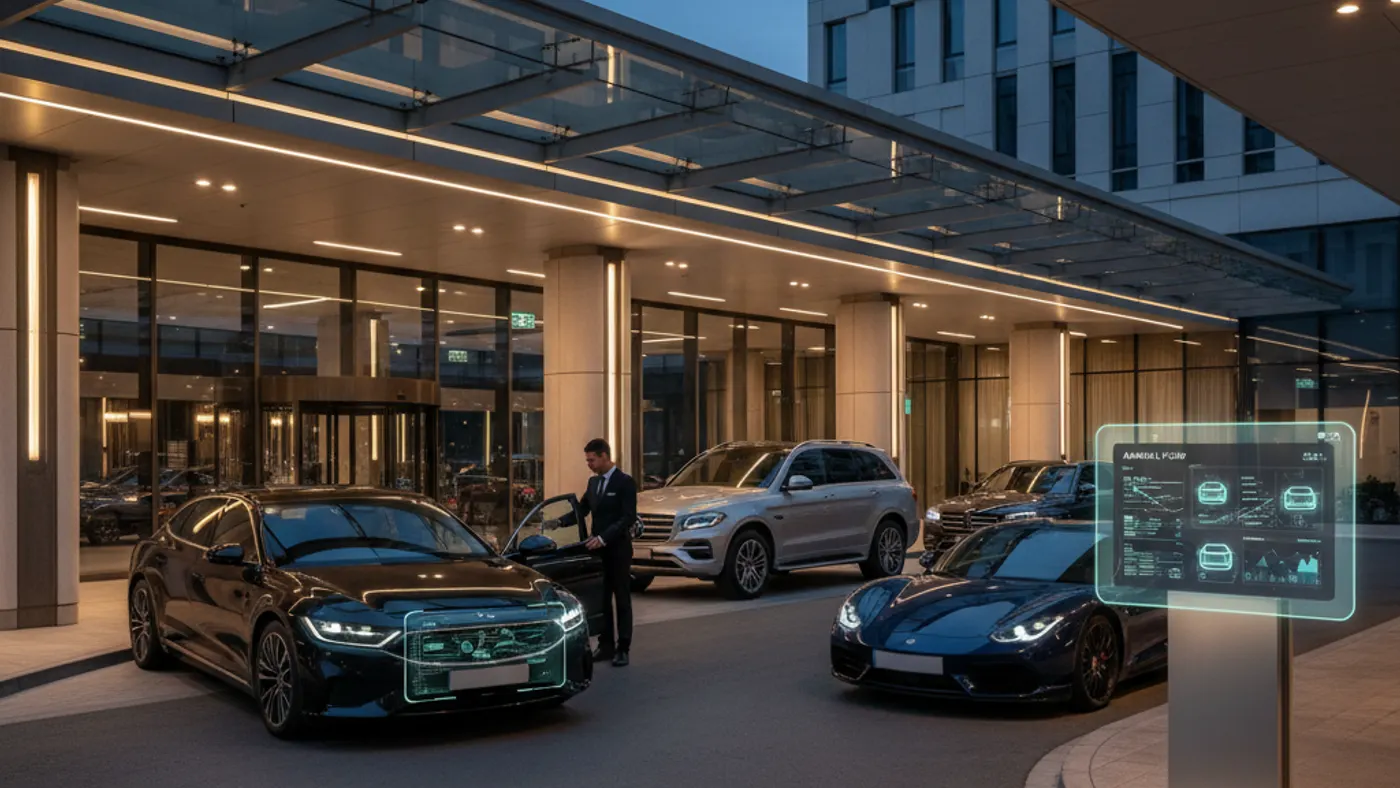
Direct answer: Event valet companies track repeat VIP vehicles by building a portable recognition profile that follows a repeat client’s VIP list across different venues, not a single property’s roster — because unlike a hotel or venue, an event valet company’s continuity comes from its recurring corporate accounts and event planners, not from any one site. Ticketless vehicle recognition lets your crew apply a client’s VIP list consistently whether you’re working a ballroom this weekend or a private estate the next, as long as the list is rebuilt and verified for each contract.
This is the piece that makes event valet staffing genuinely different from venue-based valet: a venue parking manager tracks VIPs for their own building across many different events, but an event valet company tracks VIPs across many different buildings for the same recurring clients — a corporate events team that books you quarterly, a wedding planner who uses your crew for every event they run, a nonprofit that hires you for its annual gala. The site changes constantly; the client relationship is what’s consistent.
Why “repeat VIP” means something different for a contracted valet company
You don’t own the property, so you can’t build a permanent VIP database tied to a location the way a hotel or residential building can. What you can build is a client-scoped profile: when a corporate account or event planner books you again, their previous event’s VIP list, staffing notes, and any vehicle-handling preferences (reserved spots for the executive team, a specific arrival sequence for a wedding party) can carry forward into the new event’s setup — adapted to whatever venue you’re working that night.
This matters most for the clients you work with repeatedly:
- Corporate accounts with recurring events. A company that books your crew for quarterly leadership events likely has the same handful of executives and board members who need fast, no-wait retrieval every time — regardless of which hotel ballroom or conference venue hosts that quarter’s event.
- Wedding and event planners with multiple bookings. A planner who uses your company across several weddings a season benefits from your crew already knowing how they like VIP handling structured — family cars up front, wedding party vehicles staged for a quick exit — without re-explaining it every time.
- Recurring nonprofit or association events. Annual galas and fundraisers often have the same major donors and board members attending year after year, even as the venue occasionally changes.
Building the workflow around the contract, not the building
Rebuild and verify the VIP list for every event
Even for a repeat client, don’t assume last event’s VIP list is still accurate — board members change, executives leave, guest lists get updated. Confirm the current list with the client’s event contact before the event, and treat it as fresh authorization for that specific night, not a standing record that persists indefinitely.
Separate venue logistics from client VIP data
Keep two distinct things straight: the venue’s own site constraints (curb layout, number of lanes, house rules) and the client’s VIP list and preferences. The first resets every event because the site changes; the second is what actually carries forward with a repeat client relationship.
Brief the crew on both layers before doors open
For a repeat client at a new venue, your pre-shift briefing needs to cover the unfamiliar site logistics and the familiar VIP handling expectations together — a crew member who knows “this client wants the board chair’s car staged first” still needs to know where the staging area actually is at tonight’s venue.
Handling the handoff when the crew changes night to night
Event valet companies often rotate crew members across bookings, which means the person who worked a repeat client’s last event might not be on shift for the next one. A system that ties VIP recognition to the client’s data — rather than to one runner’s memory of “the executives from last time” — is what actually makes the client relationship feel consistent to the guest, even when the staff working the curb are different people.
FAQ
Should we keep a permanent VIP database across all our clients?
Keep it organized by client account, with each event’s list treated as a fresh, verified version — not one indefinitely growing list. This avoids using stale information for a client whose leadership or guest list has changed since their last event.
What if a repeat client books a venue we’ve never worked before?
Treat the venue logistics as entirely new — walk the site, confirm curb lanes and staging areas — while carrying forward the client’s VIP list and handling preferences, which don’t depend on the building.
How do we handle a VIP guest the client didn’t list?
Have a documented escalation step — checking with the client’s on-site event contact — rather than a runner guessing based on how a guest is dressed or acts. This protects both the guest experience and your crew from an awkward misread.
For more on structuring event valet operations, see the valet operations knowledge hub, valet parking software for venues, and the ticketless valet system guide.
Deliver consistent VIP service across every venue you work
Talk to PLACA.AI about setting up ticketless vehicle recognition that travels with your recurring clients from event to event.
Data source: U.S. Department of Transportation