

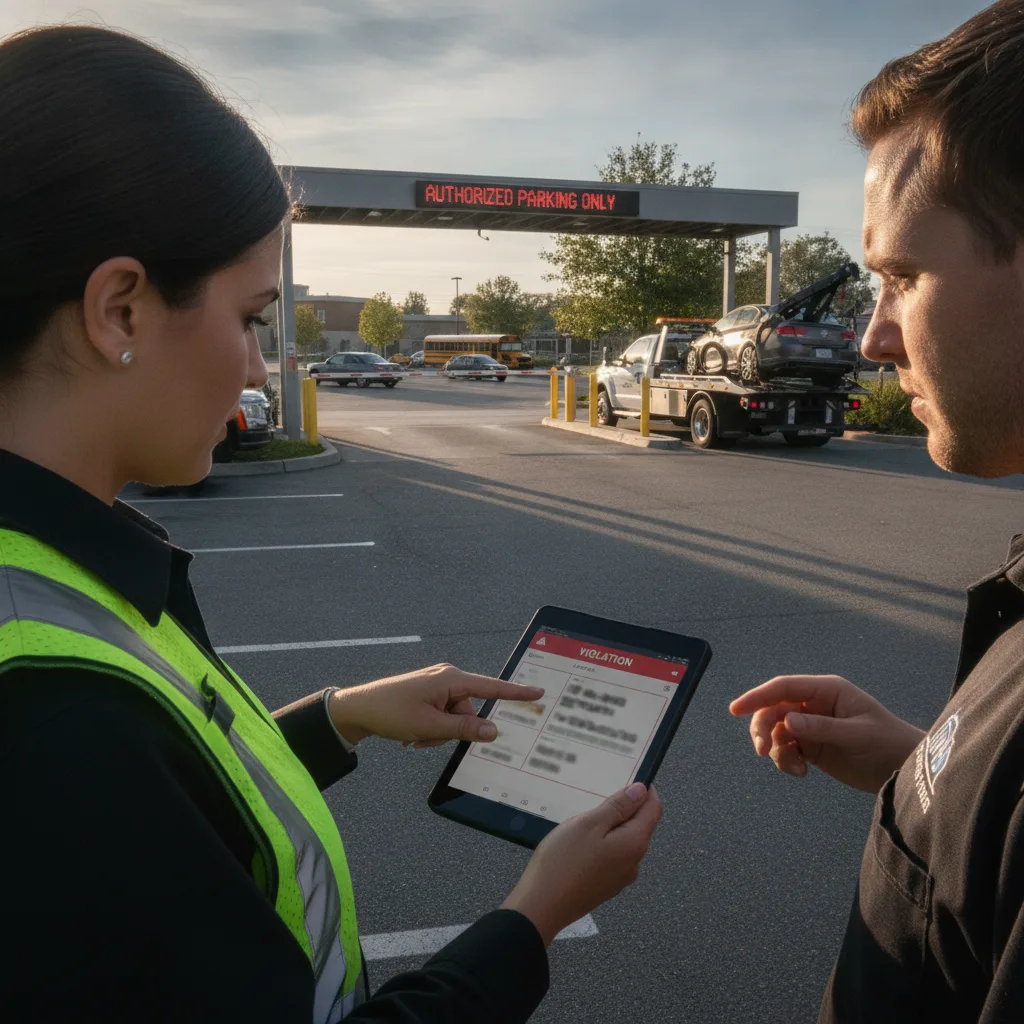
Training drivers on mobile LPR is really two trainings running at once: teaching the driver what the camera is telling them, and teaching the driver how to work with dispatch when the read and the situation on the ground don’t line up. For a tow dispatch manager, the second half is the one that actually determines whether the rollout works, because dispatch is the hub every flagged plate eventually routes through — not the driver alone.
Key Takeaways
- Train the dispatch handoff, not just the app — a driver who can read a flag but doesn’t know when to key up dispatch will still create disputes.
- Mobile LPR replaces manual plate-checking, but a human still confirms the match, and dispatch still confirms the tow order, before a truck is dispatched.
- Build training around the scenarios that actually reach a dispatcher’s desk: misreads, expired or transferred permits, and vehicles with no history in the system.
- Where local or state notification rules apply to nonconsensual tows, training has to cover who logs the notification and when — that’s usually a dispatch responsibility, not a driver one.
What Training Drivers Actually Involves
Training a driver on mobile LPR is not the same as training them to run a piece of hardware. The camera identifies the plate automatically; what the driver has to learn is what happens next — how to read a flag against an active work order, how to verify it against the vehicle in front of them, and how to get dispatch on the radio or in the app when something doesn’t match cleanly.
For a dispatch manager running multiple drivers across multiple lots or contracted properties, the practical goal is that every driver, on any shift, handles a flagged vehicle the same way — and that dispatch sees the same evidence trail regardless of which driver worked the call. That consistency has to be built into training explicitly. It doesn’t happen just because the technology is doing the plate reads.
The Core Operational Problem
The recurring issue isn’t whether a driver can operate the app. It’s whether the driver and dispatch are working from the same rule for what counts as a confirmed match versus an exception that needs a second set of eyes. If a driver doesn’t trust the flag, they either ignore violations that should be towed or escalate ones that shouldn’t be — and either way, dispatch ends up fielding a call that never needed to happen.
Before training starts, write the escalation rule in plain language and make it the same document dispatch uses to open a ticket: what counts as a confirmed match, what counts as an exception, who the driver contacts (by name or role, not just “dispatch”), and what gets logged in the dispatch software either way. Training should teach that rule directly, using the same terms the CAD or dispatch ticketing system uses, so a driver’s radio call and the resulting ticket describe the same event.
How Vehicle Recognition Helps
Mobile LPR removes the manual step of typing plates or comparing decals by hand — the camera reads every plate the patrol vehicle passes and checks it against permits, registered vehicles, and violation history automatically. That frees the driver to focus on the small number of vehicles that actually need a decision, instead of processing every vehicle on the lot by hand.
From dispatch’s side, the value is a shared, timestamped record: every flag, match, and driver action lands in the same system a dispatcher can see in real time, instead of living only in a driver’s memory or a paper log that reaches the office at the end of a shift. A good training program treats the system as a shared source of truth that both the driver and dispatch work from, not a black box the driver alone interprets.
Decision Framework
| Question | Why it matters | Useful metric |
|---|---|---|
| Does the driver know what triggers a flag, and does dispatch see the same flag? | Prevents both over- and under-enforcement, and keeps the dispatch ticket matching the driver’s account. | Correct flag response rate |
| Does the driver know when to key up dispatch instead of acting alone? | Keeps disputed or ambiguous cases in dispatch’s hands, where there’s time to check the work order. | Escalations per shift |
| Can the driver document an exception in a way dispatch can act on immediately? | Protects the company and speeds up any required notification to police or the property. | Complete exception records |
| How long until a new driver works a route without dispatch double-checking every call? | Shows whether training actually transfers under real dispatch load. | Time to first solo shift |
Implementation Best Practices
Start training with a single, narrow scenario — one lot with a known, stable set of registered vehicles — before putting a new driver on a multi-stop route juggling several active tow orders at once. A narrow first scenario keeps dispatch’s workload low while the driver is still building judgment, and it makes it easier to catch mistakes before they turn into a disputed tow.
Pair the technical walkthrough with a dispatch-side walkthrough: have the new driver sit with a dispatcher for at least one shift and watch how a flagged plate becomes a ticket, gets assigned, and gets closed out. A driver who understands the camera but has never seen how dispatch processes their call will still make inconsistent decisions about when to escalate.
What This Looks Like in the Field
A well-trained driver sees a flagged vehicle, checks the match against what they’re looking at, and either proceeds under the standing tow order or keys up dispatch according to the rule they were trained on — without guessing, and without dispatch having to reconstruct the situation from a vague radio call. The dispatcher reviewing the ticket later sees the same evidence the driver saw: plate, time, location, and match status, tied to a specific work order.
New drivers should shadow an experienced driver, and sit in with dispatch, long enough to see a real misread, a real permit exception, and a real escalation handled start to finish before working a route alone. Those three scenarios cover most of what actually generates a call to dispatch in the field.
Rollout Checklist
Start training design with a written policy review, done jointly with dispatch leadership: confirm what counts as a match, what counts as an exception, who the driver contacts by name or role, and what gets logged in the dispatch system either way.
- Document the exact scenarios new drivers need to handle in their first month, using real tickets from the dispatch log where possible.
- Build a short ride-along period into onboarding, including time observing the dispatch desk, before solo shifts begin.
- Create a one-page reference for flag types and the required driver action and dispatch contact for each.
- Review real flagged events with new drivers weekly during their first month, using the dispatch ticket as the record of what happened.
- Expand training material as new edge cases show up in the dispatch queue.
Judge the training program by what shows up in dispatch’s queue, not by completion of a training module. Fewer ambiguous escalation calls, faster time to independent shifts, and cleaner tickets all matter more than whether a driver passed an onboarding quiz.
Measurement Plan
Pick a few numbers before rollout: time to first solo shift, disputed tows per new driver in their first month, and how often a driver’s radio call matches what ends up in the dispatch ticket. Review these weekly for new hires during their first month, since that’s when gaps between what a driver reports and what dispatch records show up fastest.
After the first month, monthly review is usually enough, unless a new type of flag, exception, or a change to a client property’s tow policy starts generating calls that current training doesn’t cover.
Privacy, Fairness, and Trust
Drivers should understand what data the system captures and why — plate, time, location, and match status — so they can explain it to a vehicle owner if asked, and so dispatch can answer the same question consistently if a call comes into the office later. Training should be explicit that the system supports a decision; it doesn’t make the decision unaccountable, and dispatch remains the point where a disputed call gets resolved.
Fairness also depends on consistent training across shifts. If one driver was never shown how to handle a permit exception the way dispatch expects it documented, that driver will generate different tickets than a peer who was — and dispatch will have a harder time defending the tow if it’s disputed later.
Common Mistakes to Avoid
The first mistake is training only on the app interface and skipping the dispatch handoff — drivers end up technically competent but inconsistent about when to call in. The second mistake is putting a new driver on a full solo route, covering several client properties, before they’ve seen a real exception handled by an experienced driver and a dispatcher together. The third mistake is treating the escalation policy as fixed once it’s written, instead of updating it when a new type of flag or dispute starts showing up in the dispatch log.
Finally, don’t treat training as a one-time event. The most reliable dispatch operations review a handful of real flagged events with drivers on a regular cadence — often pulled straight from the week’s tickets — not just during onboarding week.
Related Resources
For a commercial overview, see PLACA.AI’s parking enforcement software for towing companies. You can also compare PLACA.AI as a Towbook alternative or review the PLACA.AI vs. PatrolWorks comparison.
Field Questions Operators Ask
What should dispatch managers confirm before training drivers on mobile LPR?
Confirm what counts as a confirmed match, what counts as an exception, who the driver contacts by name or role, and what data gets logged in the dispatch system for every flagged event before a new driver works a route solo.
What is the most useful first training scenario?
A single lot with a known, stable set of registered vehicles and one active tow order type. Starting there keeps dispatch’s workload low while a new driver builds confidence, before they’re juggling several client properties on one route.
What questions do new drivers usually ask about mobile LPR?
New drivers usually ask what happens when a plate is misread, how to handle a vehicle with no history in the system, when to key up dispatch instead of acting alone, and how their calls are reviewed against the dispatch ticket afterward.
How long should a new driver shadow before working solo?
Long enough to see a real misread, a real permit exception, and a real escalation worked through with dispatch — usually a handful of shifts, though the exact number depends on how often those scenarios come up on a given route and how many client properties the driver will cover.
What does PLACA.AI recommend as the safest training approach?
A short ride-along period that includes time at the dispatch desk, a one-page reference for common flag types and who to contact for each, and a weekly review of real flagged events with new drivers during their first month.
What is a useful way to check whether training worked?
Compare a new driver’s disputed-tow rate and how closely their radio calls match the resulting dispatch ticket, against an experienced driver’s on the same route. Large gaps usually point to a training issue rather than a driver issue.
How should exceptions be handled during training?
New drivers should see exceptions worked through in real time by an experienced driver and a dispatcher together before handling one alone, and every exception should generate a ticket the same way regardless of who is on shift.
Which metrics show training is working?
Fewer disputed tows among new drivers, faster time to independent shifts, tickets that match the driver’s account of what happened, and fewer escalation calls that turn out to be unnecessary once dispatch checks the work order.
When should a team revisit its training program?
Whenever a new type of flag, exception, or dispute starts showing up in the dispatch queue that current training doesn’t cover, or when disputed-tow rates start rising among recently trained drivers.
Train Your Team on Mobile LPR
If your dispatch team is rolling out mobile LPR, PLACA.AI can help build the training sequence, escalation policy, and driver reference materials before you roll it out — on a live demo with your own fleet and routes.
Data source: U.S. Department of Transportation