

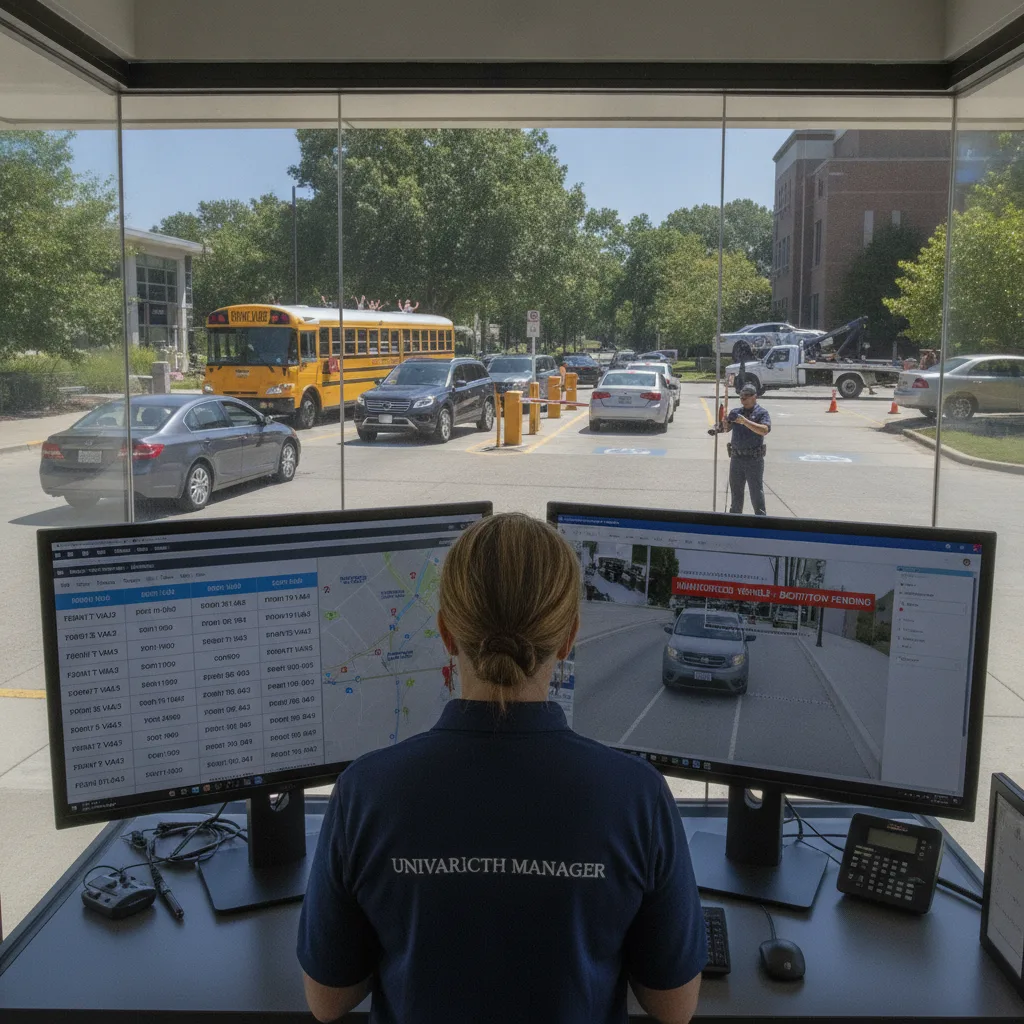
Direct answer: For a dispatch manager juggling multiple trucks, drivers, and property contracts, the real comparison isn’t which app scans plates better — it’s which platform turns a field observation into a complete, dispatch-ready work order without your team having to chase down missing information before a truck can roll. Score both finalists on how cleanly a case moves from patrol capture to driver assignment to invoice, and how well cancellations and disputes stay traceable across that whole chain.
This is written for tow dispatch managers running a fleet across several property clients — HOAs, apartment communities, retail lots — plus the drivers and property contacts on the other end of each call.
The dispatch manager’s actual problem
Patrol and LPR tools are usually evaluated from the officer’s side: does it scan fast, does it work in bad light. From dispatch, the question is different: when a case lands in the queue, is it actually ready to assign a truck to, or does someone have to call the property, confirm the rule, check whether the vehicle’s permit changed, and fill in gaps before a driver can be sent? Every one of those extra steps costs time and adds the risk of dispatching a truck that shouldn’t have gone out.
What to compare across finalists
Case completeness on arrival
Pull a sample of cases from each platform’s trial period and check whether each one arrived with everything a driver needs: property and client identifier, the specific rule violated, location within the lot, photo evidence, and current permit status — versus cases missing one of those that need a phone call to fill in.
Client-specific rules across a portfolio
If you serve multiple properties, each with different rules, hours, and tow-authorization contacts, confirm the platform keeps those separate and applies the right one automatically based on which property the case came from, rather than relying on a dispatcher to remember which client allows same-day tows versus requiring a 24-hour notice.
Driver assignment and routing
Check how a case moves from the queue to a specific driver: does the app suggest the nearest available truck, does it let you reassign quickly if a driver is tied up, and does the driver’s app show the same evidence the patrol officer captured, so they’re not driving out blind.
Cancellations and last-minute corrections
A resident pays before the truck arrives, or a property manager calls to stop a tow. Confirm the platform records who cancelled it, when, and why, and that this shows up clearly if the client or vehicle owner later disputes the incident, rather than buried in a note field nobody checks.
Client billing and reporting
If you invoice clients per tow or per patrol hour, check how easily the platform ties a completed case to the billing record, and whether a client asking why a vehicle was towed can be answered by pulling one case file rather than reconstructing it from separate systems.
A dispatch-focused trial
Run both finalists through a normal week of real cases across at least two or three different client properties and measure:
- Percentage of cases that arrived dispatch-ready without a follow-up call
- Average time from case creation to truck assignment
- How many cancellations were fully traceable — who, when, why — after the fact
- Whether client-specific rules were applied correctly without manual dispatcher intervention
- How fast you could produce a complete file if a client or vehicle owner disputed a specific tow
The dispatcher’s time saved per case, multiplied across a full week, is usually the biggest real cost difference between platforms — more than any per-seat pricing gap.
Where dispatch should hold a case instead of assigning it
Set a clear rule: if the permit status looks stale, if the property’s authorization contact hasn’t confirmed, or if there’s any indication the vehicle owner is already on-site or moving the car, hold the case for a quick check rather than sending a truck. A cancelled dispatch after the truck rolls costs more — in time, fuel, and client goodwill — than a short hold before assignment.
FAQ
How many properties should we include in the trial?
At least two or three with genuinely different rule sets. A single property’s trial won’t show how well the platform handles the portfolio-level complexity that’s actually the job.
What’s the minimum a case needs before a truck should be dispatched?
Property and rule identification, location and photo evidence, current permit status, and a named authorization — whether that’s the patrol officer’s own authority under the contract or a specific property contact’s sign-off.
How should cancelled or contested tows be tracked?
As a first-class part of the case record, with who initiated the cancellation, the reason, and the timestamp, not as an afterthought your team can only reconstruct from memory.
Running dispatch across a growing client list gets easier with a system that keeps every case portfolio-aware from the first capture. See how towing enforcement software supports multi-property dispatch or explore mobile LPR built to feed a dispatch queue, then book a demo to walk through your actual client mix.
Data source: U.S. Department of Transportation