

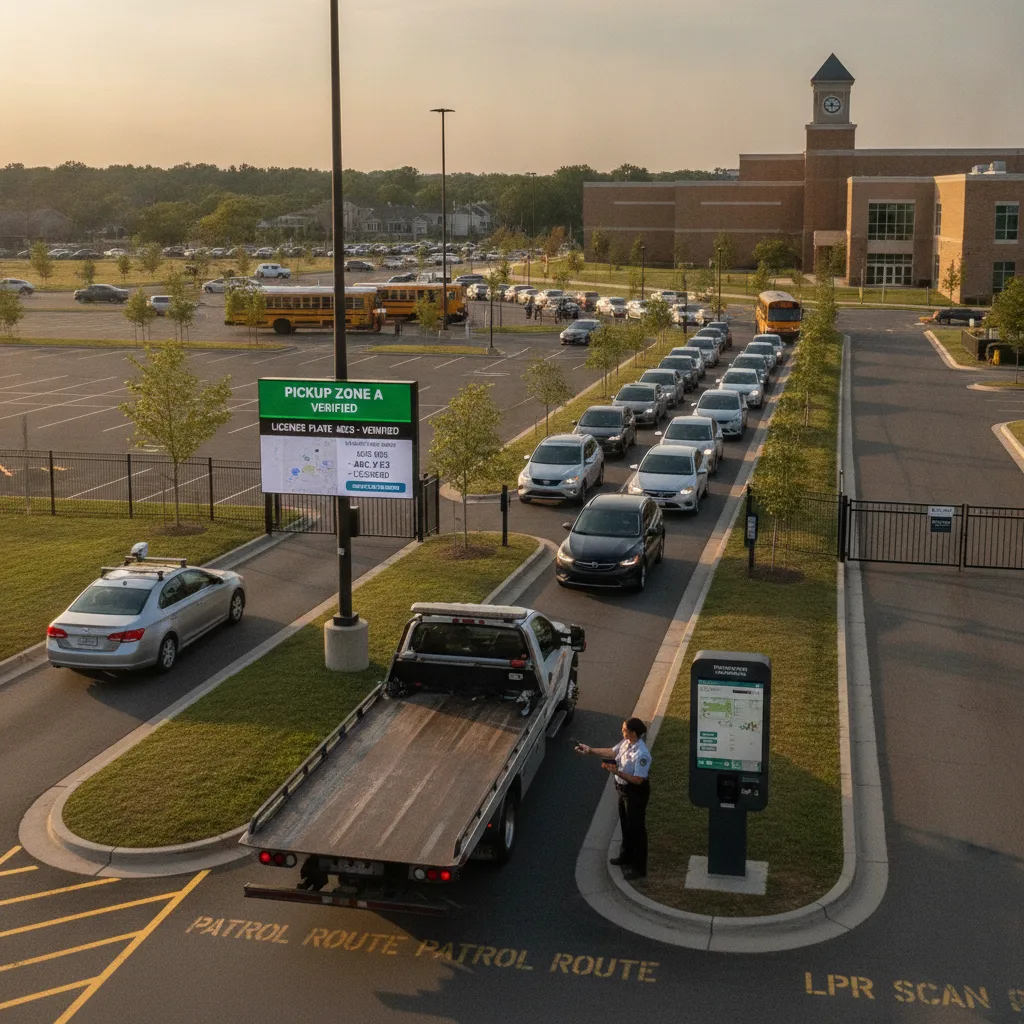
How Repo and Tow Operators Can Compare Patrol Software Workflows With Mobile LPR Workflows
Direct answer: Repo and tow operators are comparing two different tools for two different jobs. Patrol software is built to log and schedule rounds on a property you already have rights to enforce — lot checks, permit sweeps, route completion. Mobile LPR is built to identify a specific vehicle, by plate, against a list — a permit roster on the private-property side, or a lienholder’s recovery order on the repossession side. Most operators end up running both, not choosing one.
Key Takeaways
- Patrol software answers “did we cover the route”; mobile LPR answers “is this specific vehicle one we’re looking for.”
- Repossession work runs on legal constraints that parking enforcement doesn’t: breach-of-peace rules, state recovery-agent licensing or bonding, and the accuracy of the lienholder’s order.
- Plate hits from mobile LPR feed differently into each workflow — a permit sweep closes out locally, a recovery hit has to be verified against a live order before anyone approaches the vehicle.
- Operators who do both private-property towing and repossession recovery usually need the two workflows to stay separate, even on the same truck.
Two Different Jobs Wearing the Same Camera
“Patrol software” usually means a route or checklist tool: it tracks which lots or lanes a driver covered, timestamps the pass, and gives a manager a record that the property was checked on schedule. It doesn’t identify anything on its own — a driver still has to notice a violation, note it, and act.
Mobile LPR changes what happens during that same drive-through: the camera reads every plate and checks it automatically against whatever list matters for that property or that job — a resident and guest permit roster for a parking enforcement pass, or a hot list of vehicles under an active recovery order for a repossession run. The route coverage question and the vehicle identification question are related but not the same, and conflating them is where a lot of operators get the comparison wrong.
Where the Two Sides of This Business Diverge
For a private-property towing or parking-enforcement pass, the operating question is usually permit status: is this vehicle authorized in this lot right now. The evidence bar is set by the property’s posted policy and, in many states, by statutory requirements around notice and documentation before a nonconsensual tow — California’s Vehicle Code 22658, for example, requires specific notification and evidence steps before a private-property tow can proceed, and other states have their own versions of the same idea.
For repossession recovery, the operating question is different: is this the exact vehicle named on a lienholder’s recovery order, and can the agent take it without a breach of the peace. Self-help repossession under UCC Article 9 lets a secured creditor recover collateral without going to court, but only up to the point someone objects — if the debtor or anyone present objects, the agent has to stop. Many states also require recovery agents to be licensed or bonded, separate from any towing license the same company may hold for its private-property work. A plate match from mobile LPR is useful evidence in both jobs, but what happens after the match is governed by two different rulebooks.
How Mobile LPR Fits Into Each Workflow
On the parking-enforcement side, a plate hit against the permit roster is usually the end of the identification step — the driver confirms the vehicle, checks for a posted exception, and either logs a warning or proceeds under the property’s tow policy. The record needed afterward is mostly local: photos, time, location, and the notice history for that vehicle.
On the recovery side, a plate hit against a hot list is the start of a verification step, not the end of one. Recovery-industry LPR data is often shared across a network — national vendors like Digital Recognition Network (DRN) and MVTRAC aggregate plate captures from many agents and feed matches back against active orders — so a hit has to be checked against the current, still-open order before an agent approaches the vehicle. Orders get recalled when a borrower cures the default or a lender pulls the file, and acting on a stale hit is a liability problem, not just an operational one.
Decision Framework
| Question | Why it matters | Useful metric |
|---|---|---|
| Is the job route coverage, vehicle identification, or both? | Determines whether patrol software alone is enough or mobile LPR is doing real work. | Flags requiring action per pass |
| Is the vehicle order still active? | Prevents recovery attempts on cured, recalled, or disputed accounts. | Stale-order hit rate |
| Does the driver or agent have the licensing this specific job requires? | Repossession agents often need separate state licensing or bonding from a towing license. | Compliance audit findings |
| What happens if someone objects at the scene? | Breach-of-peace rules mean the agent has to stand down, unlike most parking-enforcement stops. | Aborted recovery attempts logged |
Implementation Best Practices
If your operation runs both lines of business, keep the workflows separate even when the hardware is shared. A driver doing a permit sweep should not be the same pass that’s also checking recovery hot lists unless the roles, training, and documentation for each are kept distinct — the evidence standard and legal exposure are different enough that blending them creates confusion about which rulebook applied to a given stop.
Start any new mobile LPR rollout with the narrower of the two jobs first. A permit-enforcement pilot on one lot is lower-stakes than a recovery pilot, because a misread permit flag is a disputed tow; a misread recovery flag is a stop at the wrong vehicle, which is a different order of problem.
Industry-Specific Examples
A repo and tow operator running both services might use mobile LPR two ways on the same fleet: during the day, patrol passes on contracted lots check permits and flag repeat violators for the property manager; separately, a recovery agent runs assigned routes checking active orders against a hot list synced from the lender or a data vendor. The systems can share the same camera hardware, but the resulting record — who reviewed the hit, what happened next, and under what authority — needs to stay separate because a lienholder’s file and a property’s tow log get audited differently.
Rollout Checklist
Before comparing tools, write down which job each workflow is actually solving. A strong rollout starts with a written policy review that names the responsible staff member for each line of business, the escalation path, and the specific legal requirements — state licensing, notification timing, breach-of-peace protocol — that apply to that job and not the other.
- Separate the permit-enforcement workflow from the recovery workflow in writing, even if the same drivers run both.
- Confirm state licensing or bonding requirements for any staff performing repossession recovery.
- Set a rule for how often recovery hot lists sync, so drivers aren’t acting on stale orders.
- Train staff on the breach-of-peace stop condition separately from the parking-enforcement escalation rule.
- Run a limited pilot on each workflow before expanding either one fleet-wide.
Judge each workflow by its own outcomes. A permit-enforcement pilot should be judged on disputed-tow rate and review time; a recovery pilot should be judged on verified-order accuracy and aborted-attempt handling, not on total scan volume.
Measurement Plan
For the parking-enforcement side, track disputed tows, incomplete evidence records, and repeat-violator patterns. For the recovery side, track stale-order hits caught before an approach, aborted attempts logged with a reason, and time between a lender’s order update and it reaching the field list. Review both sets weekly during the first month of any rollout, since that’s when list-sync gaps and unclear ownership tend to surface.
Privacy, Fairness, and Trust
Recovery-industry plate data is more heavily scrutinized than routine parking-enforcement logs, partly because national LPR networks aggregate captures across many operators and jurisdictions. Operators should know what their data vendor does with captures that don’t match an active order, how long that data is retained, and whether captures are shared beyond the specific recovery use case. On the parking-enforcement side, the same discipline applies at a smaller scale: keep the retention and access rules for permit and violation data limited to what the property’s policy actually requires.
Common Mistakes to Avoid
The first mistake is treating a recovery hit the way a permit-enforcement flag is treated — as something a driver can act on immediately. Recovery orders can be recalled between the time a plate was captured and when it’s matched, and acting on a stale order is the most common source of wrongful-repossession complaints. The second mistake is assuming a towing license covers repossession work; many states license and bond recovery agents separately. The third mistake is not training staff on the breach-of-peace stop condition, which has no real equivalent in parking-enforcement work and catches drivers who cross over from one job to the other without dedicated training.
Internal Resources
Related Resources
For a deeper commercial overview, see Placa.ai’s towing / parking enforcement solution. Technical teams may also want to review related automation workflows and compare them with supporting use cases.
Field Questions Operators Ask
What’s the real difference between patrol software and mobile LPR for a repo and tow operator?
Patrol software logs whether a route or lot was covered on schedule. Mobile LPR identifies a specific vehicle by plate against a list — a permit roster for parking enforcement, or a hot list of active recovery orders for repossession. Most operators running both lines of business need both tools, not one instead of the other.
Does a towing license cover repossession recovery work?
Not necessarily. Many states require recovery agents to hold a separate license or bond for repossession work, distinct from a private-property towing license. Operators running both services should confirm requirements in every state they operate.
What happens if someone objects during a repossession attempt?
Under the breach-of-peace rules that govern self-help repossession, an agent has to stop if the debtor or anyone present objects. This has no direct equivalent in parking-enforcement patrol work, which is one reason the two workflows need separate training.
Why does a recovery hit need to be verified before an agent approaches the vehicle?
Recovery orders can be recalled after a plate is captured but before it’s matched — for example, if a borrower cures the default. Acting on a stale order is a common source of wrongful-repossession disputes, so the order’s current status has to be checked, not just the plate match.
Can the same mobile LPR hardware support both parking enforcement and recovery work?
The camera hardware can be shared, but the resulting workflows, evidence standards, and legal requirements are different enough that the two jobs should stay separate in policy and documentation, even when one fleet or one driver handles both.
What should an operator check before comparing patrol software vendors against mobile LPR vendors?
Confirm which specific job each tool needs to solve — route coverage, vehicle identification, or both — and whether the operation needs separate recovery-agent licensing, since that shapes which tool categories actually apply.
How do recovery hot lists typically get built?
National data vendors such as Digital Recognition Network and MVTRAC aggregate plate captures across many recovery agents and match them against active lienholder orders, feeding hits back to agents in the field. Some operators also maintain their own hot lists from direct lender relationships.
What record does each workflow need to keep?
Parking enforcement needs a local record: photos, time, location, and notice history tied to the property’s policy. Recovery work needs a record tied to the lienholder’s order: verification of current status, licensing confirmation, and documentation of the stop condition if the attempt was aborted.
When should an operator keep the two workflows on completely separate routes?
When staff aren’t cross-trained on both rulebooks, when a state’s recovery licensing doesn’t cover the staff doing patrol work, or when a client property’s tow policy and a lienholder’s recovery order could plausibly apply to the same vehicle at the same time.
Plan Your Towing Parking Enforcement Rollout
If your team is evaluating patrol software against mobile LPR for towing or repossession recovery, Placa.ai can help map the policy, licensing, and workflow differences before you roll it out.
Data source: U.S. Department of Transportation