

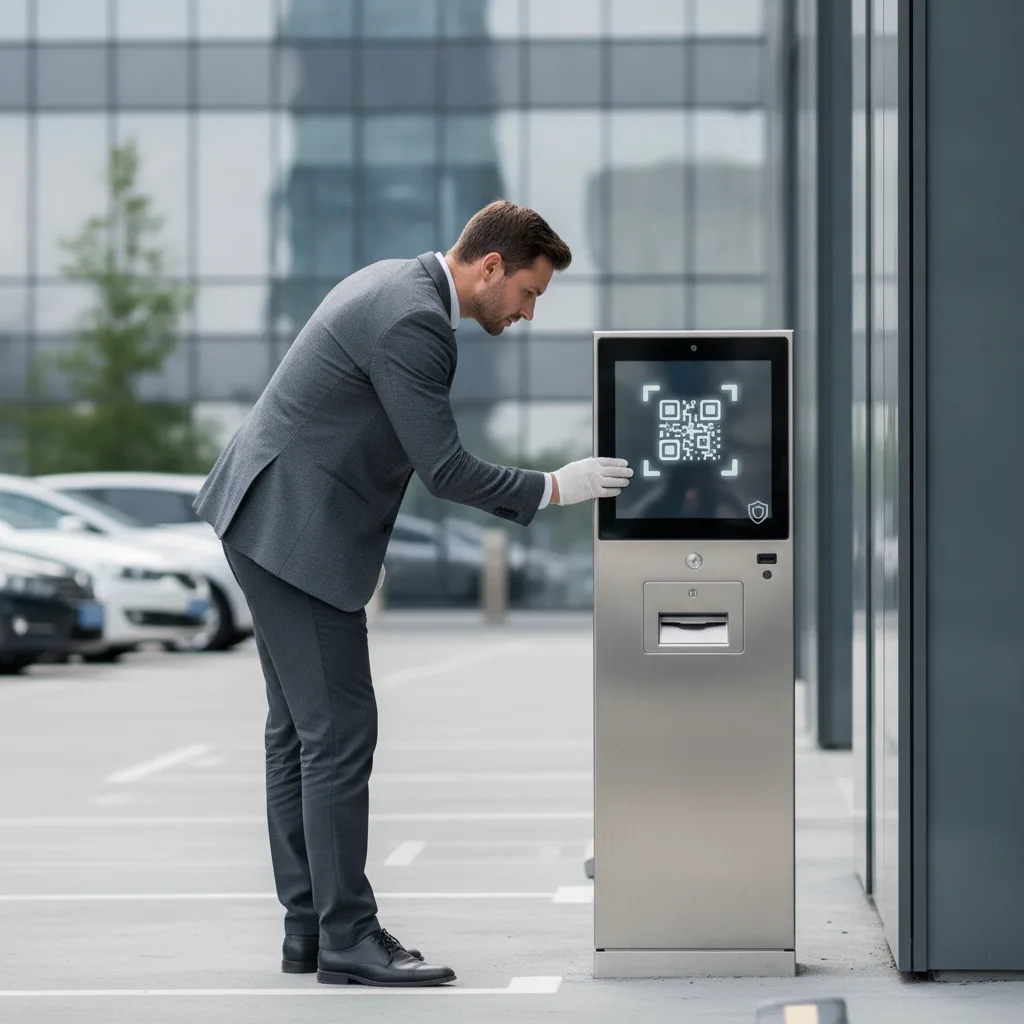
QR parking payment fraud controls let a parking operator use QR payments more safely by making the official payment route hard to spoof, inspecting unattended signs or machines, tying each QR session to a plate or zone record, and pausing enforcement when fraud indicators make a failed payment plausible.
Key Takeaways
- Fraudulent QR stickers turn a payment convenience into an operations, support, and enforcement problem.
- Drivers need an obvious way to verify the official domain before entering card information.
- Operators should inspect physical payment surfaces, not only monitor digital payment reports.
- Plate-linked payment sessions make it easier to separate unpaid parking from a credible scam exception.
- The fairest workflow creates a temporary enforcement hold while support reviews evidence, location, timing, and payment records.
What This Workflow Involves
This workflow treats QR and mobile payment as part of the parking control system, not a separate convenience feature. The operator defines where a code may appear, what official domain or app name should be shown, how often staff inspect the surface, and what support needs when a driver says the payment path looked wrong.
The same record should connect the vehicle, zone, payment session, inspection status, citation decision, and support outcome. If the payment vendor confirms no transaction, the operator still needs to know whether the customer scanned a sticker, followed a text link, used an unofficial domain, paid through the wrong zone, or simply did not pay.
For lots using license plate recognition, the scan helps anchor the timeline. It can show when the vehicle entered, which plate or state was read, which zone or lot was involved, and whether a valid session later attached to that vehicle. That context lets enforcement staff review the exception before escalating a citation or tow.
Why This Problem Is Showing Up Now
Parking payment fraud has become more visible because many lots moved payment away from attended booths and fixed kiosks. QR stickers, mobile links, and text-to-pay notices are easy for drivers to use, but they are also easy for a criminal to imitate if the physical surface is unattended.
Toronto Parking Authority warned on May 1, 2026 that invalid QR stickers had been placed on Green P machines to redirect payment. Its public notice said older machines do not have QR capability and newer machine codes are embedded in the screen, making stickers a warning sign.
Christchurch City Council faced a fresh example on July 14, 2026, when fraudulent QR stickers were found on parking machines across the city, including privately owned machines. Local reporting said some screens were marked to push drivers toward the false code instead of the legitimate machine interface.
Security researchers also continue to treat QR spoofing as a real public-infrastructure issue. A July 9, 2026 arXiv paper described QR spoofing, often called quishing, as an attack vector for self-service parking machines and proposed stronger authenticity models. Most operators will not deploy cryptographic codes tomorrow, but the practical lesson is immediate: trust has to be designed into the payment path.
The Core Operational Problem
The core problem is the gap between payment intent and enforcement evidence. A driver may believe they paid, the payment vendor may show no valid session, and the enforcement team may only see an unpaid plate. If those systems cannot be reconciled, the dispute becomes a credibility contest.
That gap is especially damaging in private lots because the operator may not have the public trust, signage familiarity, or customer-service infrastructure of a city parking authority. A frustrated driver will not distinguish between the scammer, the payment processor, the lot owner, and the enforcement contractor if the final outcome is a chargeback, citation, or tow.
PLACA.AI’s LPR and QR auto-pay workflows for parking operators focus on connecting vehicle sessions to payment and enforcement events. Fraud-resistant operations need that same connection, plus a visible way to prove which payment route was official on the date and location in question.
QR Parking Payment Fraud Controls Checklist
| Control | Operator action | Review question |
|---|---|---|
| Approved placement | Keep a photo inventory of every official sign, machine face, window decal, and lane placard that can direct payment. | Can staff tell whether a code or sticker belongs there? |
| Trusted destination | Use short, memorable official domains or app names and repeat them in plain text next to the code. | Would a driver notice a misspelled or unrelated payment URL? |
| Physical inspection | Add payment surfaces to opening, closing, and patrol checklists, especially unattended lots and tourist/event locations. | Who last verified the sign, and when? |
| Payment reconciliation | Match plate, zone, session start, session end, and payment source before treating a vehicle as unpaid. | Is this unpaid, paid in the wrong place, delayed, duplicated, or possibly misdirected? |
| Support hold | Create a temporary citation or tow hold when a credible fraud report matches the location and time window. | What evidence is needed before the hold is cleared? |
Exception Workflow Before Enforcement
- Check the lot and payment-zone inspection log for the date and time of the parking session.
- Confirm whether any fraudulent sticker, damaged machine, marker instruction, outage, or suspicious domain was reported nearby.
- Review the vehicle record: plate, state, entry time, exit time, lot, zone, and any valid or failed payment match.
- Ask support to collect a privacy-safe receipt, card authorization, browser history domain, or screenshot only when the customer voluntarily provides it.
- Place a time-limited hold on citations, late fees, or tow escalation when the evidence suggests a payment-path problem.
- Resolve the case as paid, unpaid, wrong-zone, processor error, fraud exception, duplicate charge, or insufficient evidence.
- Feed confirmed fraud indicators back into field inspection, signage replacement, domain takedown, and payment-vendor reporting.
Risks, Limits, And Privacy
No checklist can make QR payment risk disappear. A scammer can still copy branding, buy a similar domain, or place a sticker shortly after an inspection. The realistic goal is to reduce the window of exposure and make the official route easier to recognize than the fake one.
Operators should also avoid overcollecting customer evidence. A support team does not need a full bank statement to review a parking-session dispute. Ask for the minimum useful proof, redact unrelated details, and avoid retaining personal information longer than the case requires.
Fraud concern should not become a blanket excuse to waive every unpaid session. The policy should define what makes a report credible: matching lot, matching time window, suspicious domain, physical tampering, multiple complaints from the same machine, processor confirmation, or field staff verification.
Worked Example: Private Garage With A Sticker Report
A downtown private garage uses QR signs at stairwells and elevator lobbies. At 7:40 p.m., a driver parks for an event and scans a sticker that appears to sit on top of the printed sign. The driver enters payment information, but the garage payment system never receives a session for that plate.
Without an exception workflow, the LPR record simply shows a vehicle with no matching payment. The enforcement team may issue a citation after the grace period, and support later has to work backward from a complaint.
With a better workflow, the garage has a current photo inventory of the official sign, a plain-text payment domain on the sign, and a patrol inspection record. When the driver reports the suspicious code, support checks whether other complaints came from the same location, whether staff found a sticker, and whether the driver’s provided domain differs from the official route. The citation is held while that review is open.
If the sticker is confirmed, the operator removes it, reports the domain, clears or adjusts affected citations, and adds a temporary warning notice until replacement signage is installed. If no fraud indicator is found, the operator can explain the decision using the plate record, payment logs, and inspection timeline instead of relying on a generic unpaid-parking notice.
Frequently Asked Questions
Should parking operators stop using QR payments because of scams?
Not necessarily. QR payment can still be useful when the official route is obvious, signs are inspected, payment sessions are reconciled, and support can hold enforcement when fraud indicators are present. Removing QR may be appropriate for specific high-risk locations, but it is not the only control.
What makes a QR code easier for a driver to trust?
Use embedded or printed codes rather than stickers when possible, show the official domain in plain text, avoid shortened or unfamiliar URLs, keep the app name consistent, and give drivers a non-QR payment route if they are unsure.
How often should a lot inspect payment signs?
The cadence should match exposure. A low-turnover monthly lot may need routine checks, while event lots, tourist garages, downtown meters, and unattended machines should be inspected more often and after fraud reports.
What should support do when a driver says they paid through a fake code?
Support should verify the lot, time, plate, claimed payment route, and any field reports from that location. If the report is plausible, place a temporary enforcement hold while reviewing payment logs and physical-sign evidence.
Can LPR prove that a driver paid through the correct QR route?
No. LPR can connect a vehicle to a time, place, and plate-based session. It still needs payment-system records, zone data, inspection logs, and support evidence to decide whether a payment was valid, missing, delayed, or misdirected.
Related PLACA Resources
- Start with LPR and QR auto-pay workflows for parking operators when mapping payment, vehicle sessions, and enforcement review.
- Use the mobile parking payment processing comparison to evaluate how payment speed, records, and support handoffs affect enforcement decisions.
Next Step
Walk one active lot and photograph every place a driver can be told how to pay. For each sign or machine, record the official domain, inspection owner, payment-zone mapping, and escalation rule. If support cannot connect that surface to a plate session and enforcement hold, the QR workflow needs cleanup before the next fraud report.
Internal Resources
- Release On Scene Towing Workflow for Drop-Fee Disputes
- What Should Towing Teams Document Before a Private-Property Tow Under New Transparency Laws?
- How Apartment Guest Parking Managers Can Reduce Payment Kiosk Dependence Without Adding More Hardware
- How HOA Patrol Operators Can Reduce Disputed Tows With Mobile LPR Workflows
- How Parking Operators Can Track Parking Receipts For Business Users Without Adding More Hardware