
AI Vehicle Access Control Report 2026
Access-control buyers, gated-property operators, security teams, storage operators, apartment managers, and HOA boards.
What This Report Covers
Vehicle access control is moving from credential possession to vehicle identity. Fobs, cards, and keypads still matter, but many properties now need access decisions tied to vehicles, visitors, audit logs, and repeat entry patterns.
This report explains where AI license plate recognition fits in modern gate automation and how buyers can compare LPR with fobs, cards, intercoms, RFID, and keypad systems.
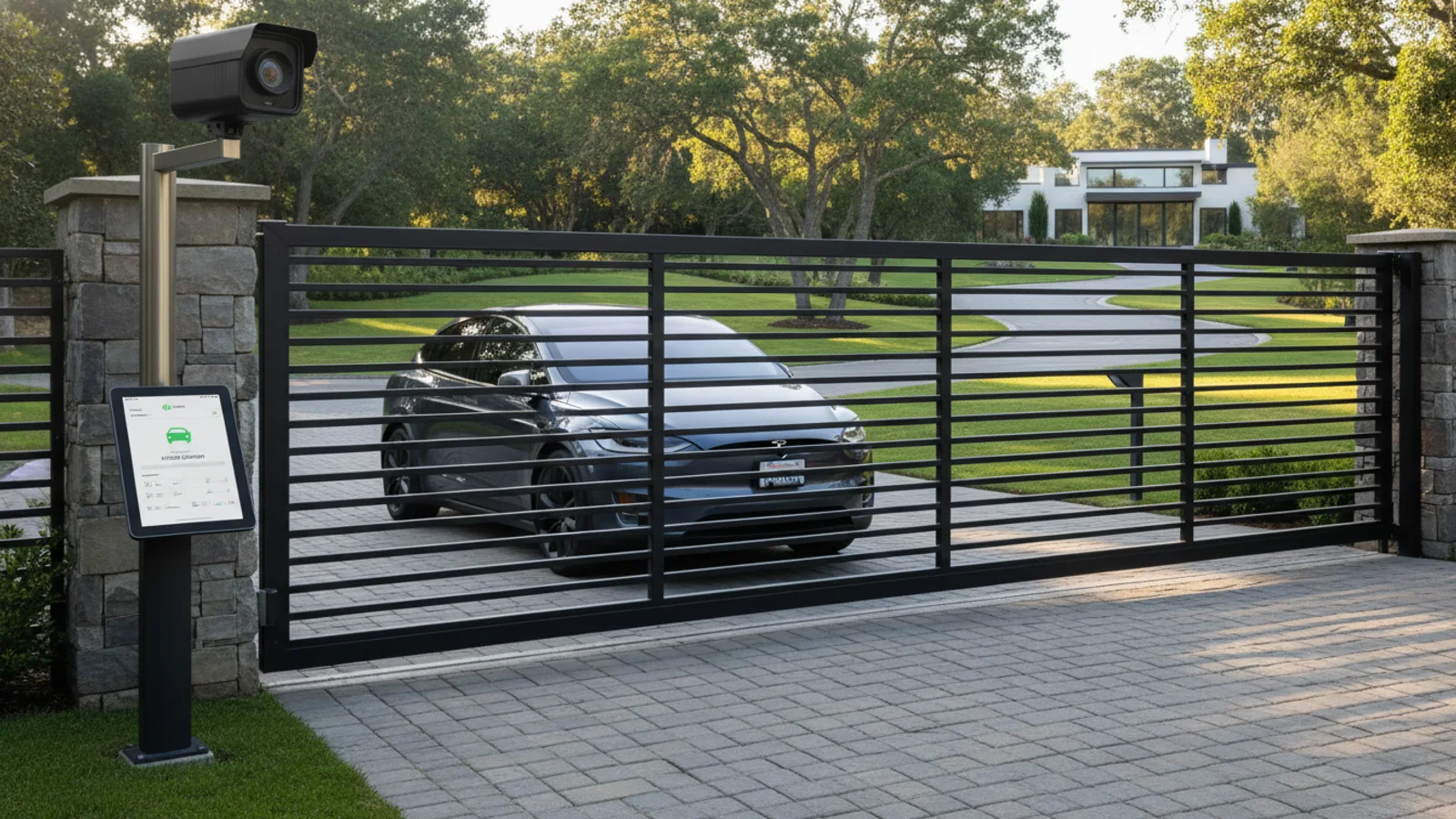
Short answer: AI vehicle access control uses license plate recognition and access rules to identify approved vehicles, trigger gate workflows, and create searchable entry records for private properties.
Key Findings
Vehicle identity is becoming an access layer
The vehicle itself can become a credential when plate recognition is connected to access rules.
Keypads remain easy but shareable
Shared codes are convenient until they spread beyond approved residents, staff, or vendors.
Hybrid systems often win
LPR for vehicles and traditional credentials for people can create a balanced access model.
Audit logs are a buyer requirement
Access teams need searchable events, not only gate-open signals.
Data Snapshot
These report cards use operational counts and decision points rather than unverified market claims. External statistics should be added only after source verification.
Credential types to compare: keypads, fobs/cards, intercoms, and LPR.
Core access outputs: decision, gate action, and event log.
Clean access policy should define who, when, and why a vehicle can enter.
Problem / Solution
The Old Workflow
Many access systems identify a credential but not the vehicle using it. A shared keypad code or borrowed fob can open a gate without telling the property which vehicle entered.
The Modern Workflow
AI vehicle access control uses LPR to tie access events to vehicle identity, visitor permission, account status, or property rules.
Comparison Table
| Method | Best For | Risk | Modern Role |
|---|---|---|---|
| Keypads | Simple gates | Codes are easy to share | Backup or low-complexity entry |
| Fobs/cards | Building and pedestrian access | Credentials can be lost or lent | Still useful for people and doors |
| Intercoms | Guest communication | Slower vehicle throughput | Visitor exception handling |
| LPR | Vehicle-specific access | Needs camera quality and clear policy | Resident, tenant, visitor, staff, and vendor vehicles |
Buyer Decision Framework
| Decision Area | What To Check | Why It Matters | Related Resource |
|---|---|---|---|
| Gate compatibility | Can the existing gate accept a relay, controller, or integration? | Compatibility determines implementation complexity. | Review the related PLACA.AI resource cards below. |
| Camera placement | Can the plate be captured clearly at the point of decision? | Poor placement weakens every LPR workflow. | Review the related PLACA.AI resource cards below. |
| Visitor rules | Can visitor access be temporary and auditable? | Temporary permissions reduce code sharing. | Review the related PLACA.AI resource cards below. |
| Audit needs | Who can review access history and for how long? | Access logs must be useful and governed. | Review the related PLACA.AI resource cards below. |
Implementation Roadmap
Map current gate hardware
Use this step to move from broad interest to a measurable, reviewable vehicle workflow.
Review camera angle and lighting
Use this step to move from broad interest to a measurable, reviewable vehicle workflow.
Define resident, visitor, staff, and vendor rules
Use this step to move from broad interest to a measurable, reviewable vehicle workflow.
Pilot access decisions in one lane
Use this step to move from broad interest to a measurable, reviewable vehicle workflow.
Review audit logs and exception cases
Use this step to move from broad interest to a measurable, reviewable vehicle workflow.
State Relevance
For state and local relevance, PLACA.AI should expand existing state assets rather than create doorway pages. Existing regional resources include Florida LPR and gate access, Texas and DFW license plate recognition, and Phoenix/Arizona gate access control.
Related PLACA.AI Resources
Access Control
Canonical access-control pillar.
HOA Gate Access
HOA-specific gate workflows.
Apartment LPR
Apartment access and parking workflows.
Self Storage LPR
Storage gate and tenant access workflows.
AI LPR Guide
Technical explanation of AI license plate recognition.
FAQ
What is AI vehicle access control?
AI vehicle access control uses vehicle recognition, usually license plate recognition, to identify approved vehicles and support gate or entry decisions.
Is LPR better than key fobs?
LPR is better for vehicle-specific access and audit logs. Fobs may still be useful for pedestrian doors or backup workflows.
Can LPR work with existing gates?
Often yes, if the gate can accept a relay, controller, or integration and the camera can capture plates reliably.
What camera quality is needed for plate-based access?
The camera must capture the plate clearly at the decision point, with enough resolution, angle, shutter speed, and lighting.
How should access logs be managed?
Logs should have defined retention, role-based access, and a documented purpose tied to property operations.
Turn this report into a working vehicle access plan.
Share your current workflow and PLACA.AI can help map the cameras, rules, permissions, and review process that fit your property or operation.