

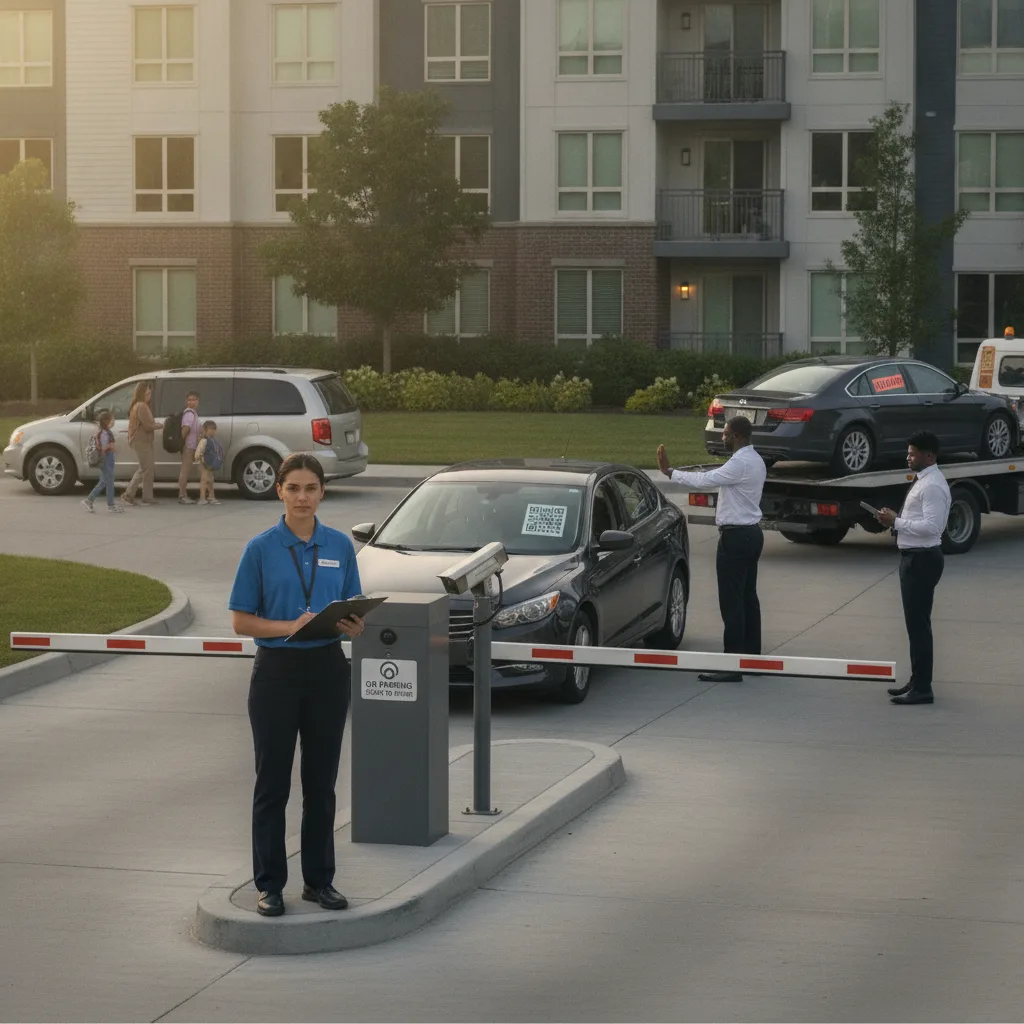
A California ALPR policy checklist should be completed before a parking or property team collects plate data. Confirm whether the system creates searchable plate records, publish a compliant usage policy, identify the custodian, define access and retention, verify vendor sharing, preserve logs, and pause enforcement until counsel reviews the workflow.
Key Takeaways
- California treats many searchable license-plate camera workflows as ALPR systems, even when the business sees them as parking, access, payment, or loss-prevention tools.
- The operator needs more than a camera notice. The policy, vendor contract, retention setting, access log, audit routine, and accuracy process should all line up.
- A July 30, 2026 legal alert says commercial ALPR litigation has expanded after Bartholomew v. Parking Concepts, Inc., including parking operators and other property categories.
- Mata v. Digital Recognition Network adds an important limit: when a business has a written posted policy, a plaintiff may need to show harm beyond a bare technical complaint.
- This is a counsel-review workflow, not legal advice. The safe operational move is to hold launch or enforcement until the compliance packet is complete.
What This Workflow Involves
The workflow starts with an inventory. List every place where cameras read plates: garage entries, surface-lot exits, apartment gates, visitor lanes, private-road cameras, valet handoff points, mobile patrol vehicles, and vendor dashboards. For each location, record who owns the camera, who runs the software, who can search the database, and who receives the plate data.
Next, decide whether the system creates a searchable plate record. A simple video camera pointed at a driveway may be reviewed differently from a camera plus software that converts a plate image into characters and stores the result in a searchable database. If the workflow fits that second pattern, the team should assume counsel needs to review the California ALPR duties before collection begins.
Finally, connect the policy to the operating reality. If the public policy says plate data is retained for a defined period, the system should actually delete or archive on that schedule. If only trained staff may access the records, the dashboard should enforce roles. If vendors can process or store records, the contract should say how they protect, share, return, and delete the information.
Why This Problem Is Showing Up Now
The current trigger is litigation, not a new camera feature. The February 5, 2026 published opinion in Bartholomew v. Parking Concepts, Inc. involved a San Francisco parking garage where the plaintiff alleged the operator collected plate information without implementing and making public the policy required by California law.
On July 30, 2026, Brownstein published a fresh legal alert describing a surge of claims after that decision and warning that commercial deployers can include parking operators, hotels, office parks, medical centers, retail centers, and campuses. The useful takeaway for an operator is narrow: do not wait until a complaint to discover whether the camera, vendor, or garage system is collecting ALPR information under California law.
There is also fresh legal tension to respect. A July 27, 2026 McGuireWoods analysis of Mata v. Digital Recognition Network explained that the Fourth District required actual harm beyond a bare statutory violation where the business maintained a policy. A July 2026 Coblentz note similarly distinguished businesses with no policy from businesses with a conspicuously posted written policy. That makes the practical step clearer: the policy is not a paperwork afterthought. It is part of the risk-control system.
The Core Operational Problem
The core problem is that parking and property teams often buy LPR as an operations shortcut, then discover that plate data has its own governance burden. The camera may help match paid parking sessions, open a gate, document a violation, or reduce manual patrol work. But if the organization cannot explain collection purpose, access roles, retention, sharing, audit, custodian responsibility, and accuracy correction, the workflow is not ready.
This matters because the public question is not only whether plate readers are useful. It is who is collecting the plate, where the record goes, how long it stays, whether police or vendors can access it, and what a driver or resident can read before entering the property. Public Reddit discussions about California plate readers show that people look for the policy once they understand what the cameras are doing. Those posts are not factual authority, but they do predict the questions support teams and managers will hear.
For operators planning payment, permit, and enforcement workflows, the parking operator LPR and QR payment hub is the right PLACA starting point. The compliance packet should sit upstream from enforcement logic, because a clean plate read does not cure an unclear data-governance workflow.
California ALPR Policy Checklist
| Checkpoint | Operator question | Document before launch |
|---|---|---|
| System scope | Does the workflow turn plate images into searchable plate records? | Camera map, software description, data-flow diagram |
| Operator or end-user role | Who operates the system, who accesses it, and who benefits from the data? | Role memo reviewed with counsel and vendors |
| Authorized purposes | Is collection limited to parking, payment, access, security, or enforcement purposes the business can explain? | Public purpose statement and internal SOP |
| Access roles | Which employees, contractors, property managers, patrol teams, or vendors can search records? | Role list, training requirement, least-privilege settings |
| Sharing restrictions | Can data be sold, shared, transferred, queried by law enforcement, or processed outside the operator? | Vendor clauses, sharing matrix, disclosure language |
| Retention and deletion | How long is plate data kept, and what process destroys it when no longer needed? | Retention schedule, deletion workflow, exception approval |
| Access logs | Can the system record who accessed plate data, when, why, and what was queried? | Audit log sample and monthly review owner |
| Accuracy correction | How are misreads, wrong-plate matches, and customer corrections handled? | Error-correction SOP and enforcement hold rule |
| Public posting | Is the usage and privacy policy conspicuous, stand-alone, and easy to find? | Website URL, printed copy process, signage cross-reference |
What The Official Code Requires Operators To Address
The official California Civil Code title for collection of license plate information defines ALPR systems and sets operator duties. The California Civil Code ALPR provisions require operators to maintain reasonable security procedures and implement a publicly available usage and privacy policy.
At minimum, that policy must address authorized purposes, job titles or designations for authorized users, training requirements, monitoring for security and legal compliance, sale or sharing restrictions, the official custodian or owner responsible for implementation, accuracy and correction measures, retention length, and destruction process. If the operator provides access to ALPR information, the code also requires records of access, including date, time, query data, username or affiliated organization, and purpose.
Do not convert those statutory elements into generic brochure copy. A policy that says data is secure without naming the access roles, retention period, audit owner, and correction process may not help the actual operation. The point is to make the written policy testable against the dashboard and vendor contract.
Vendor Review Before The Cameras Go Live
Many parking and property teams do not run every technical layer themselves. A vendor may host the ALPR database, operate a payment system, send violations, support appeals, provide mobile patrol software, process QR sessions, or route plate data to an access controller. That does not remove the operator question. It makes vendor review more important.
Ask for a data-flow diagram showing where plate images, OCR results, vehicle attributes, timestamps, payment records, and enforcement decisions are stored. Ask whether any data is shared with affiliates, law enforcement portals, analytics systems, out-of-state processors, or subcontractors. Ask how access logs are exported, how long records remain after cancellation, and how the vendor supports correction of misreads.
Use the LPR camera and software comparison guide when comparing platforms, but add California-specific legal review before signing. A product can be technically strong and still be a poor fit if its access, retention, sharing, or audit model cannot match the policy your counsel approves.
When Enforcement Should Pause
A launch hold is appropriate when the team cannot answer basic policy questions. Pause if no one knows whether the system creates a searchable database, if the public policy is missing or buried, if vendor sharing is unclear, if access logs cannot be produced, if retention is open-ended, or if staff are issuing fees from plate reads before misread correction and appeal rules are written.
Pause does not have to mean abandoning automation. It can mean running a non-enforcement pilot, collecting test reads without driver penalties where counsel allows, validating deletion settings, training staff, and checking whether signage and public notices match the policy. That is a better status-quo bridge than launching first and trying to repair the governance layer later.
If plate events can lead to citations, invoices, booting, patrol dispatch, or towing, connect this review to the parking enforcement software workflow guide. Enforcement amplifies the need for accurate records, clear review authority, and an appeal packet that explains both the parking rule and the plate-data workflow.
Risks, Limits, And Fair Buyer Psychology
The responsible message is not that every California operator should panic or that every plate reader creates the same exposure. The responsible message is that uncertainty is expensive. A short compliance review before launch is easier than rebuilding public policy, vendor terms, data retention, and support scripts after a claim or resident complaint.
There are also limits to what this checklist can do. It cannot decide whether a specific property is an ALPR operator or end-user. It cannot validate a legal policy. It cannot predict how a court will treat a partially compliant policy or a specific vendor relationship. Those are counsel questions.
The checklist can still reduce risk. It forces the buyer to ask who owns the data, who can search it, why it is collected, when it is deleted, how errors are corrected, and whether the public notice is real. Those are practical questions regardless of which vendor wins the deal.
Worked Example: Garage Payment Cameras In California
A California garage operator installs entry and exit cameras that read plates, print the plate on the ticket, connect the visit to a payment record, and store the plate in a searchable database for disputes and unpaid sessions. The vendor calls the feature frictionless parking. The operations team calls it payment reconciliation. Counsel may still need to review it as an ALPR workflow.
Before enforcement begins, the operator maps the data flow. The policy states the authorized parking and payment purposes, names the responsible custodian, limits access to trained staff, discloses vendor processing, sets a retention period, describes deletion, and explains how misreads are corrected. The dashboard is configured to log every search and hold contested records while a dispute is reviewed.
That does not guarantee there will never be a claim. It does make the operation easier to defend internally and externally. If a driver asks what was collected, why it was used, and how long it stays, support has a real answer rather than a vendor screenshot.
Frequently Asked Questions
Does every parking camera count as an ALPR system in California?
No. The key question is whether the workflow uses cameras and algorithms to read plates and create searchable computerized plate data. Operators should have counsel review the exact camera, software, storage, and search workflow before deciding.
Is a sign at the garage entrance enough?
Usually a sign is not the whole compliance packet. California law focuses on a publicly available usage and privacy policy plus security, access, retention, audit, sharing, custodian, and accuracy measures. Signage can point people to the policy, but it should not replace it.
What changed after Bartholomew v. Parking Concepts?
The February 2026 appellate opinion allowed claims to proceed where the plaintiff alleged plate data was collected without the required public policy. Fresh July 2026 legal updates describe more commercial ALPR litigation after that decision.
Does Mata mean operators are safe if they post any policy?
No. Mata is useful because it distinguished a business with a written policy from one with no policy, but a weak or mismatched policy can still create operational and legal risk. The policy should match the actual system, contracts, access logs, and retention settings.
Should a property keep collecting plate data while counsel reviews the policy?
That depends on the existing legal posture and operational need. A conservative operations step is to pause new enforcement, limit access, preserve logs, and ask counsel whether collection should continue during review.
Related PLACA Resources
- Start with the parking operator LPR and QR payment hub when plate reads connect to paid parking, QR sessions, and enforcement.
- Use the LPR camera and software comparison guide to compare platform capabilities before adding California-specific legal requirements.
- Review the parking enforcement software workflow guide when plate data can trigger patrol, notice, booting, or towing action.
Next Step
Pull one live or proposed California location and complete the checklist before the next enforcement decision. If the team cannot produce the public policy URL, vendor data-flow map, retention rule, access-log sample, custodian name, and error-correction process, treat the site as not ready for automated plate-based enforcement.