

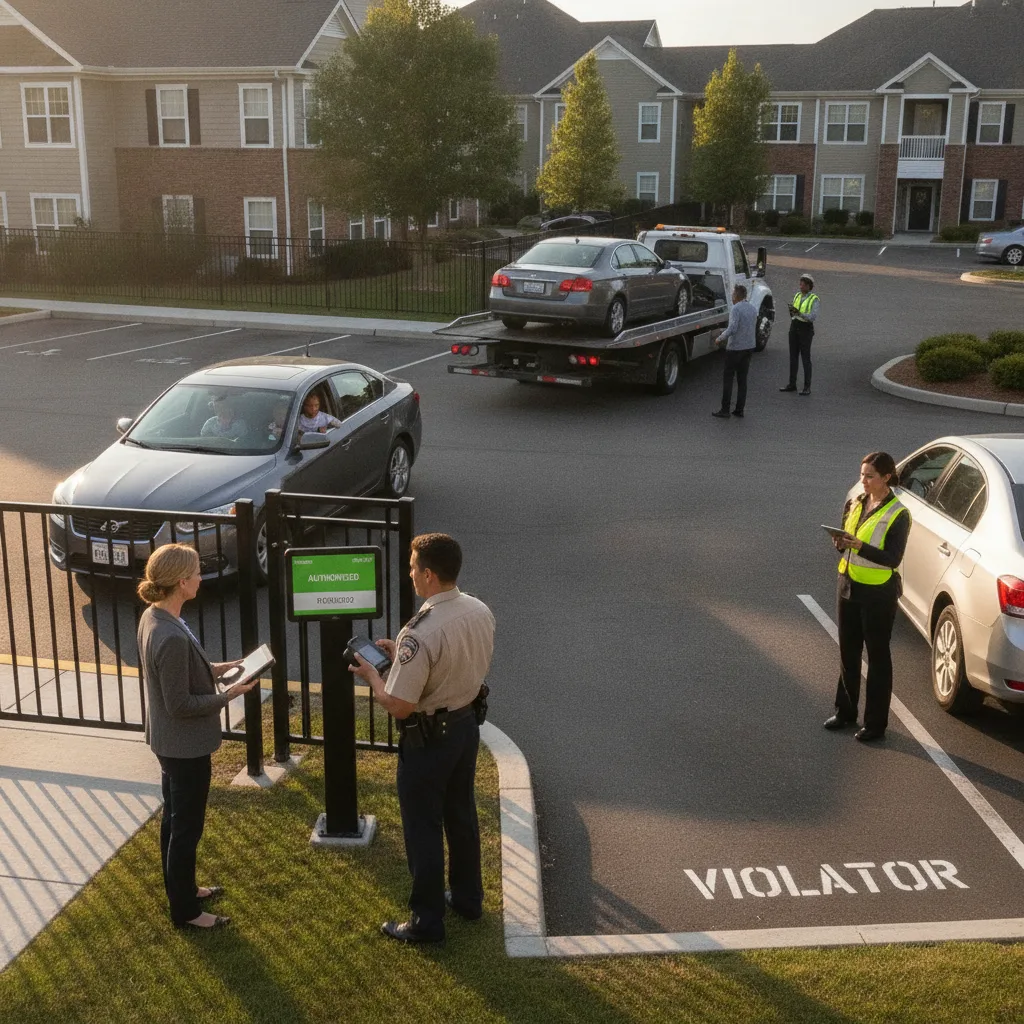
Short answer: Most disputed tows at apartment communities trace back to one gap: nobody can show, with a timestamp, that the vehicle was actually out of compliance long enough to justify the tow. A mobile LPR patrol closes that gap by turning a single drive-by into a documented pattern — plate, spot, permit status, and time — on every pass through the property. When a resident calls the leasing office or disputes a charge, the enforcement team has a record instead of a memory.
Why apartment tows get disputed in the first place
Multifamily parking enforcement runs on rules that change constantly: new move-ins who haven’t been added to the permit list yet, guest passes that expired at midnight, a reserved space reassigned after a unit turnover, a sticker that fell off the windshield. A single scan catches a violation; it doesn’t prove how long the violation existed or whether the resident had a temporary exception the front office forgot to log. That’s the fact pattern residents lean on when they call to dispute a tow, and it’s the same fact pattern property managers need answered before they’ll authorize one.
The properties that see the fewest disputes aren’t the ones towing least aggressively — they’re the ones who can answer three questions on demand: how long was the vehicle out of compliance, who confirmed the current permit or guest status at the time, and is there a photo that shows the spot and posted signage, not just the plate.
What a defensible patrol record needs
More than one pass
A single scan tells you a plate isn’t on today’s list. It doesn’t tell you whether the car pulled in five minutes ago to unload groceries. Running the same row or lot on a second pass — typically 60 to 120 minutes apart, adjusted to your property’s grace-period policy — is what turns a snapshot into evidence of an ongoing violation.
A same-day match against the current roster
Permit lists and guest logs go stale fast at a property with regular turnover. Match plates against whatever list was current at the time of the scan, not a weekly export. If your leasing software updates guest passes in real time, pull from that feed directly instead of a manual spreadsheet someone updates once a day.
Context, not just a plate
A photo of the plate alone won’t settle a dispute about a missing or obstructed sign, or a resident who insists they were in a marked visitor spot. Capture the space number and a wide shot that includes nearby signage on the first pass, so you’re not sending someone back out after the tow truck already left.
A pre-tow checklist for enforcement staff
- Confirm the permit or guest list you’re checking against was pulled today, not last week.
- Confirm the elapsed time between first and most recent violation scan meets your property’s written grace period.
- Check for a temporary permission — move-in day, maintenance visit, guest pass issued at the leasing office — before authorizing.
- Photograph the plate, the space, and any posted signage.
- Log the officer’s name or ID and the exact time the tow was called in.
- File the record somewhere the leasing office can pull it without calling the patrol company.
That last step matters more than it sounds. The dispute call almost never comes in while the enforcement officer is still on-site — it comes in the next morning, to whoever’s staffing the front desk. If that person can’t find the record, the property either eats the dispute or makes the resident wait on someone who isn’t in the office.
Handling the dispute once it reaches the leasing office
Four claims come up more than any others, and each one has a specific answer if the patrol record is built correctly:
- “I was only there for a few minutes.” Two timestamped passes showing the vehicle in the same non-compliant state answer this directly.
- “I have a permit, it just didn’t scan.” Cross-check the plate against the roster manually — decals fall off, and a resident with a valid account shouldn’t get towed over a missing sticker if the plate matches their unit record.
- “The sign was down or blocked.” A periodic signage photo, taken during routine patrol rather than only after a complaint, settles this in minutes instead of becoming a liability question.
- “I just moved in, I’m not in the system yet.” This is a process gap, not a resident problem. Build a same-day temporary tag or grace-period rule for new move-ins so this stops generating disputes altogether.
Where the documentation actually pays off
The value isn’t just winning disputes — it’s how much staff time each one takes. A leasing office that can pull a scan log with two timestamps, a roster match, and a photo resolves a dispute call in a few minutes. Without it, someone is digging through paper logs, calling the towing company for their records, or escalating to a regional manager, all while a resident is unhappy in the lobby. Fewer of those calls also means fewer tow-related complaints reaching ownership or showing up in resident reviews — which matters more to renewal rates than any single tow decision does.
FAQ
How long should a vehicle be out of compliance before it’s tow-eligible?
That’s a policy decision your property and towing vendor should set in writing, informed by local towing ordinances that often specify minimum notice periods for private property tows. The patrol record should prove that window was met, not create the policy itself.
Who should have final authority to call a tow?
Name one role — often a courtesy officer or enforcement lead — as the approver, with a documented backup for when they’re off shift. Ambiguity about who signed off on a tow is one of the fastest ways a dispute turns into a liability question.
Is a scan log enough, or do we need photos too?
Keep both. A scan log proves the plate and time; a photo proves the physical context — the space, the signage, the vehicle’s condition — that residents actually argue about.
Related reading
- Parking enforcement software for towing companies
- Planning a mobile LPR rollout
- LPR-based parking enforcement workflows
If your team is still resolving tow disputes from memory and paper notes, get in touch to talk through what a patrol and documentation workflow would look like for your properties.
Data source: U.S. Department of Transportation