
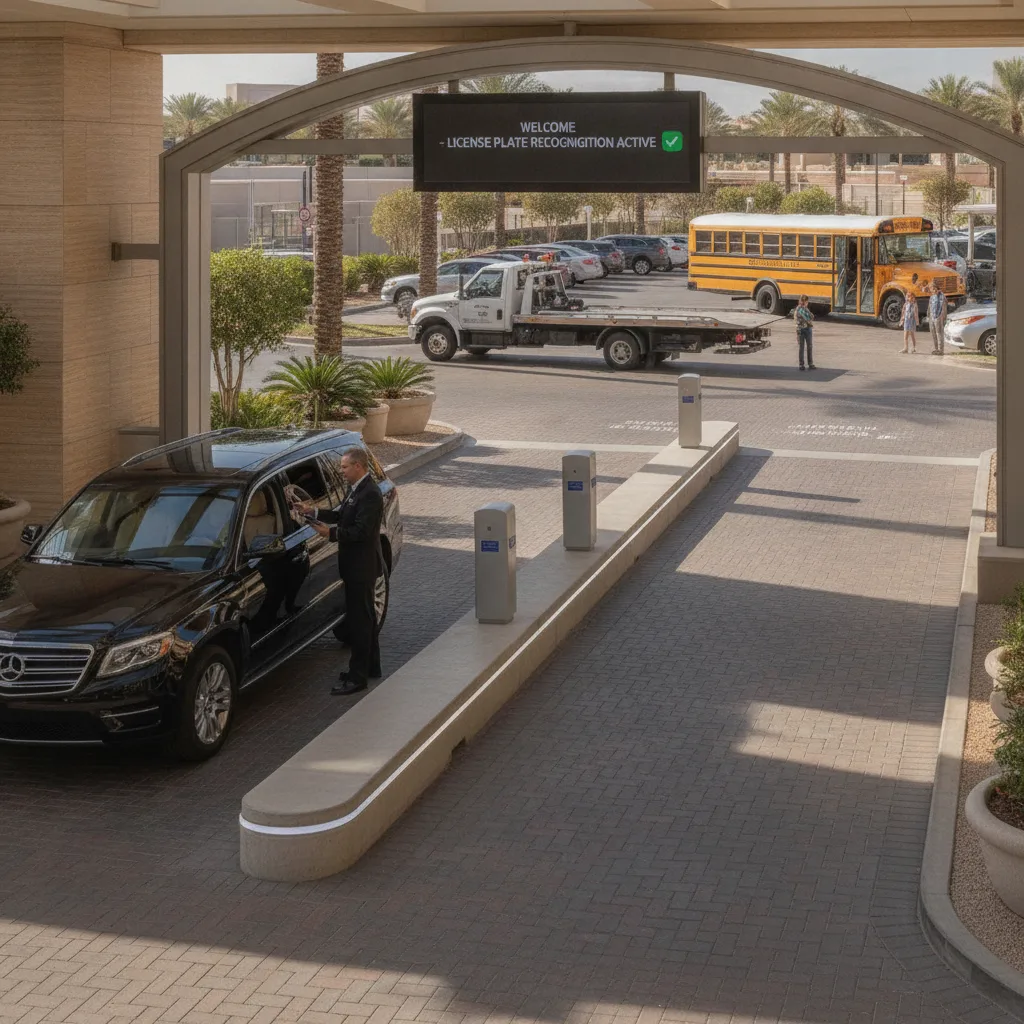
Short answer: Casino valet liability sits at the intersection of high-value vehicles, 24/7 operations, intoxicated guests, and a property that already runs one of the most heavily monitored environments in hospitality. The strongest position for a casino parking team is a vehicle record that ties into your existing surveillance and security infrastructure — so a damage claim, a VIP dispute, or a lost-vehicle report can be resolved by pulling footage and timestamps your team already has, rather than starting from scratch.
Why casino valet liability is its own category
Casinos share some liability exposure with hotels — many are attached to one — but they carry additional layers most hospitality valet operations don’t. Valet stands run around the clock, not just during check-in and dinner hours. Vehicles at the high-limit and VIP entrance are often significantly more valuable than the average guest car, and the property already runs continuous surveillance coverage that most other venues don’t have. That surveillance infrastructure is an asset for liability resolution, but only if your vehicle records are structured to connect with it — matching a plate and timestamp to the right camera feed instead of leaving security to scrub hours of footage manually.
Casinos also deal with a guest population where intoxication is a more constant factor than in most other valet settings, and where player loyalty tiers create pressure to resolve disputes quickly and generously to protect a relationship with a high-value patron.
Where casino parking liability exposure comes from
High-value and VIP vehicles
The players’ entrance or VIP valet lane often sees a disproportionate share of exotic and luxury vehicles relative to the general lot. A scratch on a six-figure car generates a dramatically higher-stakes claim than the same scratch on an average sedan, and these guests — often high-value players your host team actively manages the relationship with — expect a fast, credible response, not a runaround.
24/7 shift coverage
Unlike a restaurant or hotel with defined peak windows, casino valet runs continuously, which means custody handoffs happen across every shift, including overnight, when staffing is thinnest and turnover between shift leads is highest. A vehicle that arrives on the evening shift and gets requested at 4am may pass through two or three shift changes in between.
Intoxicated guest handoffs
Casinos deal with intoxication-related vehicle release decisions more routinely than most valet operations. Staff need a clear, documented process for declining to release a vehicle to a visibly intoxicated guest, coordinated with security and, where applicable, responsible gaming protocols — and that refusal needs to be logged the same way a damage claim would be.
Loss prevention and surveillance coordination
Casino surveillance teams are used to being the first call when something goes wrong on the floor — but valet incidents often don’t reach them fast enough, because parking and gaming operations can run as fairly separate departments. A vehicle record that flags an incident in real time, with a timestamp and plate, gives surveillance a fast starting point to pull the relevant camera coverage instead of searching blind.
Off-site and overflow lot transfers
Many casino properties use remote employee or overflow lots with shuttle service, especially during large events or tournaments. Vehicle transfers to and from these lots are a common documentation gap, similar to what hotels see with overflow parking, but at casino scale it can mean hundreds of vehicles moving off-site during a single major event.
Building a record that works with your security operation
- Arrival capture tied to camera zones. Log plate, timestamp, and condition at arrival in a way that maps to your existing camera coverage zones, so surveillance can pull the right footage without a manual search.
- Shift-spanning custody log. Every handoff between shifts gets attributed to a specific staff member, so a vehicle that sits overnight doesn’t lose its chain of custody across shift changes.
- VIP and high-value flagging. Vehicles in premium or VIP lanes get an elevated documentation standard — more thorough condition photos, faster incident escalation — reflecting the higher stakes of a claim.
- Intoxication refusal logging. Document every instance where a vehicle release was declined, who made the call, and how it was resolved (rideshare, security escort, overnight hold).
Coordinating across departments
Casino operations tend to be siloed — gaming, hospitality, security, and parking often report through different lines. Liability questions get resolved faster when your valet team’s vehicle records are visible to security and surveillance in real time, not just available on request during business hours. Build a direct escalation path from valet supervisors to your security or surveillance shift lead for any incident involving a high-value vehicle or an intoxicated guest, so the response happens within the same shift, not after a report gets filed the next morning.
Working with your risk team, gaming compliance, and insurer
This is operational guidance, not legal, insurance, or regulatory advice — actual liability determinations and any gaming compliance questions should go through your risk management, legal, and compliance teams. What you can control operationally is the quality and completeness of your vehicle records: arrival condition, custody chain across shifts, and a clear log of any release refusal. A well-documented record makes it easier for your insurer and your gaming commission compliance team, if a regulatory question arises, to see that your property followed a consistent, defensible process.
Practical steps to put in place
- Confirm your valet arrival logging zones align with your existing camera coverage so incidents can be cross-referenced quickly.
- Set an elevated documentation standard for VIP and high-value vehicle lanes.
- Build a same-shift escalation path from valet to security/surveillance for any incident involving intoxication or a high-value vehicle.
- Log every intoxication-related release refusal with the same rigor as a damage claim.
- Review overnight and shift-change custody handoffs specifically — this is where casino operations differ most from a standard hospitality valet setup.
Frequently asked questions
How should we handle a damage claim on a high-value VIP vehicle?
Pull the full arrival-to-retrieval record immediately, including any associated camera footage, and loop in your risk manager and the guest’s host or relationship manager early — high-value guests typically expect a faster, more personal response than a standard claims process provides.
What’s the biggest documentation gap in 24/7 casino valet operations?
Custody handoffs across overnight shift changes, when staffing is thinnest and the vehicle may not move again until the next afternoon. A record that ties each handoff to a specific staff member closes this gap.
Should valet incidents automatically route to casino surveillance?
For anything involving potential damage, theft, or an intoxicated guest, yes — a direct, real-time escalation path is far more useful than a next-day report, since surveillance footage retention windows and staff recall both degrade quickly.
PLACA.AI’s valet parking system and valet parking knowledge hub have more on structuring documentation for high-volume, round-the-clock operations. To discuss how this fits your property’s security and surveillance setup, get in touch and we’ll walk through it.
Data source: U.S. Department of Transportation