

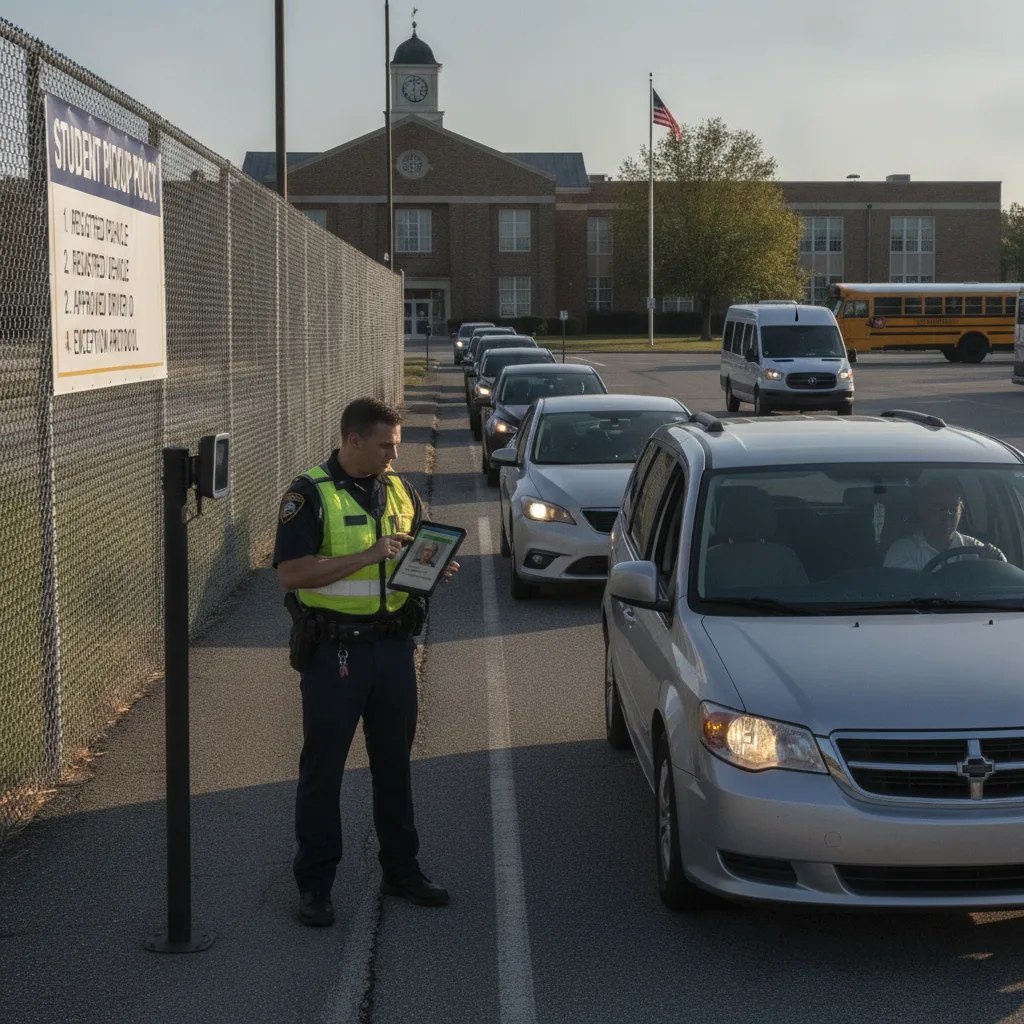
Direct answer: Set one district-wide standard for how grandparent pickup permission is requested, who can grant it, how long it lasts before requiring renewal, and how a revocation reaches every campus a student attends — then let individual campuses handle the day-to-day verification however fits their staffing. The policy question operations teams actually need to answer is narrower than it sounds: who is allowed to say yes on the district’s behalf, and how fast does a “no” propagate once a parent revokes it.
This is for district operations, student services, and compliance teams setting policy that dozens or hundreds of campuses will apply — not the front-desk mechanics of checking ID, but the governance question of what counts as a valid grandparent authorization and how the district protects itself when family situations get complicated.
Why This Sits Closer to Legal Exposure Than Most Dismissal Policy
Grandparent pickup looks like a convenience issue until it intersects with a custody dispute, and it does that more often than most operations teams expect. A parent restricts a grandparent’s access as part of a custody arrangement; the other parent, or the grandparent, doesn’t know or doesn’t accept the restriction; a campus that’s been informally allowing that grandparent to pick up for months has no record of when the arrangement started, who approved it, or whether it was ever supposed to be permanent. When that situation escalates — a legal filing, a law enforcement welfare check, a heated pickup-line confrontation — the district needs to be able to show, campus by campus, exactly what was authorized, by whom, and when it changed. A policy that leaves “who can grant grandparent access” ambiguous is a genuine liability gap, not just an operational inconvenience.
The Governance Questions Operations Teams Need Answered
| Question | Why it needs a district answer, not a campus one |
|---|---|
| Who is authorized to grant grandparent pickup permission — either parent, only the custodial parent, or does it require both? | Campuses left to decide this individually will land on different answers, which is exactly the inconsistency that becomes indefensible during a custody dispute |
| How long does an authorization last before it requires renewal? | An unreviewed “standing” authorization from two years ago is a liability if it was never meant to be permanent |
| How fast does a revocation reach every campus the student’s siblings attend? | A parent who revokes grandparent access at one campus needs that revocation to apply everywhere the family has children enrolled, immediately |
| What record is retained, and for how long? | Retention policy needs to match the district’s broader student-record and legal-hold requirements, not be invented per campus |
Why “Ask the Front Office” Isn’t a District Policy
Many districts, when audited, discover that grandparent pickup policy effectively is whatever the front office at each campus has decided over the years — often a reasonable, well-intentioned local practice, but one that varies from “we require the parent’s written note every single time” to “if the grandparent has picked up before, we don’t ask again.” Neither extreme is wrong on its own, but having thirty different versions of the rule across a district means the district cannot answer a straightforward legal question — “what was our policy on grandparent authorization on this date” — with a single, consistent answer. That inconsistency is what operations teams are actually being asked to fix, more than the day-to-day verification step itself.
Building the District Standard
- Decide, with legal counsel input, whether a single parent or guardian can authorize grandparent pickup, or whether it requires agreement when custody is shared or disputed.
- Set a default expiration for grandparent authorizations — for example, one semester — with an explicit renewal step, rather than allowing indefinite standing permissions by default.
- Build the authorization record so a revocation at one campus propagates automatically to every campus where the family has enrolled children, not just the campus where it was entered.
- Define retention: how long a grandparent authorization record is kept after it expires or is revoked, aligned with the district’s existing student-record retention schedule.
- Train front office staff district-wide on the same standard, with a clear escalation path — to student services or legal, not campus discretion — when a request involves a known custody restriction.
Metrics for District-Level Oversight
- Percentage of campuses using the district-standard authorization form versus a locally invented process
- Grandparent authorizations past their expiration date and not yet reviewed
- Revocations that took more than 24 hours to reach a sibling’s campus
- Custody-related grandparent pickup exceptions escalated to student services or legal, and how they were resolved
Where a Shared Verification Record Helps
The policy question and the verification mechanism are related but separate. Once operations has set the standard for who can authorize grandparent pickup and how long it lasts, a shared vehicle-verification record — the same authorized-pickup list checked at every campus — gives the district an actual audit trail: which vehicle, which date, matched against which authorization, at which campus. That’s the evidence a district needs if a revocation or a custody restriction is ever challenged, and it’s a meaningfully stronger position than “the front office remembers approving it.”
Related PLACA.AI planning resources
Common Questions
Should grandparent authorization require both parents’ agreement?
That’s a legal-counsel question specific to your district’s custody-handling policy, not an operational one — but whatever the answer, it needs to be the same answer at every campus.
How long should a standing grandparent authorization last before renewal?
Most districts that have audited this land on one semester or one academic year as a default, with an explicit renewal step rather than indefinite standing access.
What’s the fastest way to find where campuses have diverged from policy?
Sample a handful of campuses’ grandparent authorization records directly and check the date each was created against the district’s expiration standard — gaps show up quickly.
Give the district one auditable grandparent-authorization record
Placa.ai’s license plate recognition ties every grandparent pickup to a dated, expiring authorization checked the same way at every campus, so revocations and custody restrictions apply consistently district-wide. If you’re setting this policy, we can help map the current gaps.
Editorial refresh: July 22, 2026. Independently confirm current product capabilities, third-party features, pricing, contracts, governing requirements, and local rules before acting.
Data source: National Center for Education Statistics