

how does valet parking work for restaurants
Valet operator guide
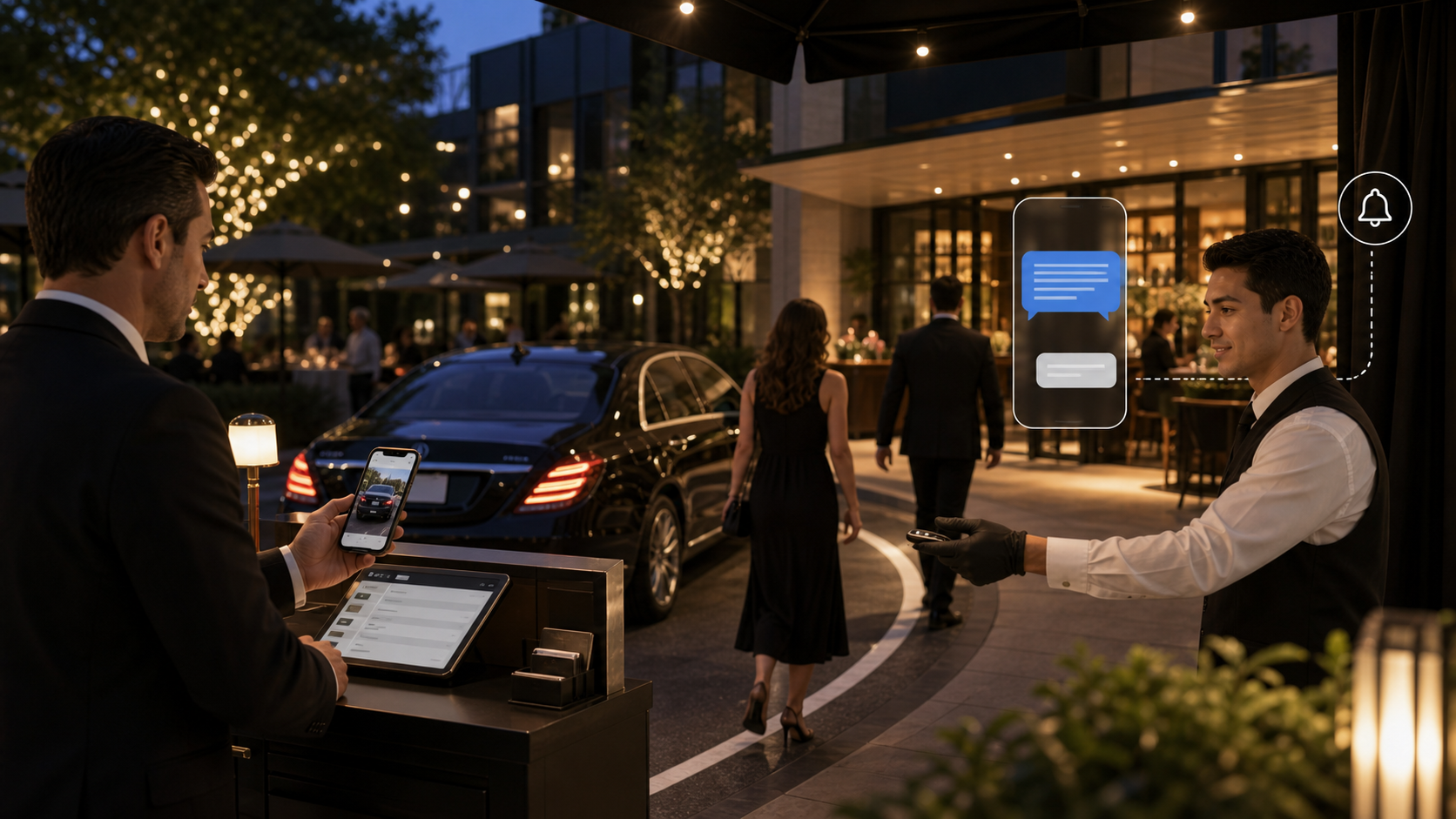
Restaurant valet works by receiving the guest at the curb, recording the vehicle, parking it, storing the key, then retrieving it when the guest requests pickup.
Short Answer
Restaurant valet works by receiving the guest at the curb, recording the vehicle, parking it, storing the key, then retrieving it when the guest requests pickup.
Why This Matters for Revenue
Restaurants make money from smoother guest flow, premium arrival experience, and better service perception.
PLACA.AI helps valet companies increase revenue potential by improving guest experience, reducing slow handoffs, keeping pickup requests organized, and creating more digital tip moments.
Valet Revenue Analysis
Use this planning model: monthly cars x tip participation x average tip. Example: 3,120 cars/month at 35% participation and average tip equals ,368/month. If better service and digital tipping move participation to 55% at average, estimated tips become ,296/month. Possible lift: ,928/month.
This is an example model, not a guaranteed result. Actual outcome depends on location, staff quality, guest mix, event volume, and tip policy.
How PLACA.AI Helps
- Phone-based plate scan check-in.
- Returning guest recognition.
- SMS pickup request link.
- GPS parked location for runners.
- Ready SMS notification.
- Digital tipping.
Related
Read next guide or visit Valet Parking Knowledge Hub.
How Valet Parking Works for Restaurants
What is the valet parking process?
When a guest arrives, an attendant greets them, issues a numbered ticket, and parks the vehicle. When the guest is ready to leave, they present the ticket and the attendant retrieves the car. The ticket number links to the vehicle’s plate and any noted pre-existing damage. Speed depends on attendant count, parking lot distance, and retrieval systems. LPR cameras at the entrance capture each plate automatically, match it to the ticket, and create a searchable log of every vehicle handled during the shift.
How does technology improve restaurant valet?
Text-to-retrieve systems allow guests to request their vehicle before leaving the table, spreading retrieval load over a wider window. License plate recognition eliminates manual ticket matching, reduces filing errors, and provides timestamped proof of vehicle condition at intake and return. For a busy restaurant handling 80 to 150 cars per service, these tools measurably cut average guest wait time and reduce the chance of disputes over vehicle damage or lost tickets.
About Placa.ai
Placa.ai is a license plate recognition platform used by parking operators, valet companies, and property managers who need automated vehicle identification. The platform pairs LPR cameras with cloud software that delivers real-time plate reads, vehicle logs, and alert notifications. Valet operations using Placa.ai gain a digital record of every vehicle, with timestamped photos of each plate, eliminating manual ticket logging and speeding customer retrieval. To learn more or schedule a demo, visit placa.ai.
Industry reference: International Parking and Mobility Institute
Placa.ai is available for valet operators who want to add license plate recognition to their existing workflow. The platform requires no on-site server hardware and connects to cameras via standard RTSP streams, making integration straightforward for operators already using digital ticket management tools.