

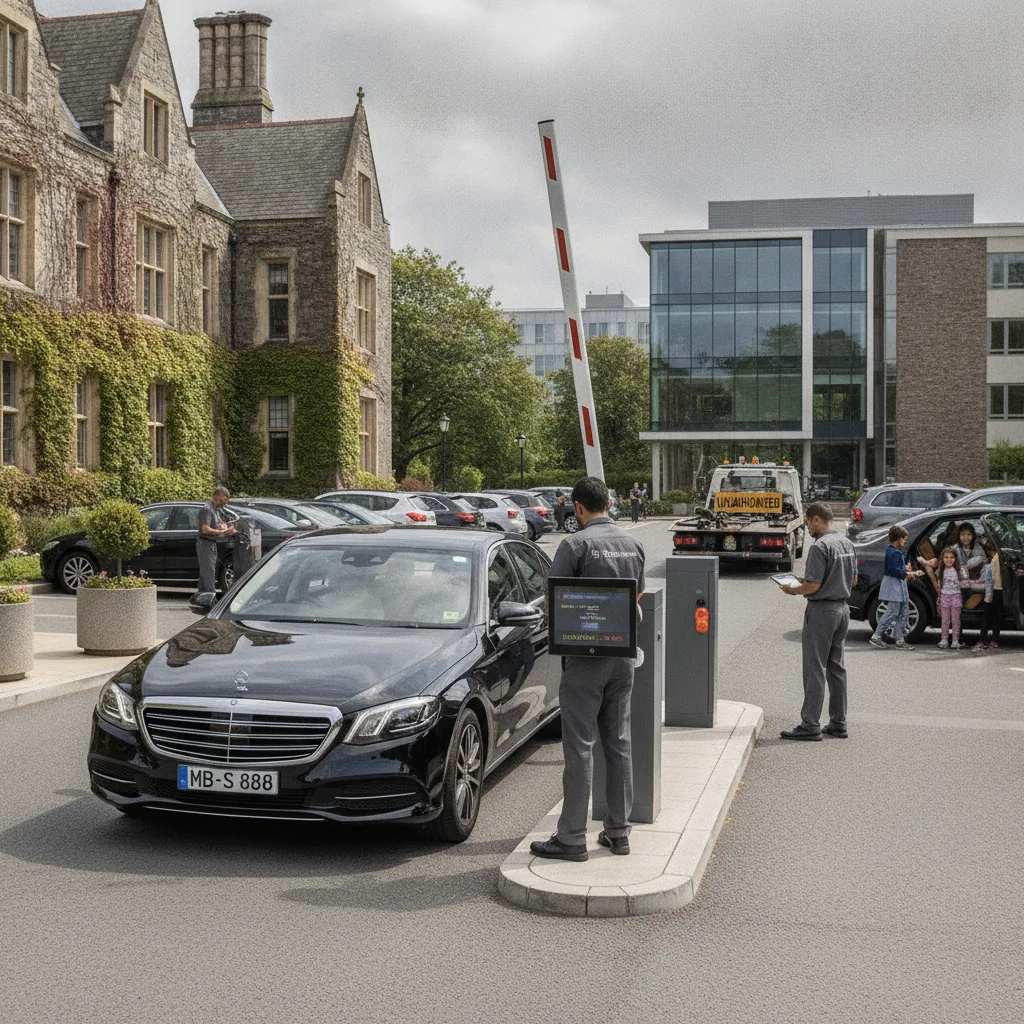
Direct answer: Map responsibility across arrival condition, vehicle and key custody, authorized drivers, movement, parking location, incident notice, evidence hold, guest communication, vendor agreement, and insurance review. Ticketless records support reconstruction but do not decide liability. For handling liability questions at event valet operations, record the responsible owner, the accepted outcome, the reason for each correction, and the measured result for events with complete custody stages before expanding the process.
This guide is for event valet companies, venue managers, risk teams, insurers, counsel, and guests and addresses handling liability questions at event valet operations. The people affected by the rule should be able to understand how a correction or exception works.
Find the bottleneck
Event staffing, temporary lots, subcontractors, and compressed handoffs can leave responsibility unclear when the contract and operating record do not align.
Example: A damage claim needs arrival images, key transfers, runner identity, movement history, handoff condition, and the applicable written agreement.
Event valet responsibility map
| Decision point | Evidence or control | Required response |
|---|---|---|
| Arrival | vehicle identity, condition, claim, key intake | establish baseline |
| Custody | runner, key location, movement, parking area | trace control |
| Incident | notice, evidence hold, guest contact, supervisor | preserve case |
| Responsibility review | contract, policy, insurer, disposition | route decision |
Sequence daily work
- Step 1. For arrival, verify vehicle identity, condition, claim, key intake and then establish baseline.
- Step 2. For custody, verify runner, key location, movement, parking area and then trace control.
- Step 3. For incident, verify notice, evidence hold, guest contact, supervisor and then preserve case.
- Step 4. For responsibility review, verify contract, policy, insurer, disposition and then route decision.
Expansion should stop when required evidence is missing.
Fallback route
This is operational guidance, not legal or insurance advice; qualified professionals must interpret actual agreements and policies.
Correct the record, approve a bounded exception, deny under the written rule, or escalate to the named authority; do not leave the case unresolved.
Bounded pilot
Run a limited test long enough to observe the recurring pattern and at least one correction or fallback.
- events with complete custody stages
- condition records linked to claims
- incidents reported on time
- evidence holds completed
- responsibilities confirmed before events
Define who counts each measure, the observation window, and the result that blocks expansion.
Acceptance evidence
- State the purpose and non-goals for handling liability questions at event valet operations.
- Assign owners for the normal path, correction, exception, and final approval.
- Test live conditions with the people who administer and experience the workflow.
- Confirm contracts, pricing, support, integrations, data handling, and governing requirements independently.
- Retain enough evidence to reproduce each approval, denial, correction, or escalation.
Related PLACA.AI planning resources
- valet operations knowledge hub
- ticketless valet system guide
- vehicle recognition for valet operations
Practical questions
What must be approved first for handling liability questions at event valet operations?
Approve the purpose, owner, evidence standard, decision rule, and exception path before scaling.
What should the pilot reproduce?
Test the normal process and the named exception while collecting events with complete custody stages and the other listed measures.
When should rollout stop?
Stop when ownership is unclear, required evidence is missing, a serious exception lacks a safe route, or the result conflicts with the approved rule.
Plan a limited workflow review
Bring the current rule, process, exceptions, and success criteria for handling liability questions at event valet operations. PLACA.AI can help evaluate a bounded pilot without assuming another property’s workflow is the right answer.
Editorial refresh: July 22, 2026. Independently confirm current product capabilities, third-party features, pricing, contracts, governing requirements, and local rules before acting.
Data source: U.S. Department of Transportation