

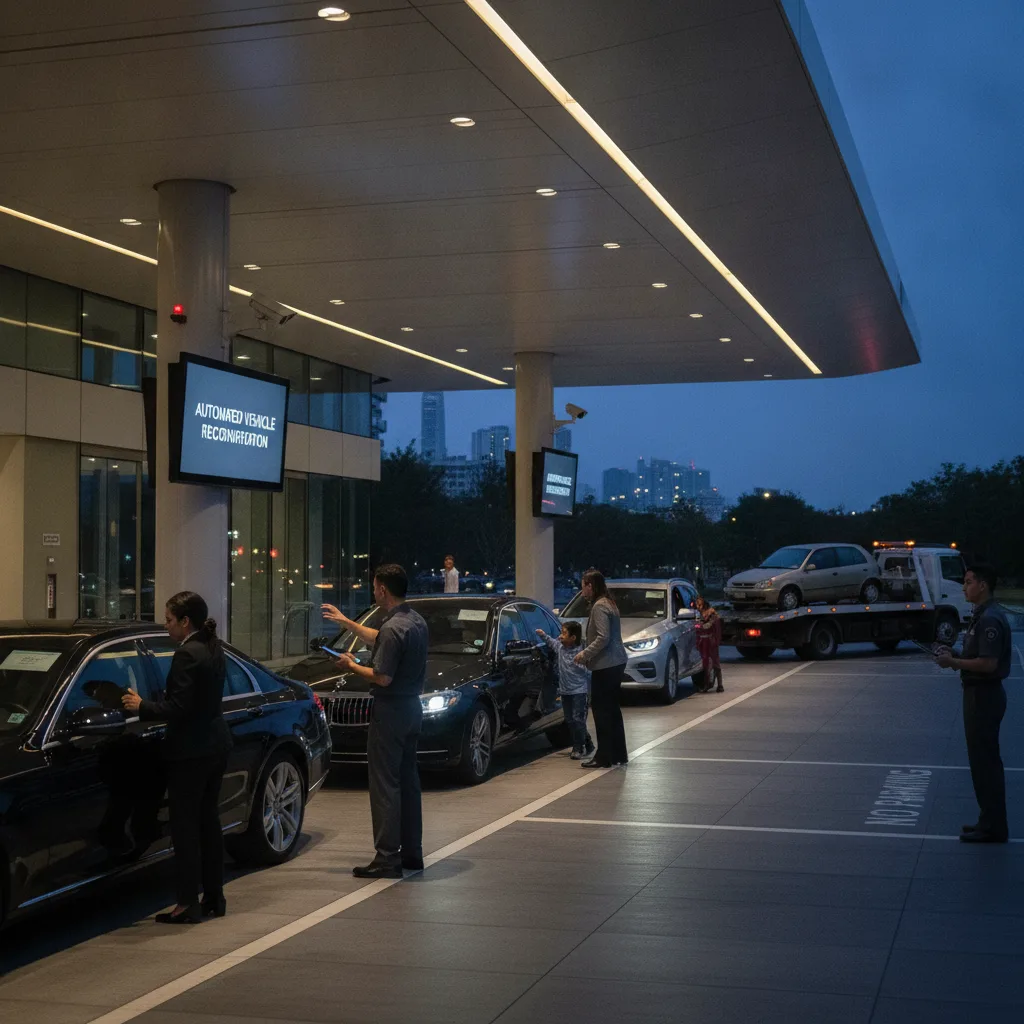
Short answer: Event valet companies face a liability problem hotels and restaurants don’t: you’re setting up a brand-new operation at an unfamiliar site for every single job — a wedding venue you’ve never worked, a private estate, a corporate campus, a rented lot down the street from a gala — often with no fixed infrastructure and a one-time guest list. Handling liability questions well means treating documentation as portable: a process your crew can stand up in twenty minutes at any site, tied to that specific event’s contract and insurance requirements, not a system built around one fixed location.
Why event valet liability looks different from a fixed-site operation
A hotel or restaurant valet team works the same stand, the same lot, the same lighting and layout, night after night. An event valet crew might work a beachfront wedding on Friday and a downtown corporate gala on Saturday, using a client-provided lot, a street closure permit, or an improvised staging area they’ve never seen before the walkthrough. That variability is the core liability challenge: your documentation process has to work identically regardless of the site, because you can’t rely on site-specific infrastructure or a lot attendant who’s worked there for years.
On top of that, most event valet work runs on a signed contract with a specific client — a couple, a planner, a venue, a corporate events team — each of which may have its own insurance and indemnification requirements written into the booking agreement. Liability isn’t just about the vehicle; it’s about proving you met that specific contract’s terms.
Where event valet liability exposure comes from
Unfamiliar terrain and improvised parking areas
A grass field, a gravel lot, a client’s private driveway, a rented commercial lot for the night — none of these come with the fixed markings, lighting, or barriers of a permanent valet stand. Uneven or unfamiliar terrain is a common source of both vehicle damage and staff injury claims, and it’s worth documenting site conditions at setup, not just vehicle condition at drop-off.
One-time guest relationships
At a hotel, staff often recognize returning guests. At a one-night event, every driver is a stranger, and the valet crew has no prior relationship or record to fall back on if a dispute arises. That makes accurate arrival documentation — condition, plate, claim ticket or digital record — more important here than almost anywhere else in valet operations.
Permit and jurisdiction differences
Street closures, temporary loading zones, and public right-of-way use require permits that vary by city and sometimes by neighborhood. Operating outside your permit’s scope — even unintentionally, because a client’s provided lot turned out to require a separate permit — creates liability exposure beyond the vehicle itself.
Per-event contract and insurance terms
Many clients, venues, and planners require a certificate of insurance naming them as additional insured for that specific date and location. Missing or mismatched paperwork here is a common, avoidable source of disputes — and one that surfaces immediately if an incident happens and the client checks whether the certificate actually covers that event.
End-of-night rush and low lighting
Events often end in a compressed window — everyone leaves within the same thirty minutes — frequently at night, with less light and less time per vehicle than the graceful pace of arrivals. This is when handoff errors and minor collisions in a crowded staging area are most likely.
Building a documentation process that travels with the crew
- Site walkthrough record. Before the event starts, log the staging area’s condition — surface, lighting, obstacles — so any later damage claim can be evaluated against a documented baseline, not just guesswork.
- Arrival capture at any location. Plate recognition and condition photos work the same way whether you’re at a hotel’s covered garage or a grass field with a folding table as your podium — the process shouldn’t depend on fixed infrastructure.
- Digital record over paper tickets. Paper claim tickets get lost easily in outdoor or high-wind conditions and don’t survive a rained-out event. A digital, plate-matched record avoids that failure point entirely.
- Event-specific contract tagging. Tie each job’s records to that specific client contract and insurance certificate, so if a question comes up weeks later, you can pull the exact paperwork that applied to that date.
Managing client and venue relationships
Because you’re often a vendor to a venue or planner rather than the primary business on site, liability questions can involve three parties: your company, the client who booked you, and the venue itself. Clarify in your contract, before the event, who’s responsible for site conditions versus vehicle handling, and confirm your certificate of insurance actually matches what the venue’s rental agreement requires — a generic annual certificate doesn’t always satisfy a venue’s specific additional-insured language. This is operational guidance, not legal advice; have counsel review your standard event contract and any venue-specific riders.
Practical steps for your next event
- Build a standard pre-event site documentation checklist your crew runs at every job, regardless of venue familiarity.
- Confirm the correct certificate of insurance is issued and matches the specific date, location, and additional-insured requirements before the event, not the morning of.
- Use digital, plate-based arrival capture instead of paper tickets for any outdoor or weather-exposed job.
- Brief your crew on the specific site’s permit boundaries, especially for street or public right-of-way jobs.
- Debrief after high-volume events to catch any incidents that weren’t reported in real time, while the crew’s memory is still fresh.
Frequently asked questions
Do we need a new insurance certificate for every event?
Many venues and clients require a certificate naming them as additional insured for that specific date and location — check each contract rather than assuming your standard annual certificate is sufficient. Confirm this with your broker.
How do we document liability at a site with no fixed infrastructure?
The same core principles apply — arrival condition, custody, retrieval match — but you also need a record of the site conditions themselves at setup, since uneven terrain or poor lighting can be a factor in a damage or injury claim.
What’s the biggest liability gap for event valet companies compared to fixed-site operators?
The lack of repeat relationships and consistent infrastructure. Every job starts from zero, so the documentation process has to be portable and consistent regardless of venue, rather than relying on institutional knowledge of one location.
PLACA.AI’s valet parking system is designed to work the same way at any site, and our valet parking knowledge hub has more on setting up documentation that travels with a mobile crew. If you’d like to see how it fits your event calendar, book a demo and we’ll walk through it.
Data source: U.S. Department of Transportation