

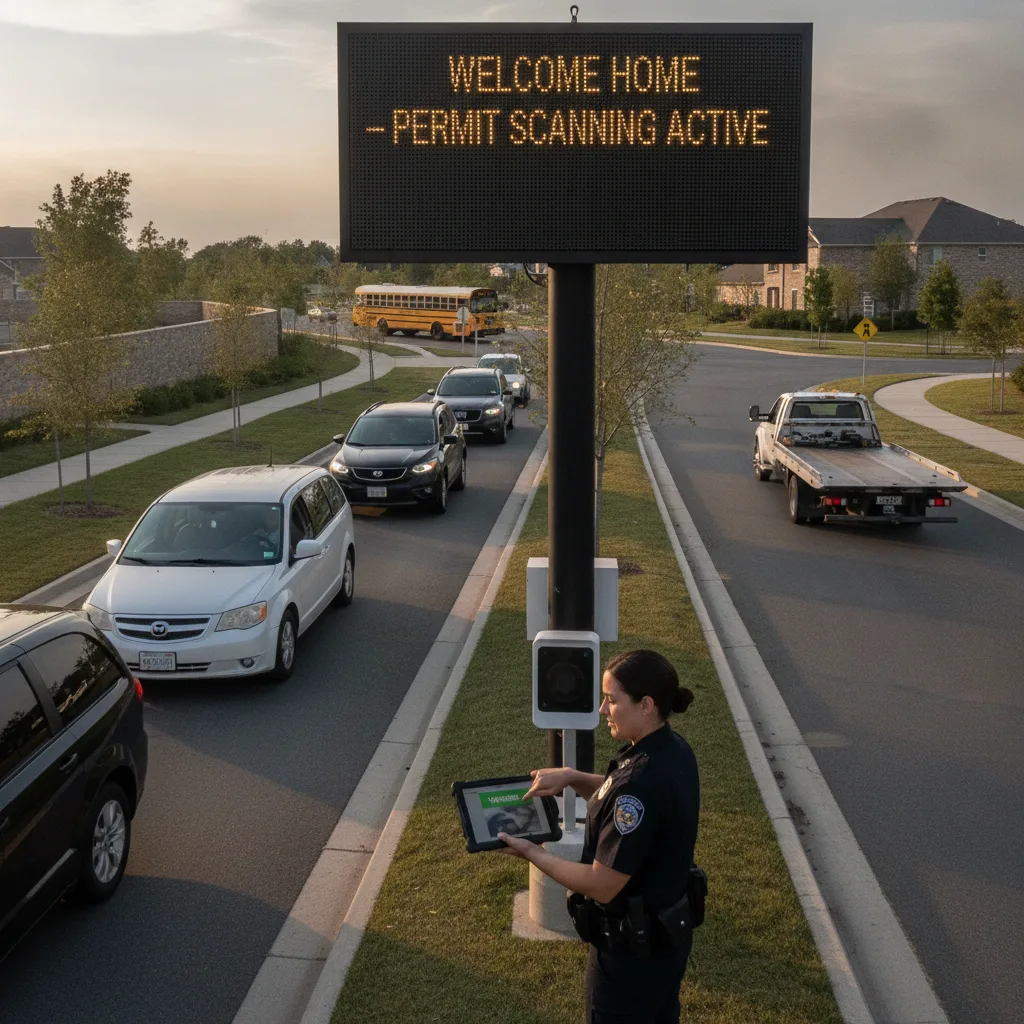
Short answer: HOA patrol operators verify permits faster by scanning plates against the community’s live resident and guest registry instead of a printed roster, treating resident, tenant, and guest permits as separate categories with different rules, and routing anything ambiguous to the property manager or board liaison rather than making a judgment call on a neighbor’s car. In an HOA, speed that skips the resident-relationship context creates more work than it saves, because every wrong call turns into a complaint at the next board meeting.
HOA patrol is different from commercial lot enforcement in one important way: almost everyone you’re checking a plate against lives there, has a guest visiting, or rents from someone who does. Getting a verification wrong doesn’t just risk a wrongful tow — it risks a resident dispute that lands on the board’s desk.
Why HOA permit verification needs its own logic
Most communities run at least three overlapping categories that a generic “permit valid / not valid” check misses:
- Resident permits tied to a specific unit or lot, sometimes capped at one or two per household.
- Guest and visitor passes, often short-term and self-registered by the resident through an app or the front gate, which is exactly where sync delays cause the most false no-matches.
- Rental or tenant permits, which can lag behind a lease change if property management hasn’t updated the registry yet after a move-in or move-out.
A workflow that treats these as one undifferentiated list will constantly misfire on guest and rental cases, which are also the two categories most likely to trigger an angry call to the board.
Building the field check
Scan first, then classify
Capture the plate with mobile LPR on approach so the read itself isn’t a source of error, then let the system tell you which category it falls into — resident, guest, rental, unregistered — before deciding anything. A guest pass that’s valid for the clubhouse lot but not the overnight resident zone is a common example: the plate matches something, but not the right thing for where the vehicle is parked.
Treat “no match” on a guest as a routing decision, not a violation
Guest passes are usually entered by the resident themselves, often same-day, and are the most likely record to be missing at the moment of the check. Before treating a guest no-match as a violation, confirm the registry has synced recently, and if there’s any doubt, leave a courtesy notice and log the case rather than escalating straight to towing.
Know who owns the exception
In an HOA, the person who can actually resolve an ambiguous case usually isn’t the patrol operator — it’s the community manager or a designated board contact. Build a simple, agreed-upon path: patrol documents (plate photo, location, timestamp, reason flagged), then hands it to the manager for same-day or next-day resolution, rather than the patrol operator personally deciding to override a rule at the curb.
Handling the recurring HOA-specific cases
New residents and closings
Move-ins often outpace the paperwork. If a vehicle doesn’t match but there’s a recent closing or lease on file, that’s a hold-and-verify case, not an automatic violation.
Holiday and event overflow
Holidays, graduation parties, and community events routinely bring more guest vehicles than the registered guest lot can absorb. Communities that plan for this — a temporary overflow zone, a relaxed guest-pass window for a specific weekend — avoid most of the disputes that come from strict enforcement during a predictable surge.
Recurring offenders vs. one-off mistakes
A resident who genuinely forgot to register a guest once is a different case from a unit that repeatedly parks unregistered vehicles in violation of the covenant. Keeping a simple history attached to each unit (not just each plate) helps the board apply consistent, documented escalation instead of relying on memory or reputation.
What to bring to the board
Boards want to see that enforcement is consistent and defensible, not just fast. A short monthly or quarterly summary works well: number of checks performed, how many resolved automatically, how many were held for manager review and why, and how those holds were ultimately resolved. This gives the board evidence that the process is fair rather than just anecdotes from whichever resident complained loudest.
FAQ
Should guest passes and resident permits use the same verification rule?
No. Treat them as separate categories with separate tolerance for ambiguity — guest passes are far more likely to have a legitimate same-day registration gap than resident permits are.
Who should have authority to override a flagged case in the field?
Generally the community manager or a specifically designated board liaison, not the patrol operator alone. Document the case and route it rather than making the exception call solo.
How should a new move-in be handled before the registry updates?
Most HOAs benefit from a short standard grace window (check your governing documents and management agreement for the specifics) during which an unmatched but plausible new-resident vehicle is held for verification rather than towed.
For the underlying scanning setup, see our mobile LPR planning guide, and for a broader look at enforcement workflows across property types, see our parking enforcement workflow guide. If your community wants help mapping resident, guest, and rental permit rules into one field workflow, contact us and we’ll walk through your current setup.
Data source: Community Associations Institute