

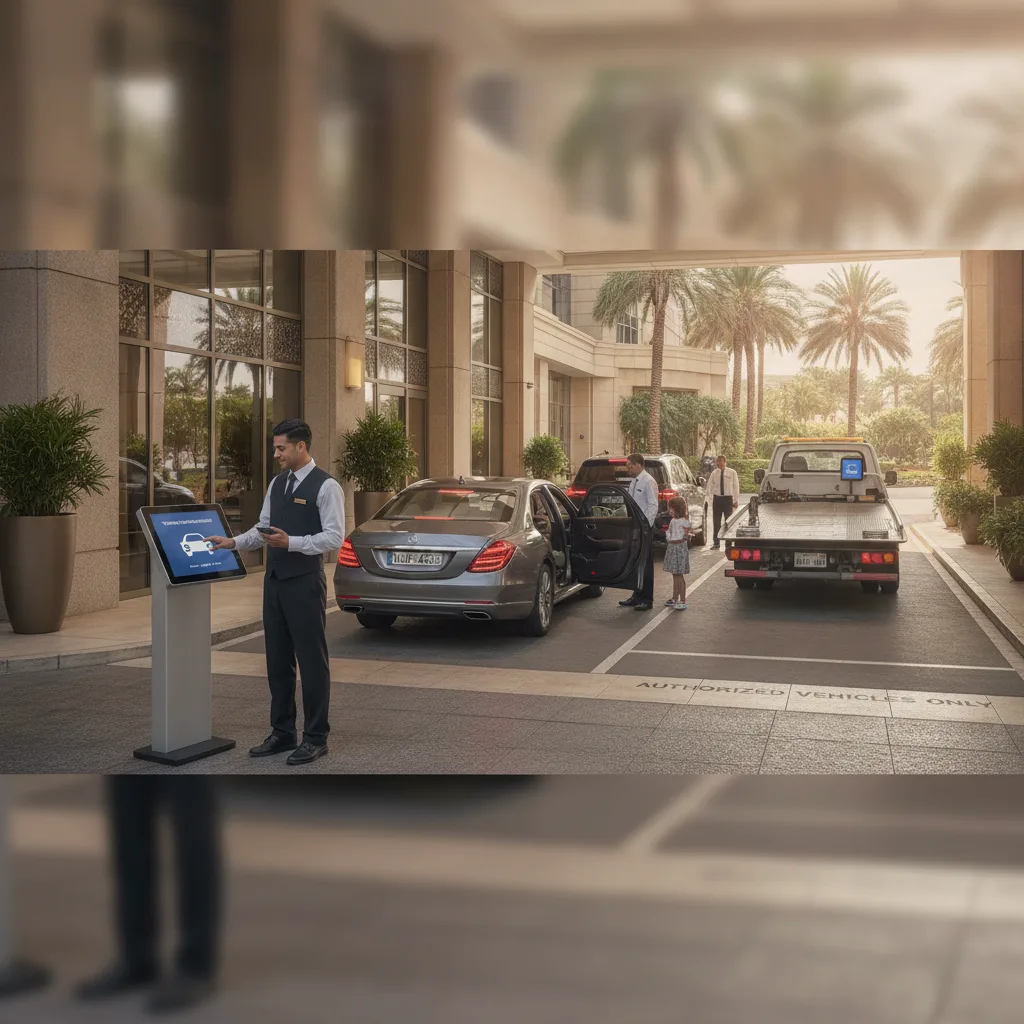
Direct answer: Across a hospitality group, the goal isn’t a single SMS script every property uses word for word — it’s a shared message framework (the same core states, the same tone, the same brand voice) with room for each property to fill in real local details like pickup location, wait-time estimates, and hours. Standardize the structure centrally; let each general manager’s team own the local variables that only they know accurately.
The tension every multi-property group runs into
Give every property full freedom over their SMS wording and you get exactly what most groups have today: inconsistent brand voice, wildly different guest experiences between a flagship urban hotel and a suburban limited-service property, and no way for corporate guest-experience or IT teams to diagnose a problem across the portfolio because every property’s messaging looks different. Go the opposite direction — a single rigid template every property must use unmodified — and you get messages that are wrong on day one, because a resort with valet parked a quarter-mile away has fundamentally different timing and instructions than an urban hotel with an attached garage. The answer is a framework: fixed message structure and brand tone, variable local content.
Designing the framework
1. Standardize the message states, not the exact wording
Every property should use the same core sequence — request received, vehicle in progress, vehicle ready, handoff confirmed — so that training, reporting, and guest expectations are consistent no matter which property in your portfolio a guest is staying at. What’s local is the timing estimate and pickup instruction attached to each state.
2. Centralize brand voice and formatting, decentralize logistics
Corporate should own the tone, length, and formatting of each message template — this is a brand-standards question as much as an operations one. Property teams should own the variables: actual pickup location, current wait-time estimate, local escalation contact, and hours of valet service. Build the template so a property can fill in these fields without touching the surrounding message language.
3. Integrate with your property management system, not around it
If a guest’s phone number already lives in your PMS from check-in, valet SMS should pull from that record rather than asking guests to provide a number a second time at the valet stand. This reduces friction and keeps a single source of truth for guest contact information across the stay, which also matters for consent tracking and opt-out handling at the corporate level.
4. Build one change-approval process for template updates
When a property wants to adjust wording — because their guest feedback shows confusion, or because a seasonal condition changes their timing — that change should go through a defined approval path, not get edited locally without anyone else knowing. This keeps drift from creeping back in six months after your initial rollout.
Handling variation across very different property types
A resort, an urban hotel, and a limited-service property near an airport are not going to run identical valet operations, and the messaging needs to reflect that honestly:
- Resorts and remote-parking properties need realistic time estimates that account for genuinely longer retrieval distances — don’t force a template built for a five-minute garage retrieval onto a property where ten to fifteen minutes is normal and honest.
- Urban properties with attached garages can promise faster turnaround and should say so — an artificially conservative estimate just trains guests to distrust the messaging.
- Properties with limited overnight valet staffing need messaging that’s honest about reduced service hours rather than sending a template that implies 24-hour valet availability when it isn’t actually staffed that way.
What corporate operations should monitor across properties
You want visibility without micromanaging every text. Track, at the portfolio level: delivery failure rates by property (a spike can indicate a data quality issue with phone numbers collected at check-in), how many guests fall back to a non-SMS request method, and whether individual properties are quietly deviating from the approved message states. A property with unusually high fallback-channel usage is signaling either a technical problem or a guest population that isn’t engaging with text — both worth investigating.
FAQ
Should every property in the portfolio use the exact same SMS vendor or platform?
Using a single platform across properties makes governance, reporting, and consent tracking far easier than reconciling data from multiple disconnected tools property by property — even if the messaging itself varies locally.
How do we handle guest consent for SMS across a portfolio with different local regulations?
Set a single, conservative consent standard at the corporate level that meets the strictest applicable requirement across your operating markets, rather than trying to manage different consent language property by property.
What’s the biggest early failure mode when rolling this out across a group?
Copying one property’s working template onto every other property without adjusting the local variables — timing estimates and pickup instructions that are accurate at your flagship property are often simply wrong somewhere else in the portfolio.
See PLACA.AI’s valet parking software for hotels page, the ticketless valet system overview, and the valet parking knowledge hub for more on standardizing operations across properties.
Rolling out SMS communication across a multi-property portfolio? Talk to PLACA.AI about a framework that scales without losing per-property accuracy.
Data source: U.S. Department of Transportation