

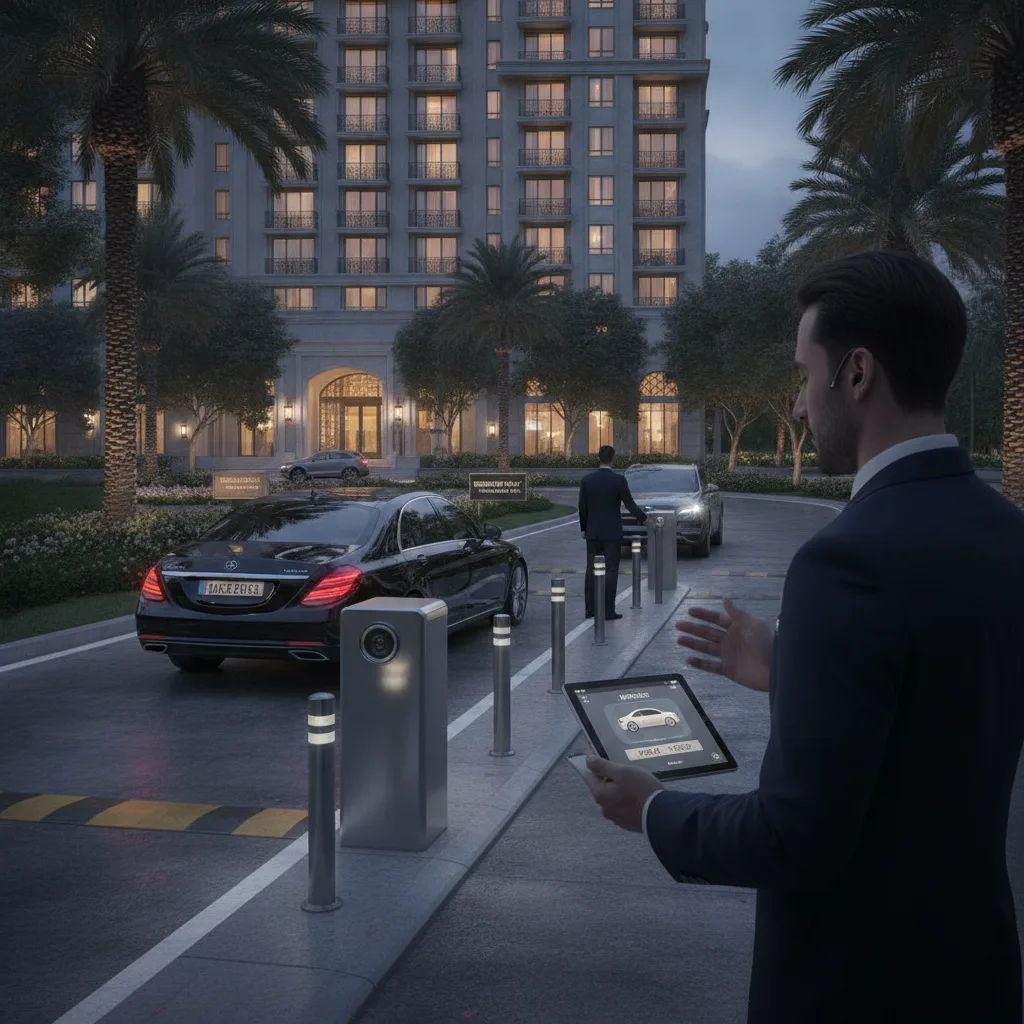
Direct answer: Luxury residential valet teams coordinate staffing on busy nights by scheduling around predictable building-specific surges — holiday parties, move-in/move-out weekends, resident events in the amenity space — and by using ticketless vehicle recognition so the same small, familiar crew can identify resident and guest vehicles instantly instead of relying on a ticket system that frustrates residents who expect concierge-level service every single time, not just on quiet nights.
Residential valet is fundamentally different from hotel or event valet: it’s the same residents, the same cars, and the same expectations every day, and a bad experience on a Saturday night doesn’t just cost a tip — it generates a complaint to the board. Your staffing plan has to hold up under both routine evening traffic and the occasional predictable surge, without the building ever feeling short-staffed to people who live there.
Know your building’s actual surge calendar
Unlike a hotel or event venue, a residential building’s busy nights are largely knowable in advance:
- Holidays and building-hosted events: New Year’s Eve, Thanksgiving, a rooftop or clubhouse party — these draw both residents and their guests simultaneously, often with everyone arriving in the same 90-minute window.
- Move-in/move-out weekends: Especially in buildings with lease turnover concentrated around the first of the month, moving trucks and multiple resident vehicles competing for the same curb space create a very different kind of surge than a party night — longer dwell times, not just higher volume.
- Weekend evenings generally: Friday and Saturday dinner-hour and late-night return traffic is the steady baseline surge every residential valet team should already be staffing for, separate from special events.
Build a simple internal calendar of known building events for the quarter and staff those nights deliberately, rather than discovering the surge in real time. For recurring weekend patterns, use your own retrieval-time logs from the past several weekends as the baseline — residential buildings generate very consistent week-over-week patterns once you’re past the first few months.
Why ticketless recognition fits residential valet especially well
In a hotel, a ticket system is tolerable because most guests are transient. In a residential building, the same 150–400 vehicles cycle through the valet stand every week, and residents notice when the process feels clunky or impersonal. Ticketless vehicle recognition plays to residential valet’s real advantage — familiarity — by making it systematic:
- Faster resident recognition. A returning resident’s car is identified automatically rather than requiring the resident to dig for a ticket they may not have kept, which matters most exactly when they’re juggling groceries, kids, or a moving box.
- Clean separation of resident and guest traffic. On a party night, you need to be able to tell at a glance which cars belong to residents (who may want faster turnaround for a quick errand) and which are dinner-party or event guests, so the crew can prioritize without guessing.
- An accurate record for disputes. Residential valet is one of the few segments where a single mishandled car can escalate straight to the HOA board or property manager. A timestamped vehicle record — when it came in, who took it, when it went out — is the difference between a five-minute conversation and a drawn-out dispute over “your team lost my car for twenty minutes.”
Staffing the surge without over-staffing the routine night
Most residential buildings can’t justify event-level staffing every night, so the plan needs two tiers:
Baseline weeknight and quiet-weekend coverage
A steady, small crew — often one greeter/runner combination plus a second runner during the dinner-hour return window — is enough for routine traffic. This is where a consistent, known crew pays off: residents recognize their valet team by name, and that familiarity is part of the service residents are actually paying for in their HOA or building fees.
Surge-night coverage for known events
For holidays, building events, and move-in/move-out weekends, add a dedicated curb lead whose only job is managing the queue and coordinating with the front desk or concierge, plus one or two additional runners pulled from your on-call list. Because these dates are largely predictable, you can schedule ahead rather than scrambling for last-minute coverage — a real advantage over event or restaurant valet, where surges are less certain in timing.
Front desk and concierge coordination
In most luxury residential buildings, valet doesn’t operate in isolation — the front desk or concierge team is fielding resident calls about guest arrivals, deliveries, and building events at the same time. Make sure your curb lead has a direct line to the front desk on surge nights so guest lists and expected arrivals aren’t a surprise to the valet team.
Handling discretion and privacy
Residential valet carries a privacy dimension hotel and event valet don’t: your crew knows residents’ schedules, their guests, and their vehicles intimately. Set a clear standard with your team — vehicle and arrival information stays internal to valet and front-desk operations, and specific resident movements are never discussed with other residents, vendors, or outside inquiries. This is as much a resident-retention issue as it is a service standard; residents choose buildings with valet partly for the discretion it implies.
FAQ
How far in advance should we staff up for a building event?
As soon as the building management or events calendar confirms a date — for predictable events like holidays, that can be weeks out, which gives you time to line up on-call staff rather than paying rush premiums for last-minute coverage.
Should resident and guest vehicles be handled differently?
Not in terms of care, but in terms of priority and information: residents often need faster turnaround for short errands, while guest vehicles typically stay for the duration of a visit or event. Being able to distinguish them at a glance helps the crew triage correctly during a surge.
What’s the biggest complaint driver in residential valet?
Inconsistency — a resident who gets excellent, fast service on a quiet Tuesday and then a 20-minute wait on a Saturday night is far more likely to complain to the board than a resident who experiences consistent, moderate wait times every time.
For more on setting up residential valet operations, see the valet operations knowledge hub, the valet parking system overview, and the ticketless valet system guide.
Plan staffing for your building’s next surge night
Talk to PLACA.AI about setting up ticketless vehicle recognition so your residential valet team can deliver consistent service on both routine nights and predictable high-traffic events.
Data source: U.S. Department of Transportation