

Short answer: Luxury residential valet teams reduce lost valet ticket problems by building verification around the household, not the guest — confirming who’s currently authorized to request a resident’s vehicle (which can change with staff turnover, family visits, or a car loaned to a guest) rather than treating every lost-claim case like a one-time hotel or restaurant interaction.
Residential valet is a different relationship than any other segment. You’re not verifying a stranger who was here for one dinner — you’re working with the same residents, their household staff, and their regular guests over months or years. That familiarity is exactly what creates the risk: a friendly, well-known desk attendant is the one most likely to release a car on recognition alone, right at the moment a resident’s authorized-driver list has quietly changed and nobody updated the front desk.
Familiarity is the actual vulnerability, not a safeguard
In a hotel or restaurant, staff are naturally cautious with a stranger. In a residential building, the opposite instinct kicks in — staff know the resident, so a request from “someone who works for them” or “their daughter visiting for the week” tends to get waved through without much scrutiny. The problem is that household arrangements change more often than the front desk usually hears about: a new housekeeper starts, an adult child moves out and stops being an authorized driver, a resident temporarily lends their car to a visiting relative. None of these show up automatically in a system built around “we recognize this person.”
Illustrative example: A resident’s personal assistant, who has picked up the car dozens of times over two years, is no longer employed as of last month — but nobody told the valet desk. If a request comes from someone claiming that role, recognition-based release is exactly the gap that lets a lost or informal claim through incorrectly.
Build an authorized-requester list, and keep it current
The single highest-value fix for residential valet is a maintained list, per unit, of who is currently authorized to request that resident’s vehicle — updated by the resident themselves, not inferred by staff over time. This should be:
- Resident-controlled. The resident (or the primary account holder) updates the list through the building’s front desk, concierge, or property management system — not staff guessing based on who they’ve seen before.
- Reviewed periodically. Stale entries (a former assistant, an ex-partner, a driver who no longer works for the household) should be flagged for confirmation on a regular cadence rather than left indefinitely.
- Checked at the point of request, not assumed from familiarity — even for someone the desk has seen a hundred times before.
A workable lost-claim process for residential valet
- Confirm the requester’s role. Resident, listed household member, or listed guest/staff — check against the current authorized list, not memory.
- Match the vehicle record. Plate, unit, and arrival details logged at intake, regardless of whether a physical stub was issued.
- Escalate anything outside the list. If the requester isn’t on the current authorized list, the request goes to a supervisor or a direct check with the resident — not a judgment call at the desk.
- Log the exception with discretion. Residential buildings have a higher privacy expectation than a hotel or restaurant — keep the log to what’s operationally necessary (who requested, who approved, how it was verified) without recording unrelated household detail.
Balance discretion with actual verification
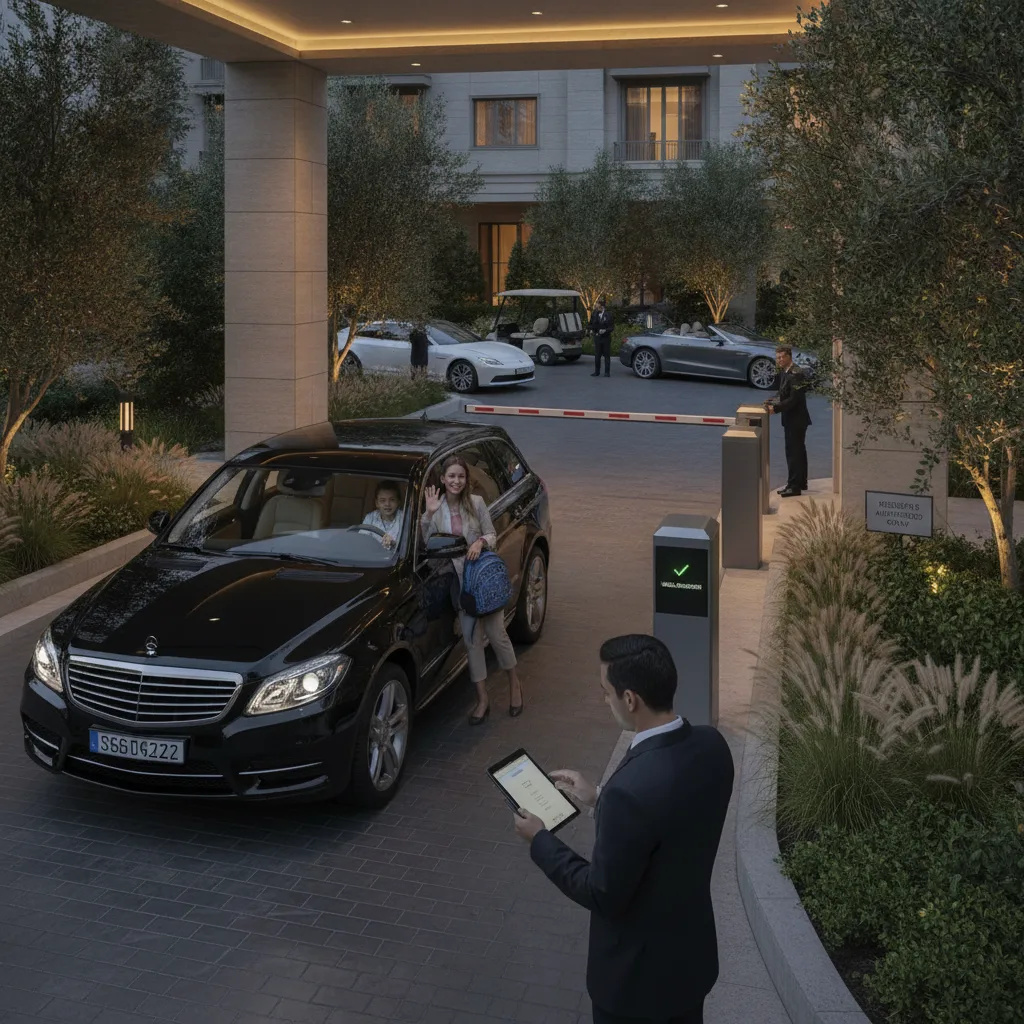
Residential guests expect a level of discretion a hotel lobby doesn’t require — nobody wants the valet desk loudly interrogating a household guest in front of neighbors. The verification steps above can and should happen quietly: a quick confirmation against a tablet or handheld record takes seconds and doesn’t need to be visible to anyone else in the lobby. Discretion is about how verification happens, not whether it happens.
Coordinate with building management and concierge
In most luxury residential buildings, valet doesn’t operate in isolation — concierge, building management, and sometimes a separate security desk all touch resident and guest access. The authorized-requester list works best when it’s the same list all of these teams reference, rather than valet keeping its own informal notes separate from what concierge knows. A resident who updates their authorized list with concierge should not have to separately notify the valet desk for it to take effect.
What to review periodically
- Are authorized-requester lists reviewed with residents at least once or twice a year, not just set once at move-in?
- Does valet actually check the list at the point of request, even for familiar faces?
- Is there a single shared record between valet, concierge, and building management, or three separate informal ones?
- Are exception logs kept with appropriate discretion while still capturing who approved what?
FAQ
How do we ask long-term residents to keep their authorized list updated without it feeling intrusive?
Frame it as a security benefit for them — most residents appreciate knowing their vehicle won’t be released to someone who’s no longer supposed to have access, once it’s explained that way.
What if a resident’s guest arrives and isn’t on the list?
Verify directly with the resident before release, ideally by a quick call or message rather than assuming based on the guest’s explanation alone.
Should residential valet use the same verification standard as a hotel?
The principle is the same — don’t rely on recognition or a ticket alone — but the mechanism is different, since residential valet is managing an ongoing authorized-requester relationship rather than a one-time guest interaction.
See PLACA’s valet parking knowledge hub, the ticketless vehicle recognition system overview, and the valet parking system overview for more on plate-based vehicle records for ongoing resident relationships.
Want to talk through how an authorized-requester workflow fits your building’s resident and staff turnover? Contact PLACA or book a demo.
Data source: U.S. Department of Transportation