

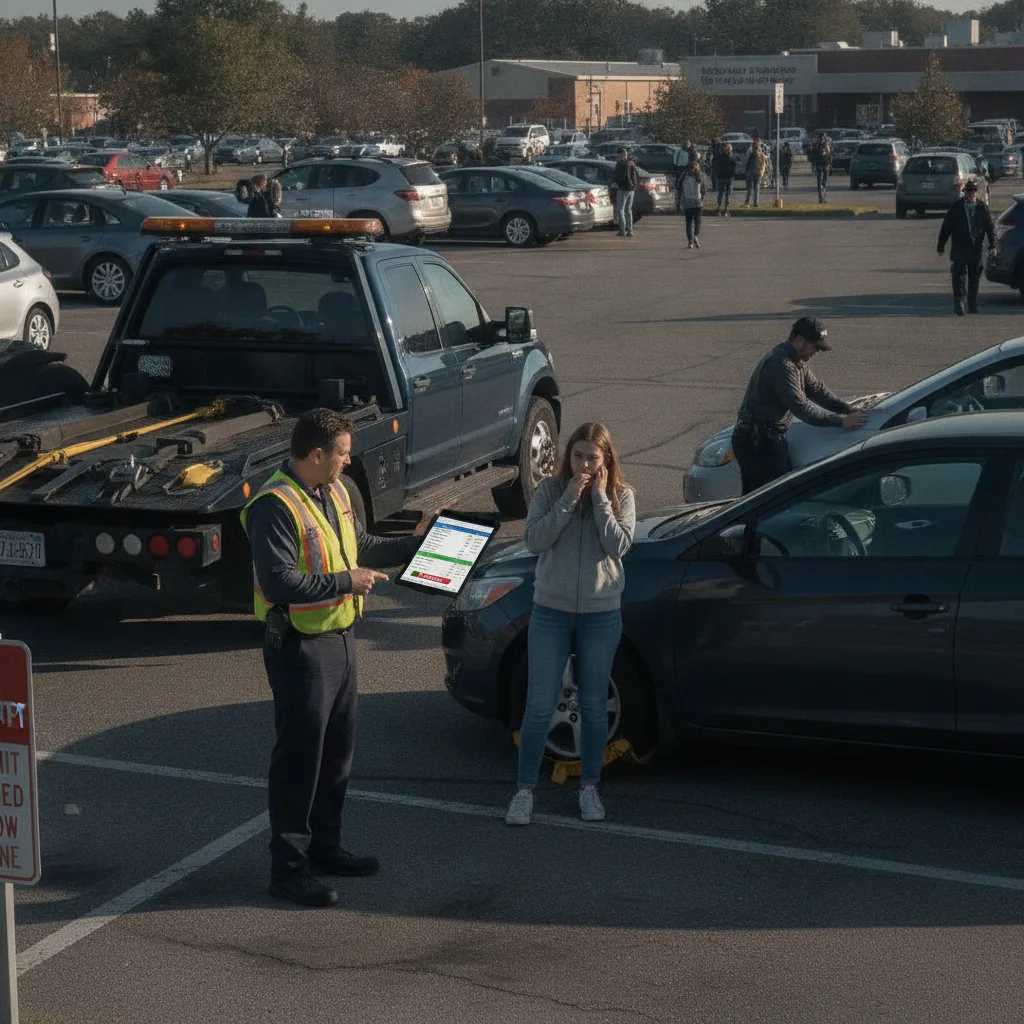
Direct answer: Companies that run both repossession recovery and private-property towing are tracking two different kinds of “repeat” plate hits, and mixing them up creates real legal exposure: a vehicle on a lienholder’s recovery order is subject to state repossession and breach-of-peace rules, while a vehicle repeatedly violating a property’s parking rules is subject to that property’s towing contract and local towing statutes. Keeping those two categories cleanly separated in your plate-matching workflow is what keeps a routine parking sweep from accidentally turning into an improper repossession attempt, or vice versa.
This is written for operators running combined repo and tow operations — field agents and dispatch who work both lienholder recovery orders and private-property patrol routes, often with overlapping equipment and staff.
Why the two “repeat violator” lists need to stay separate
A recovery order for a delinquent vehicle and a property’s list of repeat parking offenders can both flag the same plate for entirely unrelated reasons. If your field system surfaces a hit without clearly labeling which list it came from, an agent on a routine property patrol can end up initiating a repossession action they’re not currently authorized or positioned to execute safely — or a repo agent scanning a lot for a recovery target can mistakenly treat an unrelated repeat parking violator as their assignment. Both mistakes create liability: wrongful repossession claims carry their own statutory penalties in most states, separate from and often steeper than a wrongful tow dispute.
Building the recovery-order side correctly
1. Match against an active, current order only
Recovery orders expire, get suspended when a borrower reinstates a loan, or get pulled back by the lienholder. A plate match against a stale or canceled order is the single most common source of wrongful-repossession complaints — confirm order status at the point of the hit, not just at the point the order was originally issued.
2. Log the location and circumstances of every hit, not just successful recoveries
If a target vehicle is spotted but not recovered (wrong property, occupied, unsafe conditions, outside authorized recovery territory), that sighting still matters — it tells you where the vehicle tends to be, which helps plan a compliant recovery attempt later, and it documents that your agents followed the rules rather than pursuing recovery somewhere they weren’t authorized to.
3. Keep breach-of-peace conditions front and center
Most state repossession law prohibits recovery that involves forcing entry, physical confrontation, or removing a vehicle from an enclosed or clearly private space without consent. A repeat sighting on a property doesn’t change those rules — it just tells you the vehicle is there. Whether recovery can proceed depends on the conditions in front of the agent at that moment, not the number of prior sightings.
Building the property-violator side correctly
1. Track by property and rule, the way any towing client expects
For your towing contracts, repeat-violator tracking works the same way it would for a tow-only operator: same plate, same or comparable rule, documented instances, tied to that property’s specific contract terms. This list has nothing to do with lienholder orders and shouldn’t be cross-referenced with them by default.
2. Flag — don’t merge — any plate that appears on both lists
Occasionally a vehicle will legitimately show up on both a recovery order and a property’s repeat-violator list. That’s useful information, but it doesn’t collapse into one case. The recovery action and the towing action have separate legal bases, separate authorizations, and often separate clients — handle them as two linked but distinct records, not one merged entry.
Field workflow: what agents actually need to see
In practice, the safest setup gives a field agent a clear, immediate label on any plate hit — “active recovery order” versus “property violation history” — along with enough context to know whether they’re currently authorized and positioned to act on it. An agent working a property patrol route shouldn’t need to guess whether a flagged plate is a repossession target; a repo agent working a recovery route shouldn’t need to guess whether a flagged plate is just a routine parking violator. The distinction needs to be visible before any action is taken, not sorted out afterward.
When to hold off
- The recovery order’s current status can’t be confirmed in the field
- The vehicle is in a location or condition that raises breach-of-peace concerns (occupied, gated, attached structure, confrontation risk)
- A plate hit is ambiguous about which list — recovery or property violation — it belongs to
- The property’s tow authorization and a recovery order overlap in a way that isn’t clearly resolved between the two clients involved
Any of these should route back to dispatch or a supervisor before action, not get resolved by the agent alone in the field.
FAQ
Can we treat a property’s repeat parking violator as a repossession lead if we suspect the loan is delinquent?
No — recovery requires an active order from the lienholder, not a suspicion from the field. Flag it internally if relevant, but don’t act without proper authorization.
How long should we keep sighting records for an unrecovered target vehicle?
Long enough to be useful for planning future compliant attempts, but check your state’s data retention rules and your contract terms with the lienholder — retention requirements vary.
What’s the biggest operational risk in combining repo and tow work under one system?
Treating the two “repeat” concepts as one list. They have different legal bases, different clients, and different consequences for getting it wrong.
Related reading
- Parking enforcement software for towing companies
- Mobile LPR planning guide
- Parking enforcement LPR software overview
If your team runs both recovery and property patrol routes and needs those records kept clean and separate, PLACA.AI can walk through what a mobile LPR workflow looks like for combined operations — get in touch or book a demo.
Data source: U.S. Department of Transportation