

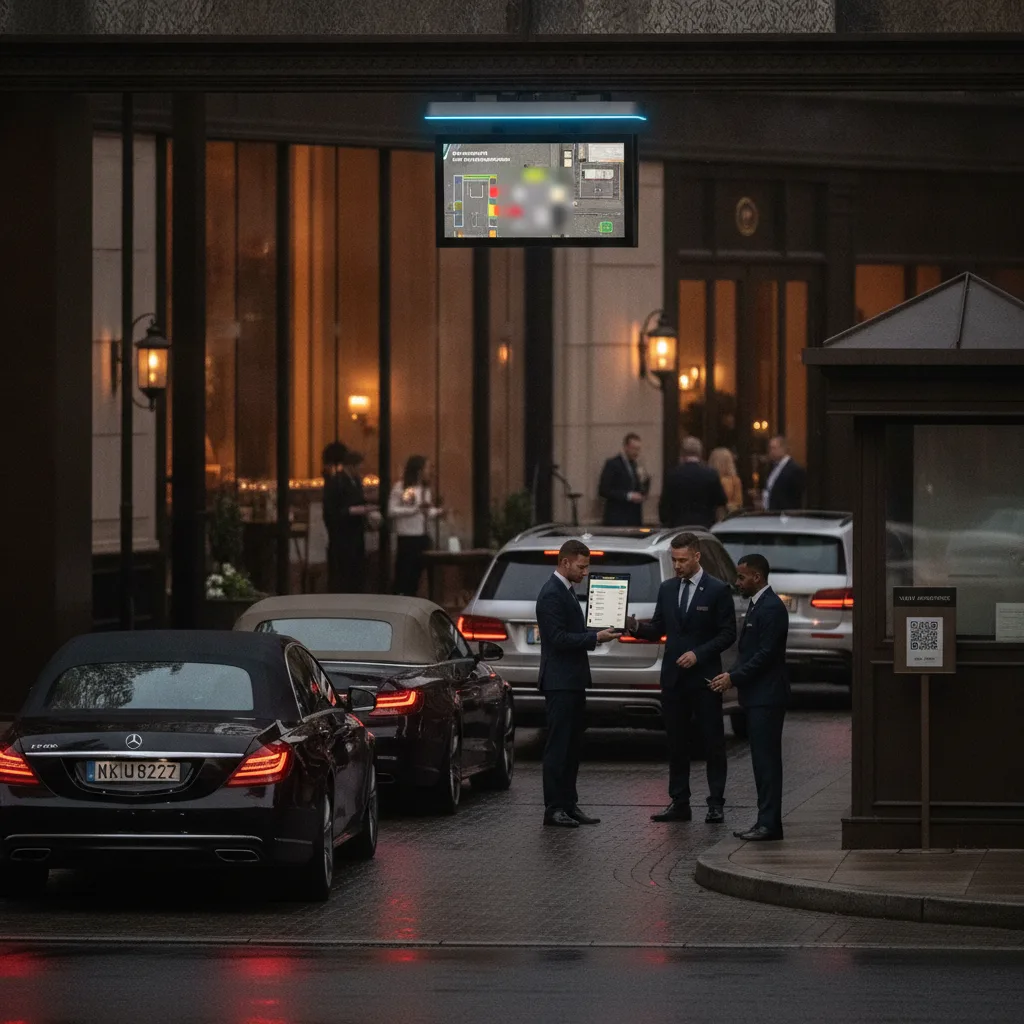
Short answer: The hard part of staffing restaurant valet isn’t hiring enough people for a busy night — it’s matching staff to the actual shape of the rush, which usually isn’t a steady flow but a series of waves tied to your reservation book, table turns, and how many parties happen to finish around the same time. Getting this right means forecasting from your covers and reservation pacing, not just your average Friday headcount, and building in a way to add coverage fast when several tables clear at once.
Why restaurant valet staffing is a wave problem, not a headcount problem
A restaurant’s busiest valet moments rarely match its busiest dining room moments exactly. Arrivals cluster around your reservation windows — a 7pm seating brings a wave of drop-offs in a tight 20-minute stretch — but retrievals cluster around when tables actually finish, which is less predictable and often comes in its own wave when several parties who arrived around the same time all wrap up dinner together. A valet team staffed for the average pace of the night can still get overwhelmed for fifteen minutes at a time if two large parties, a private event, and a cluster of a la carte tables all request their cars within the same window.
This is different from a hotel, where arrivals and departures spread more evenly across a day, or a venue, where the whole crowd moves in one direction at once. Restaurant valet has to handle both directions, in overlapping waves, often with a much smaller crew.
Forecasting the actual shape of the night
Use your reservation book, not just total covers
Total covers for the night tell you volume, but reservation timing tells you when the pressure hits. A night with 120 covers spread across a steady 5:30–9:30pm seating pattern staffs very differently than 120 covers concentrated into two big seatings at 6:30 and 8:30.
Watch for retrieval clustering
Large parties, private dining rooms, and pre-theater or pre-event diners tend to arrive and leave in blocks. If you know a party of twelve is dining before an 8pm show, you know roughly when that retrieval wave is coming — plan a floater for that window rather than discovering the surge when it happens.
Factor in weather and walk-in variability
Reservations are predictable; walk-ins and weather aren’t. A clear Friday evening can bring a wave of walk-in traffic your reservation-based forecast didn’t account for, and rain can do the opposite — but it can also push more people to valet who’d otherwise park themselves, so don’t assume bad weather always means lighter valet volume.
Building a staffing plan around the waves
- Baseline coverage. Set your standard crew size for typical volume, covering greeting, key control, and running simultaneously without gaps.
- Named trigger points. Define what actually calls in a floater — a queue past a certain length, a cluster of retrieval requests hitting at once, a known large-party departure window — rather than leaving it to whoever’s on shift to notice things are getting busy.
- On-call or split-shift coverage for peak windows. For predictable surge nights (Friday/Saturday, holidays, major local events), schedule a shorter, higher-density shift specifically for the peak hour rather than stretching your whole crew across the entire service.
- Coordination with the host stand. Give your valet lead visibility into the reservation book and any large-party or private event bookings, so staffing decisions are based on what’s actually coming, not guesswork.
Where paper tickets slow staffing decisions down
When a queue starts building, the valet captain’s first question is usually “how many cars are actually out there and how far away are they parked?” If that answer depends on flipping through paper tickets or checking with whoever ran the last car, you lose time exactly when you need to move fastest. A digital, plate-based system that shows which vehicles are parked, how long they’ve been out, and where they are lets a captain make a faster call about whether to pull in a floater or reposition a runner — without interrupting whoever’s actively working the curb to ask.
Handling holidays and major event nights
Valentine’s Day, Mother’s Day, New Year’s Eve, and any night tied to a nearby concert or game are structurally different from a normal Friday — volume is higher, but so is the concentration of arrivals and departures into narrow windows. Treat these as their own staffing plan rather than a scaled-up version of a regular busy night: bring in extra runners specifically for the known peak windows, confirm curb space with the restaurant’s landlord or neighboring businesses in advance if you expect overflow, and brief the full crew on the night’s specific timeline (reservation waves, any private events, expected walk-in surges) before doors open.
Practical steps to build this into your scheduling
- Pull your reservation timing for the upcoming week and flag any seatings with large parties or private events likely to create a retrieval cluster.
- Set a specific, written trigger (queue length, wait time, or number of pending retrievals) that calls in a floater, so the decision doesn’t depend on one person noticing.
- Build a short peak-hour shift for your highest-volume windows instead of running your entire crew at the same staffing level all night.
- Give your valet captain read access to the host stand’s reservation and large-party notes.
- After each major rush night, do a quick debrief on where the crew felt understaffed and adjust the trigger points for next time.
Frequently asked questions
How far in advance should we plan staffing for a predictable rush?
Use your reservation book a few days out to set baseline staffing, then confirm the day-of based on walk-in trends and weather. Reservations give you the shape of the night; same-day judgment fills in the rest.
What’s the best way to handle a sudden retrieval surge mid-service?
Have a named trigger (a queue length or wait time threshold) that automatically calls in a floater or pulls a runner from a lighter task, rather than waiting for someone to flag that things have gotten backed up.
Does digital vehicle tracking actually help with staffing decisions, or just liability?
Both — knowing exactly which cars are out, how long they’ve been parked, and where they are lets your captain make faster, better-informed staffing calls during a rush, on top of the documentation benefits.
PLACA.AI’s valet parking software for restaurants gives your team real-time visibility into parked vehicles during a rush, and the valet parking knowledge hub has more on building staffing plans around peak demand. If you’d like to see how it fits your reservation patterns, book a demo and we’ll walk through it.
Data source: U.S. Department of Transportation