

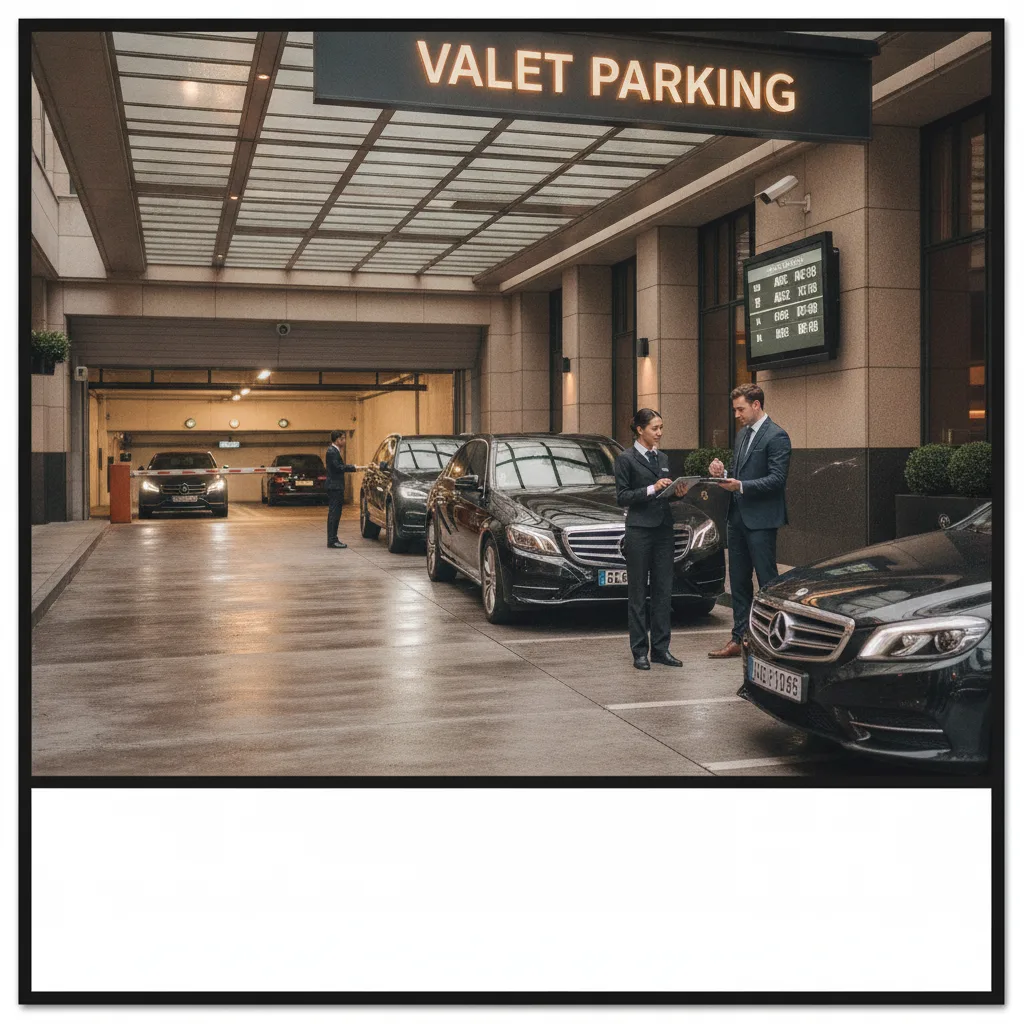
Direct answer: The highest-value SMS moment in restaurant valet isn’t the arrival text — it’s the “your car is ready” message that lets a guest finish their coffee at the table instead of standing on the sidewalk. Trigger that text automatically when the car reaches the front, tied to the guest’s plate rather than a ticket number they may have left in their coat pocket, and keep the message short enough to read in one glance at a dinner table.
Why SMS matters more at restaurants than almost anywhere else
Restaurant valet has a built-in awkwardness: the guest is seated, often mid-conversation or finishing a check, and the valet stand is out of sight. Unlike a hotel guest who’s already near the lobby, or an event guest who’s already moving toward the exit, a restaurant guest has to guess when to get up. Guess wrong and they’re either standing outside in the cold for ten minutes, or they’re holding up the valet line because they weren’t told their car was ready five minutes ago. SMS solves this — but only if the timing is right and the message doesn’t require the guest to do anything extra.
Building an SMS flow around a dinner service, not a hotel checkout
1. Send the retrieval-ready text at the moment the car is actually at the curb
The single most common failure mode is sending the “ready” text too early — while the car is still being pulled from a back lot or a stacked spot two blocks away — which just creates a guest who’s now standing outside waiting anyway. Tie the message trigger to the vehicle physically reaching the handoff point, not to when the retrieval request was made.
2. Let the guest request the car from the table, not just from a kiosk
A texted retrieval request — “reply READY when you’d like your car” or a link sent at check time — lets the kitchen and floor teams signal timing without a runner walking table to table. This matters most during a full house on a Friday or Saturday, when every minute a host spends relaying a verbal request to the valet stand is a minute they’re not seating the next table.
3. Keep the message short and skip the app requirement
Restaurant guests are not going to download an app for a single dinner. SMS works because it requires nothing beyond a phone number. Keep messages to one line: “Your car is ready at the front” is enough. Don’t bury it under a branded template with multiple links — during a rush, the guest just needs to know whether to stand up.
4. Reduce sidewalk crowding by staggering, not batching
On a busy night, several tables may request their cars within the same few minutes. If your system pings all of them with a rough estimate at once, you get a sidewalk full of people waiting simultaneously — bad for guest experience and genuinely a safety and curb-management problem. Space out ready notifications based on actual retrieval order and realistic wait time per car, not by batch.
Handling the messages that go wrong
- Undelivered texts. Not every guest’s carrier or phone will get the message instantly. Have a host-stand fallback — a visible screen or verbal check — for guests who don’t respond within a normal window.
- Shared or reassigned phone numbers. If a guest gives a different number than the one on file (common with reservations booked under someone else’s name), confirm plate and name at pickup rather than relying solely on who responds to the text.
- The “my car’s not actually ready” mismatch. If a guest walks out after a ready text but the car isn’t actually there yet, that’s a process gap, not a guest problem — track how often this happens and treat it as a signal your trigger timing needs adjusting.
What to track over a few weeks
You don’t need elaborate reporting to know if this is working. Watch: how many retrieval requests get a response text within a defined window (say, two minutes), how many guests are waiting outside for more than five minutes after their ready text, and whether duplicate “where’s my car” follow-up texts are trending down. If duplicate follow-ups aren’t dropping, the timing of your ready notification is probably off, not the guest’s patience.
FAQ
Do we need guests to opt in to SMS, or can we just text the number they gave the host?
Get explicit consent — a simple line on the valet ticket or reservation confirmation like “reply STOP to opt out of text updates” covers this and keeps you on the right side of texting regulations. Don’t assume a phone number given for a reservation is automatically fine to use for valet SMS.
What’s a reasonable response time for a “car ready” text after the request is made?
This depends entirely on your stand’s layout and staffing, but the goal is a number you can state confidently and consistently hit — guests forgive a five-minute wait they were told about far more than an unexplained ten-minute one.
Should SMS replace the valet ticket stub entirely?
It can, if your system ties the message thread to the vehicle’s plate rather than a ticket number — that also solves the common problem of a guest losing a paper stub mid-meal.
See PLACA.AI’s valet parking software for restaurants page and the ticketless valet system overview for how plate-based SMS ties into a ticketless setup. The valet parking knowledge hub covers broader operational planning.
Want to see this running at your stand? Get in touch with PLACA.AI to walk through a setup built for restaurant dinner service.
Data source: U.S. Department of Transportation