

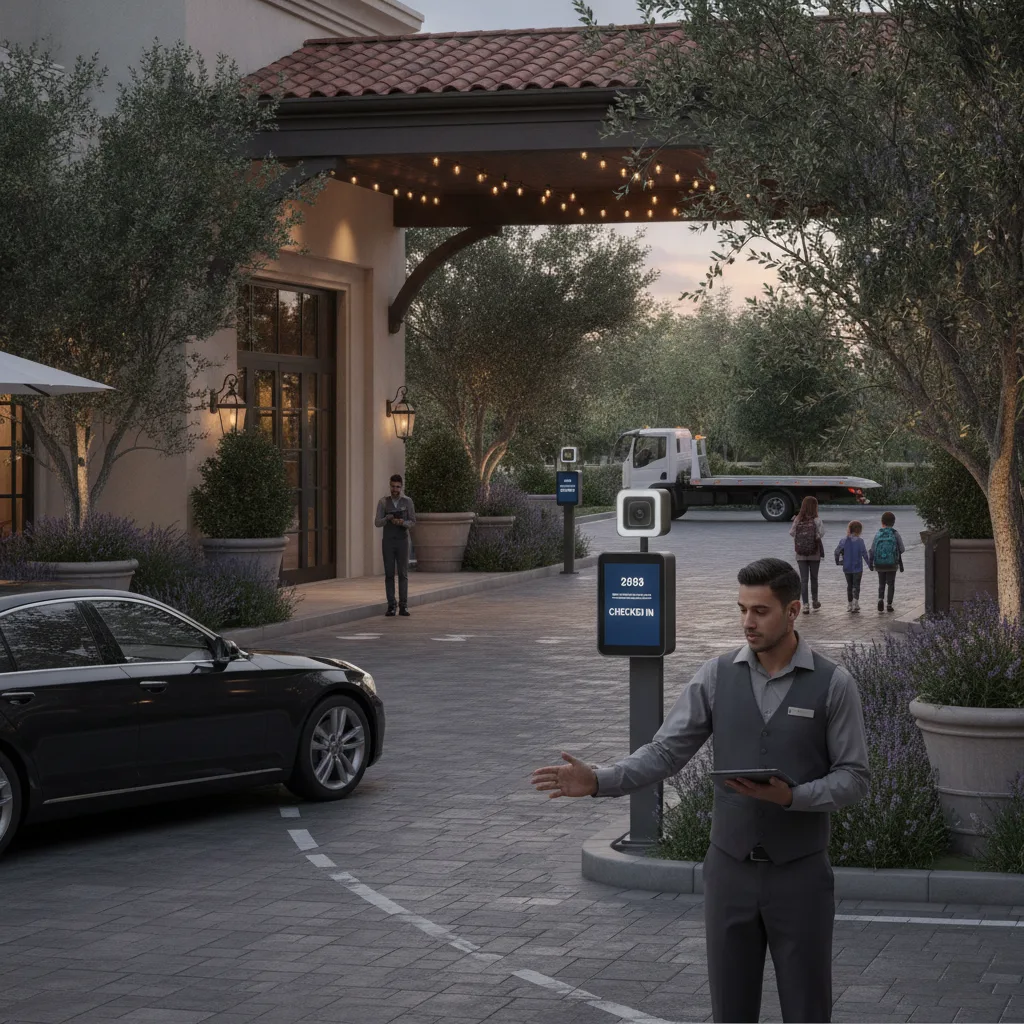
Direct answer: A restaurant valet stand can move off paper tickets faster than a hotel or venue because there’s less legacy infrastructure to unwind — usually just a ticket book, a claim-check box, and a habit. The switch works best done between busy periods (a slow Monday, not a Friday night), with plate recognition replacing the paper stub as the vehicle’s identity, and staff trained on the new retrieval-request flow before the first weekend rush after go-live.
Why restaurants are actually well positioned for this switch
Restaurant valet operations tend to be smaller and less bureaucratic than hotel or casino programs — often a handful of staff, a single stand, and a general manager who can make the call without navigating multiple departments. That’s an advantage here: there’s no PMS integration to coordinate, no multi-department sign-off, and no decades-old paper process baked into corporate SOPs. The main things standing in the way are usually budget hesitation and a worry that changing anything right before a busy season will cause chaos on the floor.
What paper tickets actually cost a restaurant valet program
Before planning the switch, it’s worth being honest about what the paper system is already costing you, even if it doesn’t show up as a line item:
- Lost ticket disputes. A guest who’s had a few drinks and lost their stub is a nightly occurrence at busy restaurants, and resolving it manually (checking the lot, asking descriptive questions, hoping staff remembers) eats staff time during your busiest hour.
- Duplicate or damaged stubs. Paper tickets get left in a coat, soaked by rain, or torn. Every damaged stub is a slower, more awkward retrieval.
- No record after the fact. Once a guest leaves with their car, the paper trail is gone. If a condition dispute or billing question comes up the next day, there’s nothing to check against.
Ticketless recognition solves all three by making the vehicle’s plate the record, rather than a piece of paper that can be lost, damaged, or forgotten.
A realistic migration plan for a single-location restaurant
1. Pick a genuinely slow night for go-live, not a big reservation night
Test the new process on a Sunday or Monday, when staff has room to work through the first-week friction without a packed dining room watching them figure it out. Don’t launch on a holiday weekend or a night you know will be busy.
2. Train the front door team on the new retrieval flow before day one
The biggest change for staff isn’t parking the car — it’s how retrieval requests work. Walk through, out loud, what happens when a guest wants their car: how it’s requested (verbally at the host stand, or by text), how the runner gets the assignment, and how handoff is confirmed. Rehearse it before the first live shift.
3. Keep a manual fallback for the first few weeks
Even a well-planned rollout should have a documented backup — what staff do if the system is briefly down, or if a guest’s plate can’t be read (a temp tag, mud-covered plate, or rental car with an out-of-state format the system doesn’t recognize cleanly). Know this process before you need it, not while a guest is waiting.
4. Tell guests what’s changing, briefly
A short note on the reservation confirmation or a sign at the stand — “we’ve gone ticketless; just give us your name at pickup” — heads off confused guests looking for a stub that doesn’t exist anymore.
What to watch in the first month
Keep it simple: how many retrievals happened without needing to fall back to a manual process, how many plate-read issues came up and what caused them (usually temp tags or obscured plates), and whether staff are comfortable enough with the new flow that a busy Friday feels routine rather than stressful. If the fallback process is getting used constantly, that’s a signal something in setup — lighting at the stand, camera angle, staff training — needs adjusting before you consider the rollout finished.
FAQ
Is this worth it for a single-location restaurant, or only for larger operations?
A single stand still benefits — the lost-ticket and duplicate-claim problems happen at any volume. The setup and budget are simply smaller in scope than a multi-property rollout.
What happens with rental cars or out-of-state plates?
Modern plate recognition handles most standard formats, but keep the manual fallback ready for the occasional unreadable plate — a temp tag, heavy mud, or a damaged plate — so staff aren’t stuck.
Do we need to change how we handle keys, or just the ticket?
Key custody tracking is worth reviewing at the same time, since you’re already updating the process — but the core change here is replacing the paper claim stub with plate-based identification.
See PLACA.AI’s valet parking software for restaurants page and the ticketless valet system overview for setup guidance sized for a single stand. The valet parking knowledge hub has broader operational planning.
Thinking about dropping paper tickets at your stand? Talk to PLACA.AI about a setup that fits a single-location restaurant’s budget and pace.
Data source: U.S. Department of Transportation