

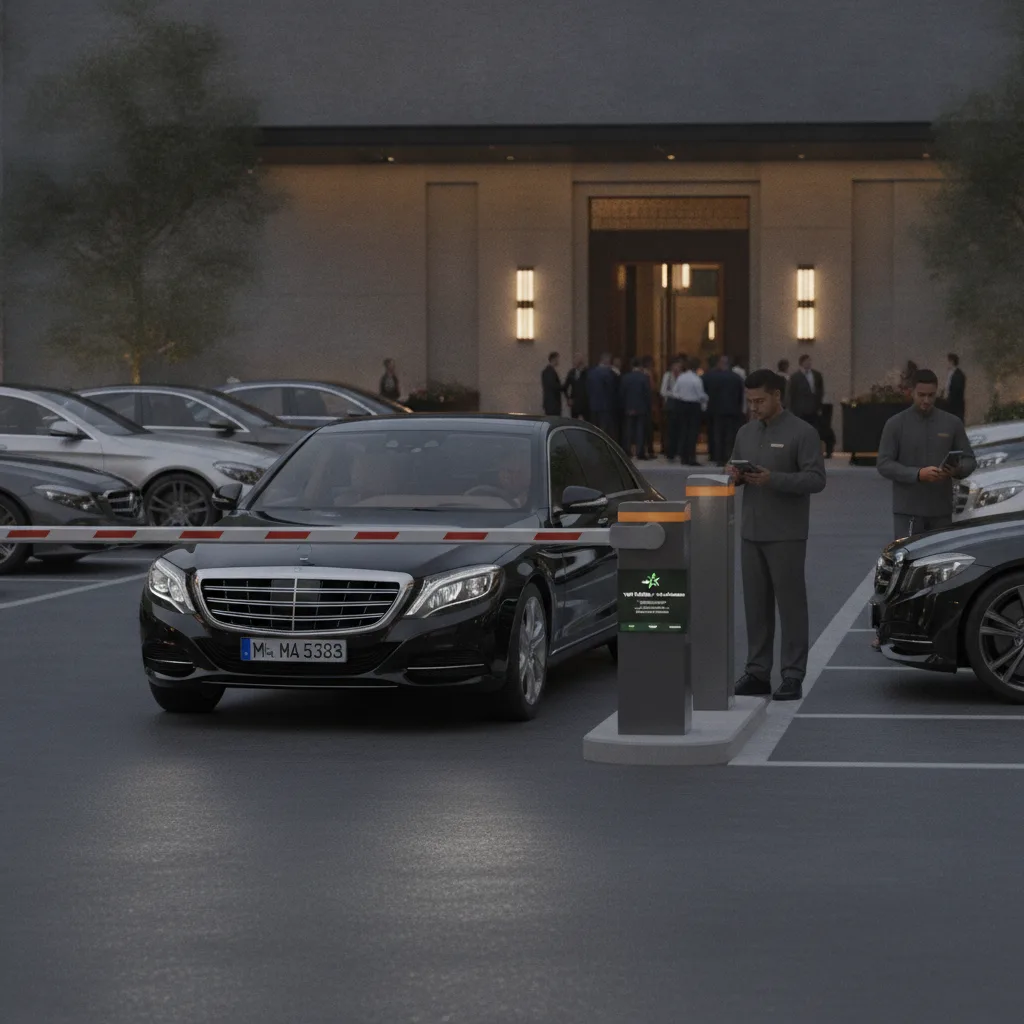
Direct answer: Restaurant valet operators track repeat VIP vehicles by linking a recognized plate to a regular guest’s profile and, where the restaurant uses one, their reservation or host-stand record — so the host can be quietly notified that a top regular just pulled up before the guest even walks through the door. The goal isn’t loyalty-program automation; it’s closing the gap between “car at the curb” and “host ready with the usual table” during a peak dinner rush when every minute of lead time matters.
Restaurant valet runs on a completely different rhythm than hotel or casino valet: the surge is compressed into a two- or three-hour dinner window, cars turn over constantly, and the same regulars come back weekly or even nightly. Recognizing a regular’s car isn’t a nice-to-have — it’s a small but real lever for protecting table turns and making frequent guests feel like the restaurant actually knows them.
Why recognition timing matters most during peak dinner hours
During a Friday or Saturday dinner rush, the valet stand is often the single busiest chokepoint in the building — cars queuing at the curb, runners moving fast, and the host stand simultaneously managing walk-ins, reservations, and a waitlist. In that environment, a few seconds of lead time is genuinely valuable:
- The host gets advance notice. If the valet team can flag “regular guest, usual party size, arriving now,” the host can have a preferred table ready or adjust the waitlist instead of the guest standing at the stand while a table gets bussed.
- The valet crew prioritizes correctly under pressure. During a surge, a fast, ticketless recognition match means the crew isn’t slowing down a long line to hand-write a ticket for a regular whose car they already half-recognize — the system confirms it instantly and the car moves.
- Repeat no-shows or late cancellations become visible. If a regular with a standing reservation habit doesn’t show, that’s useful information for the host stand’s table management, not just a valet-side curiosity.
Connecting valet recognition to the host stand, not just the valet log
The value of tracking repeat vehicles at a restaurant comes almost entirely from what happens after the match — whether that information actually reaches the person managing the dining room. A plate match that stays inside the valet team’s own log is a missed opportunity.
Set a simple notification path
When a recognized regular’s vehicle arrives, the valet captain should have a fast way to alert the host stand — a radio call, a shared messaging channel, or a notification through whatever reservation or table-management system the restaurant already uses. Keep it lightweight: name, approximate party size if known, nothing more.
Don’t over-promise on the guest’s behalf
Recognizing a car isn’t the same as confirming who’s driving it or what they want tonight. Treat the notification as “this regular is likely arriving,” not a guarantee — a regular’s car driven by a family member, or a regular who’s just passing through, shouldn’t trigger an assumption that creates an awkward moment at the host stand.
Keep preference notes tied to service, not personal details
If your restaurant keeps notes on regulars’ table preferences (booth vs. window, a favorite server), those belong in the reservation or CRM system your host stand already uses — valet recognition should trigger a lookup there, not become a second, separate place where guest preferences live and go stale.
Handling the volume problem unique to restaurant valet
Unlike a hotel, where a handful of VIP arrivals happen across a full day, a busy restaurant can have dozens of regulars arriving within the same 90-minute window. That means the recognition system has to work fast and reliably under real curb pressure — a slow or unreliable match is worse than no system at all, because it trains staff to stop trusting the alert. Build your peak-hour staffing (see your restaurant’s peak arrival surge plan) around the assumption that recognition should be near-instant, and have a simple manual fallback — a quick visual check by an experienced runner — for the rare miss.
FAQ
Is this worth setting up for a single-location restaurant, or only for groups with multiple properties?
A single busy restaurant with a strong base of weekly regulars gets real value from this — the payoff is in the host-stand handoff, not in scale. Multi-location hospitality groups get an added benefit of consistent recognition across properties, but that’s a separate concern from the core single-restaurant workflow.
What if the regular is a designated driver or has someone else drive their car tonight?
Treat the recognition as a signal to check, not to assume. A quick glance from the valet greeter confirms who’s actually arriving before any host-stand notification goes out.
How do we avoid this feeling intrusive to guests?
Keep the guest-facing experience the same as any warm greeting — nothing about vehicle recognition needs to be visible or mentioned to the guest. The value is entirely in giving your own team a few extra seconds of lead time.
For more on restaurant valet operations, see the valet operations knowledge hub, valet parking software for restaurants, and the ticketless valet system guide.
Give your regulars a faster, warmer arrival
Talk to PLACA.AI about connecting ticketless vehicle recognition to your host stand so regulars get recognized before they reach the door.
Data source: U.S. Department of Transportation