

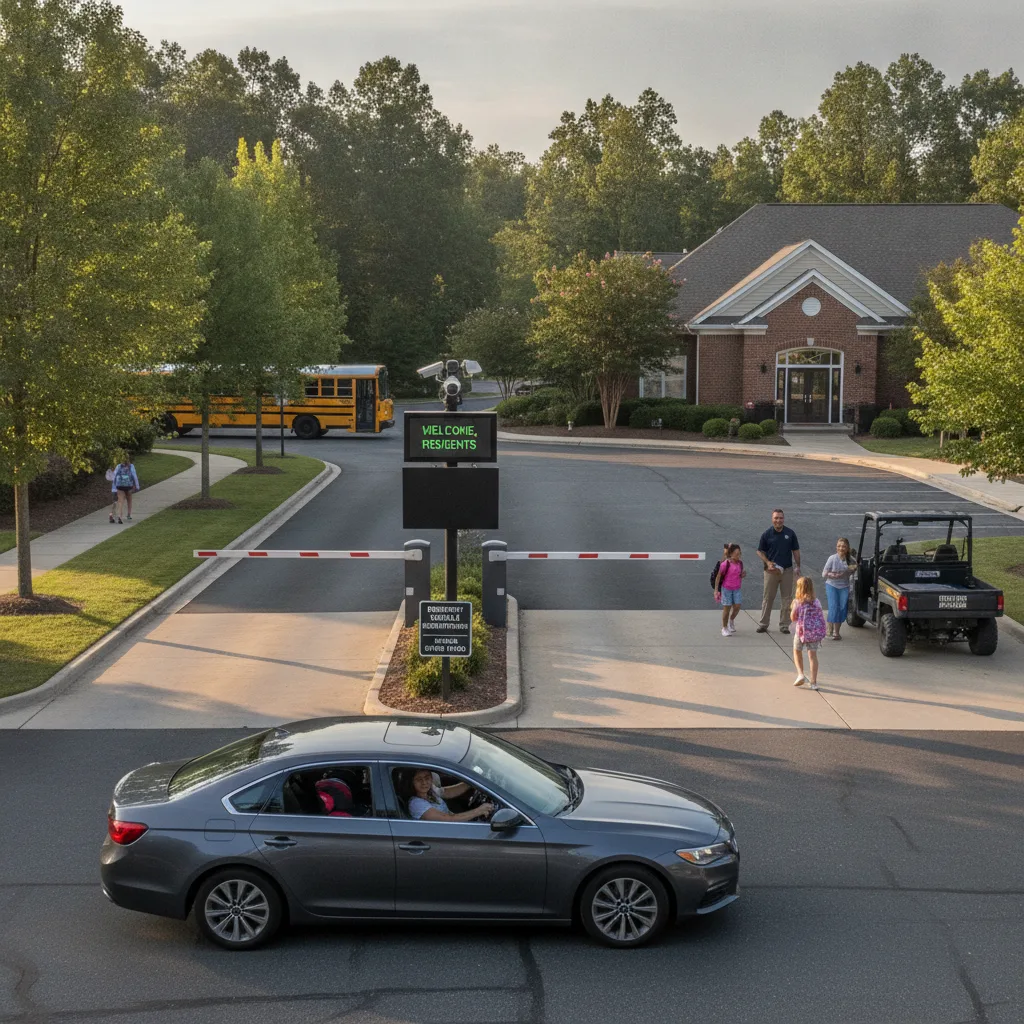
Direct answer: A small self-managed HOA doesn’t have a staff problem — it has a single-volunteer problem. Registration usually runs through one person’s personal email or a shared spreadsheet, and the entire process breaks the moment that person is busy, on vacation, or quits the board. The fix isn’t more process — it’s making the process simple enough that a second volunteer can actually take it over on short notice, with nothing living only in one person’s inbox.
This is written for boards with no management company and no paid staff — where “the registration process” is really whatever the current volunteer registrar happens to be doing, which is often not written down anywhere. If that’s your situation, the goal here is the minimum viable version of this that survives a volunteer turning over, not a full administrative system you don’t have the hours to run.
The failure mode is turnover, not volume
A small self-managed HOA might only process a handful of new registrations a month — this isn’t a scale problem the way it is for a large managed community. The actual risk is that the entire process lives in one volunteer’s head and inbox. When that person rotates off the board, moves, or just gets busy for a season, registration either stalls completely or the next volunteer starts over with no record of what came before, which is how communities end up with residents insisting they registered a car two years ago that nobody can find any record of.
What a self-managed board actually needs, and what it can skip
| Element | Worth setting up even with no staff | Can wait until you actually need it |
|---|---|---|
| Where records live | One shared spreadsheet or form the whole board can access — not one person’s personal inbox | Any dedicated software platform, until volume actually justifies the cost |
| Backup ownership | A named second person who can access and update records if the primary registrar is unavailable | A formal committee — one backup is enough for most small HOAs |
| Minimum fields collected | Resident name, unit or address, plate, and date registered — nothing more than you’ll actually use | Extensive proof requirements that take volunteer time to verify and store securely |
| Closing out old records | A simple rule — check the list once a quarter and remove anything clearly stale | An automated renewal-reminder system |
A process one volunteer can run and hand off cleanly
- Move registration out of a personal inbox. A shared form (even a free online form) that feeds a shared spreadsheet means the next volunteer isn’t starting from zero.
- Name a backup, not just a primary. One other board member with access and a basic understanding of the process is enough — the point is that the process doesn’t stop if one person is unavailable.
- Collect the minimum, not the maximum. Every extra field is something a volunteer has to verify and store; keep it to what you’d actually use if a dispute came up.
- Set a quarterly cleanup, not a complicated renewal system. A fifteen-minute pass through the list four times a year, closing out anything clearly stale, is realistic for a volunteer board in a way a formal renewal cycle often isn’t.
For the parking enforcement side of this — what to do once vehicles are actually registered — our guide for boards with more administrative bandwidth covers a more built-out version of the same lifecycle if your community grows into needing it. And our software-only approach for small operators is worth a look specifically because it doesn’t assume you have paid staff to run it.
Where a simple camera system actually helps a volunteer board
The part of registration that eats volunteer time isn’t the intake form — it’s cross-checking who’s actually parked on the property against who’s registered, usually by walking the lot with a clipboard. A basic plate-recognition system replaces that specific task without requiring the board to take on staff or a management contract; it doesn’t replace the registration policy itself, but it does remove the most time-consuming manual step from a volunteer’s plate.
Questions to answer before your next board meeting
- If your current registrar were unreachable for a month, could a second board member pick up the process from a shared record, or does it live only in one inbox?
- Are you collecting fields you’d actually use, or fields that just take volunteer time to verify?
- When was the list last cleaned out, and is there a standing quarterly time set aside to do it?
- Is the most time-consuming part of your process the paperwork, or the manual lot-walking to check who’s actually parked there?
Related PLACA.AI planning resources
Plan a limited workflow review
Bring your current spreadsheet or form, who has access to it today, and how often the list actually gets cleaned up. PLACA.AI can help evaluate whether a simple plate-matching system would cut the manual lot-checking a volunteer board spends the most time on.
Editorial refresh: September 18, 2026. Independently confirm current product capabilities, third-party features, pricing, contracts, governing requirements, and local rules before acting.
Internal Resources
- How Casino Parking Teams Can Speed Up Vehicle Retrieval Using Ticketless Vehicle Recognition
- How Texas HOAs Can Improve Resident Vehicle Registration Without Creating Resident Friction
- How Texas HOAs Can Document Overnight Parking Violations Without Creating Resident Friction
- How Florida Associations Can Stop Guest Permit Sharing Without Creating Resident Friction
- How Mixed-Use Property Owners Can Launch Scan And Pay Parking Without Adding More Hardware
Data source: Community Associations Institute