

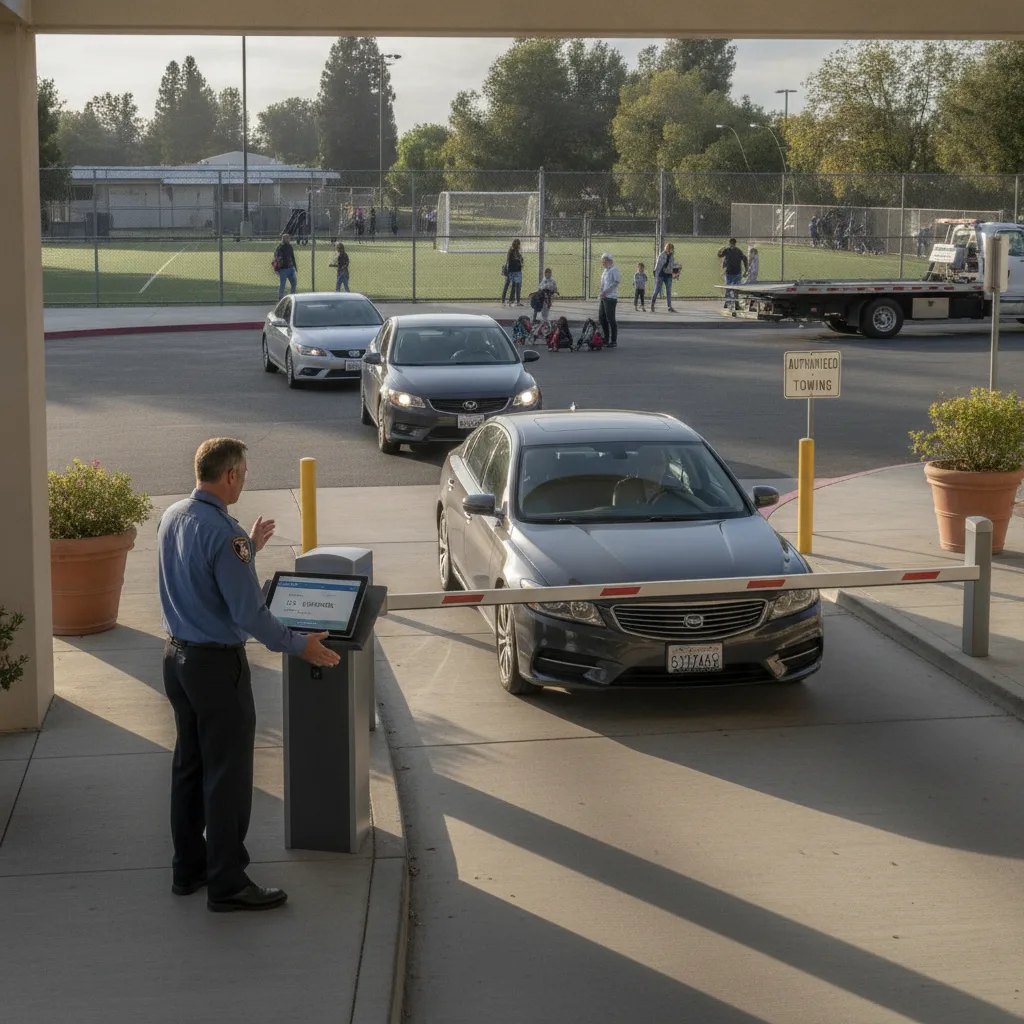
Direct answer: Venue parking is a mass-egress problem, not a one-at-a-time problem — thousands of guests can hit the exits within minutes of a final buzzer or encore. SMS only works at that scale if it’s staggered by retrieval order and tied to the event schedule, so you’re not blasting the same “your car is ready” message to five hundred phones at once and creating the exact gridlock you’re trying to avoid.
Why venue SMS is a different problem than hotel or restaurant SMS
A hotel or restaurant deals with a handful of retrieval requests at any given moment. A venue can face a wall of demand the instant an event ends — a concert lets out, a game goes final, or an award show wraps, and a meaningful share of your valet and premium parking guests all want their car within the same fifteen-minute window. Texting is genuinely the right tool here, because it lets you manage that wall of demand by pushing information to guests instead of making them all converge on a single request point. But it only helps if the message timing accounts for real queue position, not just first-come-first-served against an overwhelmed lot.
Building SMS around your event schedule, not around guest requests
1. Pre-stage the message flow against the event’s known end time
Unlike a restaurant, you usually know almost exactly when demand will spike — tip-off plus roughly three hours, a headliner’s typical set length, a show’s scheduled run time. Use that to pre-position retrieval sequencing and stagger the first wave of “your car is nearly ready” texts before the crowd even hits the exit, rather than waiting for a flood of individual requests to trigger the process from scratch.
2. Batch by retrieval queue position, not by request timestamp
If every guest who requests a car gets an identical “on its way” text regardless of where they actually sit in the queue, you get a crowd that all shows up at the pickup zone simultaneously. Send realistic, queue-position-aware estimates — “approximately 15 minutes” for someone near the back of the line, versus “now ready” for someone at the front — so guests self-pace their walk to the pickup area instead of all arriving at once.
3. Give guests a clear, single pickup location per zone
Large venues often run multiple valet or premium lots. Make sure the SMS explicitly states which zone or lane the guest should go to — a message that just says “your car is ready” without a location sends confused guests wandering a large lot looking for the right row, which slows retrieval for everyone behind them.
4. Plan for signal and carrier issues in a packed venue
Tens of thousands of phones on the same network at once, inside or near a stadium, strains cell service. Don’t assume every text lands instantly. Pair SMS with a visible status board or a secondary channel (a venue app push, or staff announcements at key exits) for guests whose texts get delayed.
Handling the post-event crunch
- Open the request window before the event ends. Let guests who know they’re leaving early (a game that’s clearly decided, or an act they’re skipping) request retrieval ahead of the main surge, spreading load instead of concentrating it.
- Staff a visible fallback point. For the guests who never see their text — dead zone, phone in a pocket, whatever the reason — have a staffed booth or clearly marked line where they can check status without needing SMS to work.
- Communicate delays honestly and immediately. If the queue backs up beyond your estimate, an updated text beats silence. Guests standing in a crowd tolerate a real wait far better than an unexplained one.
- Debrief after every major event. Note where the queue bottlenecked, whether messages went out on schedule, and how many guests ended up at the fallback point instead of using SMS successfully.
What to measure across events
Track average time from event end to vehicle handoff, how that time trends across the first, middle, and last quartile of guests to request a car, and how often the fallback staffed point gets used relative to SMS. A venue with SMS working well should see a fairly even, predictable spread of retrieval times rather than a long tail of guests waiting well past everyone else.
FAQ
Should every guest get the same retrieval text, or should it vary by lot or tier?
Vary it by lot and queue position. A single generic message across a large, multi-zone venue creates confusion about where to go and underestimates real wait times for guests further back in the queue.
How early should we start texting before an event ends?
Enough lead time to have staff and vehicles pre-staged for the first wave, timed against the event’s typical end — for a sporting event this might mean starting logistics in the final period; for a concert, during the encore. The exact timing depends on your venue’s layout and historical egress patterns.
What about guests who don’t have a working phone number on file?
Always keep a non-SMS path available — a staffed information point or visible status display — since large-venue crowds will always include some percentage of guests SMS can’t reach in the moment.
See PLACA.AI’s valet parking software for venues page and the ticketless valet system overview for how plate-based tracking supports high-volume retrieval sequencing. The valet parking knowledge hub has broader operational planning resources.
Planning SMS communication for a high-capacity venue? Talk to PLACA.AI about handling mass-egress retrieval without the sidewalk pileup.
Data source: U.S. Department of Transportation