

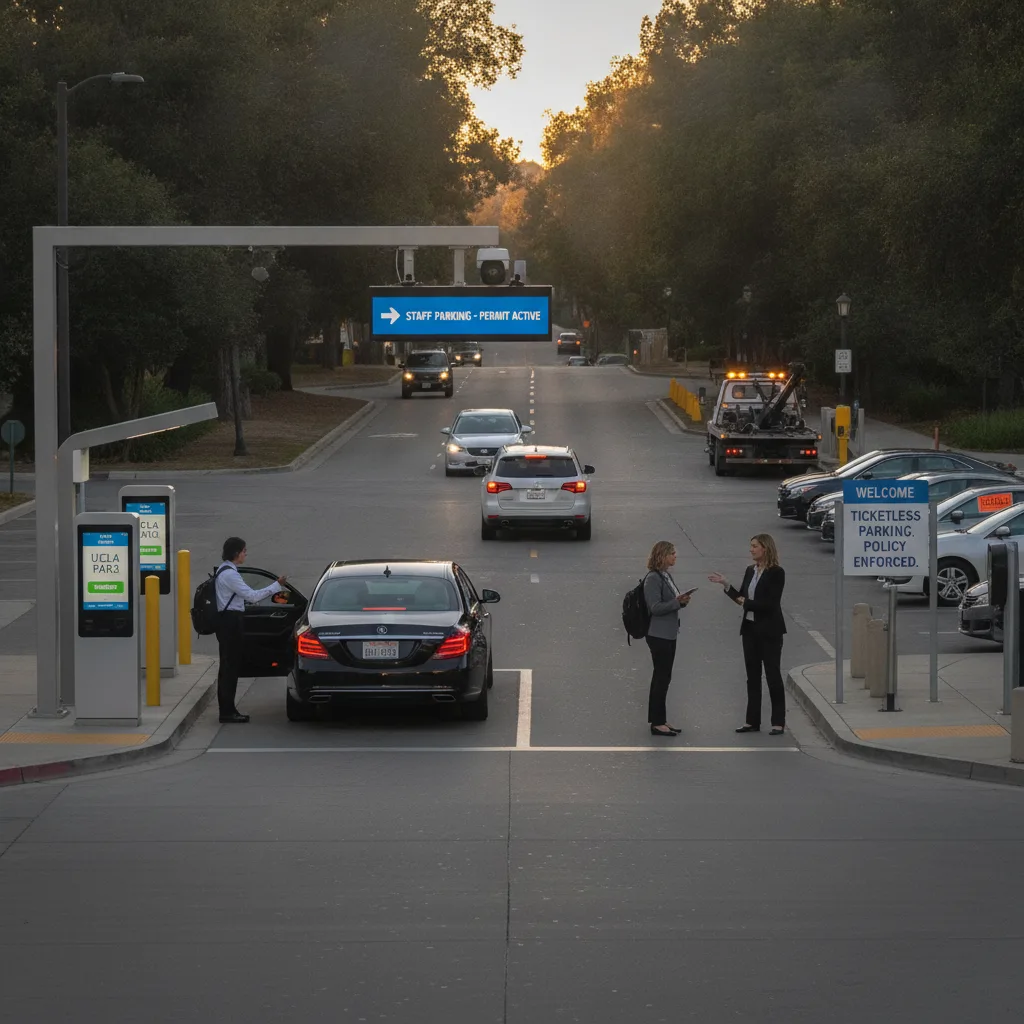
Short answer: Venue parking managers reduce lost valet ticket problems by building a fast identity-and-vehicle match process that can handle dozens of simultaneous lost-ticket claims at once — the moment a show or game lets out and thousands of guests hit the exits together — instead of a process designed for one lost ticket at a time.
A hotel or restaurant deals with a lost ticket as an isolated event: one guest, one conversation, plenty of staff time to sort it out. A venue doesn’t get that luxury. When a concert or game ends, valet gets hit with the full departure volume in a 20–40 minute window, and any lost-ticket cases that come up land in the middle of that surge, competing for the same runners who are already sprinting to keep the main queue moving.
Design for volume, not for the exception
A lost-ticket process that works fine on a quiet Tuesday afternoon can fall apart completely during a mass exit, because it usually assumes one staff member has a few minutes to walk through a verification conversation. During a post-event surge, that’s not realistic — you might have five or six lost-ticket claims happening at once while three hundred other guests are also waiting for their cars.
The fix is to make sure the verification data already exists before the claim happens, rather than trying to reconstruct it in the moment. If every vehicle is logged by plate at intake — regardless of whether the guest also got a paper stub — a lost ticket becomes a quick lookup against that record instead of a from-scratch investigation. A staff member with a tablet or handheld device can confirm a match in the time it takes to describe the car, even with a line of other guests behind them.
A workable process for high-volume lost-ticket claims
- Pull the guest out of the main queue. Route lost-ticket claims to a separate, clearly marked spot so they’re not blocking the flow of guests who do have their stub.
- Get vehicle details immediately. Make, color, and rough arrival time — collected while the record lookup happens, not sequentially.
- Match against the intake record. Confirm the vehicle against what was logged at drop-off.
- Verify with a second detail. A phone number, a name on the transaction, or a description of the vehicle’s contents — enough to prevent a wrong handoff without demanding a formal ID check for every single case.
- Log every exception. Who approved the release, what was used to verify, and the time — a running log that a supervisor can review afterward if a dispute comes up later.
Handle duplicate and conflicting claims specifically
With enough volume, you will eventually get two people claiming the same vehicle — a common scenario after a big event when a group splits up and two people both remember roughly where the car was parked, or when a ride-share driver’s passenger mistakes another valet-parked car for theirs. This needs a hard rule, not staff judgment under pressure: neither claim is approved until the vehicle record clearly supports one of them, and a supervisor makes the call, not the runner working the surge.
Staff and route for the surge specifically
Because lost-ticket claims cluster at the exact moment general throughput is under the most pressure, most venues do better by designating one or two staff specifically for lost-ticket and exception handling during the departure surge — pulled off general dispatch duty for that window — rather than expecting whoever’s free to handle it ad hoc. This keeps exception handling from slowing down the main queue, and keeps the main queue from rushing exception handling.
A worked example
After a sold-out arena show, valet is running a steady stream of departures when three separate guests approach within a few minutes, each without a ticket. A staffer at a dedicated lost-claim station takes each one in turn: vehicle description, quick match against the plate-based intake record from earlier that evening, a confirming detail, and the car is released. None of the three claims interrupt the main line, and each is logged with who verified it and how — so if a fourth person shows up ten minutes later also claiming one of those same three cars, there’s already a clear record of who received it.
What to review before a high-attendance event
- Confirm intake is capturing plate and arrival time for every vehicle, not just handing out stubs.
- Designate a specific location and staff member for lost-ticket and exception handling during the exit surge.
- Brief staff on the duplicate-claim rule and who has authority to make the final call.
- Confirm the exception log is actually being used, not just available.
FAQ
How many lost-ticket claims should we expect during a mass exit?
It varies by venue and event type, but any venue with a valet operation of meaningful size should plan to handle several simultaneous claims during a big departure surge rather than treating it as a rare edge case.
Should lost-ticket guests go to the back of the general line?
No — route them to a separate station so resolving their claim doesn’t slow down guests who have a valid stub, and so their claim isn’t rushed by pressure from the main queue.
Who should have authority to release a vehicle without a ticket during a surge?
Any trained staff member can handle the routine cases with a clear match, but duplicate or uncertain claims should go to a supervisor, decided in advance so it isn’t improvised in the moment.
See PLACA’s valet parking software for venues, the ticketless vehicle recognition system overview, and the valet parking knowledge hub for more on handling high-volume departures.
Want to see how plate-based intake records hold up during a full-capacity exit surge? Contact PLACA or book a demo.
Data source: U.S. Department of Transportation