

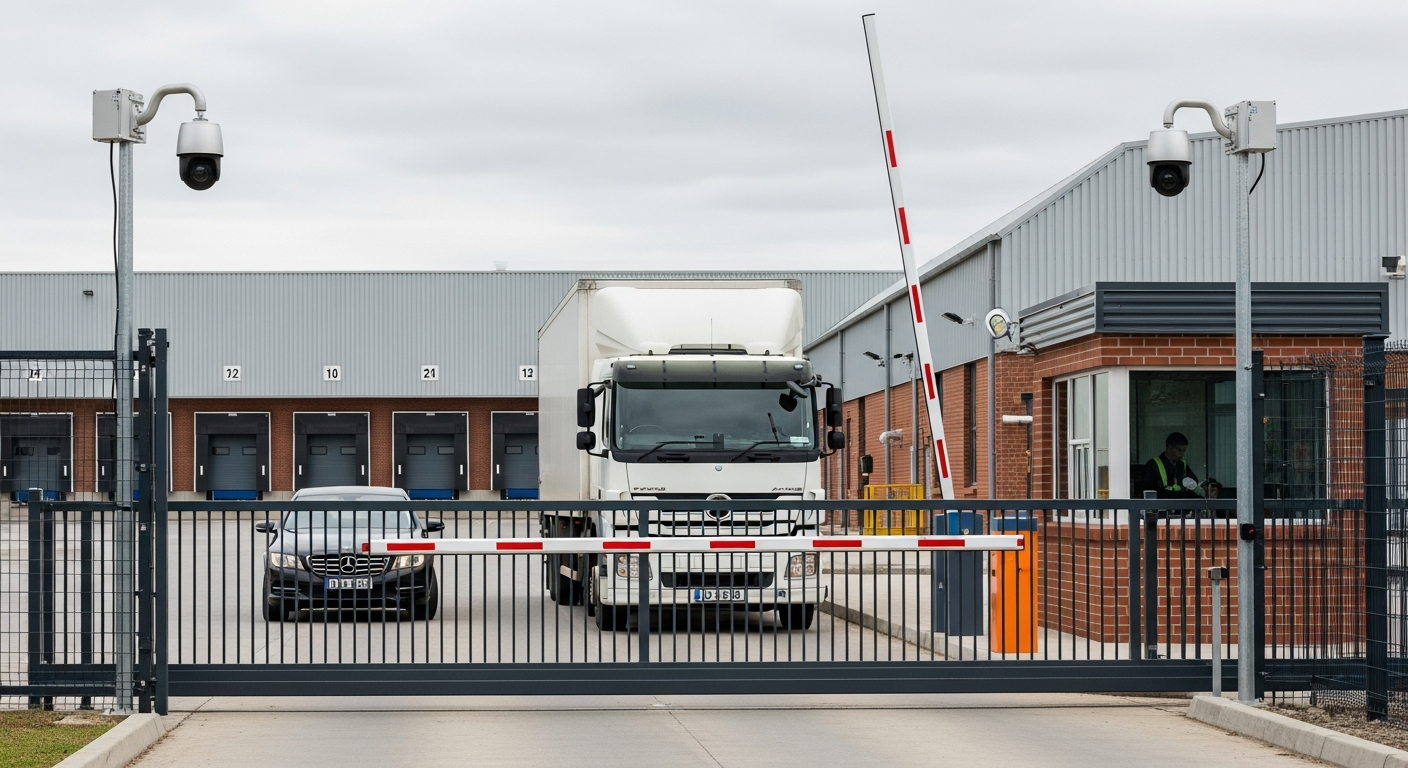
Industrial Facility LPR for Visitor and Vehicle Logs
A practical guide from Placa for buyers comparing camera placement, LPR workflows, and private-property vehicle recognition options.
Why This Matters
License plate recognition is rarely solved by buying a camera at random. The camera must see the plate clearly, at the right angle, in the right lighting, at the expected speed. Then the software must turn that read into a useful vehicle event: a searchable log, access decision, alert, report, or evidence record.
Capture First
Check lane geometry, mounting height, distance, approach angle, glare, and whether cars stop, crawl, or pass at speed.
Workflow Second
Decide what should happen after a plate is read: open a gate, flag a vehicle, search history, notify staff, or document a parking event.
Recommendation Last
Only after those conditions are known should a camera tier be selected.
What to Compare
- Lane count and whether each lane needs its own capture zone.
- Vehicle speed and whether radar-assisted or radar-triggered capture is useful.
- Night performance, IR behavior, and headlight glare.
- Power and network access, including cellular and wireless options.
- Gate controller or parking workflow integration.
- Privacy policy, retention rules, user permissions, and search access.
How Placa Helps
Placa is a cloud AI LPR platform, not a generic camera storefront. The goal is to match the camera to the site, connect the camera to cloud LPR workflows, and help teams use the resulting vehicle events for safer, cleaner operations.
Related Placa Resource
Related Placa Resource
Camera Recommendation
Related Placa Resource
Related Placa Resource
Image Recommendations
Hero image: realistic private-property entrance with a visible LPR camera and subtle Placa dashboard overlay. Diagram: camera angle, capture zone, plate read event, and cloud dashboard. AI prompt: Create a clean modern SaaS-style image showing a private-property entrance with vehicles entering, an LPR camera mounted near the lane, subtle plate recognition overlay, and a Placa cloud dashboard UI. No police, no citations, no third-party logos.
FAQ
What should I know about industrial facility LPR vehicle logs?
Industrial Facility LPR for Visitor and Vehicle Logs should be evaluated around plate capture conditions, camera placement, lighting, vehicle speed, lane count, and how the result connects to Placa cloud LPR workflows.
Is software or hardware more important?
Both matter. Software organizes plate events, search, alerts, and permissions, but the camera still needs a usable view of the plate.
What should the next step be?
The next step is a site assessment that reviews entrance geometry, speed, lighting, power, network access, and gate or parking workflow needs.
See Which Camera Fits Your Site
Share your entrance layout, speed, lane count, and current gate or parking workflow.
FAQs: Industrial Facility LPR Vehicle Logs
How do industrial facilities use LPR vehicle logs for compliance?
Industrial facilities in regulated industries such as chemical manufacturing, food processing, and pharmaceutical production often need to document which vehicles entered specific areas and when, for regulatory compliance and internal audit purposes. LPR vehicle logs automatically create timestamped records of every vehicle entry and exit with photographic evidence. These logs can be exported in formats compatible with compliance management systems and retained for the duration required by applicable regulations, often three to seven years. Automated LPR logging eliminates the manual entry errors and omissions that plague paper-based visitor log systems at industrial facilities.
What industrial facility security risks does LPR vehicle logging help prevent?
LPR vehicle logs at industrial facilities help identify and investigate several security risks. Unauthorized vendor or contractor vehicles that have not been vetted by security can be flagged immediately. Vehicles that enter but do not exit within an expected time window can trigger alerts for facility security staff. Plate records can be cross-referenced against stolen vehicle databases or watchlists when integrated with appropriate data feeds. Post-incident investigations benefit from comprehensive vehicle movement logs that can reconstruct which vehicles were on site during a specific timeframe, providing critical evidence for insurance claims, law enforcement investigations, and internal root cause analyses.
Can industrial LPR systems integrate with enterprise access control platforms?
Yes. Industrial facility LPR systems can integrate with major enterprise access control platforms through standard API connections, OSDP protocols, or direct relay outputs. Integration with platforms like Lenel, Genetec, Software House, or Milestone allows vehicle access events to appear alongside personnel access events in a unified security dashboard. This unified view gives security operations center staff complete situational awareness of both person and vehicle movements throughout the facility. Integration also enables automated scenarios such as denying vehicle entry if the driver’s personnel badge has not already been scanned at the main pedestrian entrance.
About Placa.ai
Placa.ai is an artificial intelligence platform specializing in vehicle access control and property automation for schools, homeowners associations, parking facilities, self-storage operators, and commercial campuses. Our license plate recognition technology delivers fast, accurate, and privacy-respecting vehicle identification that helps property managers streamline operations, improve security, and reduce dependence on manual processes. Unlike traditional surveillance vendors, Placa.ai is designed from the ground up to keep data within your control, with transparent retention policies and no mandatory third-party data sharing. Our customers include school districts across the United States, HOA communities, parking operators, and corporate campus managers who rely on Placa to make their properties safer and more efficient every day. Learn more about how Placa.ai can transform your vehicle access workflow by requesting a free demonstration from our team.
Ready to improve your facility’s vehicle access control and create comprehensive audit logs? Placa.ai’s license plate recognition solutions are designed for rapid deployment with minimal infrastructure changes. Our team provides end-to-end support from site survey through installation, configuration, training, and ongoing technical support. Contact our team to schedule a free consultation and demonstration for your specific facility type and access control requirements. Every deployment is backed by our performance guarantee ensuring that your system meets the read accuracy specifications required for your use case from day one of operation.
Industrial and Campus LPR Access Guides
Industrial facilities and business parks often need similar LPR workflows for visitor logs, employee vehicles, and contractor access.
Data source: Electronic Frontier Foundation: License Plate Readers