

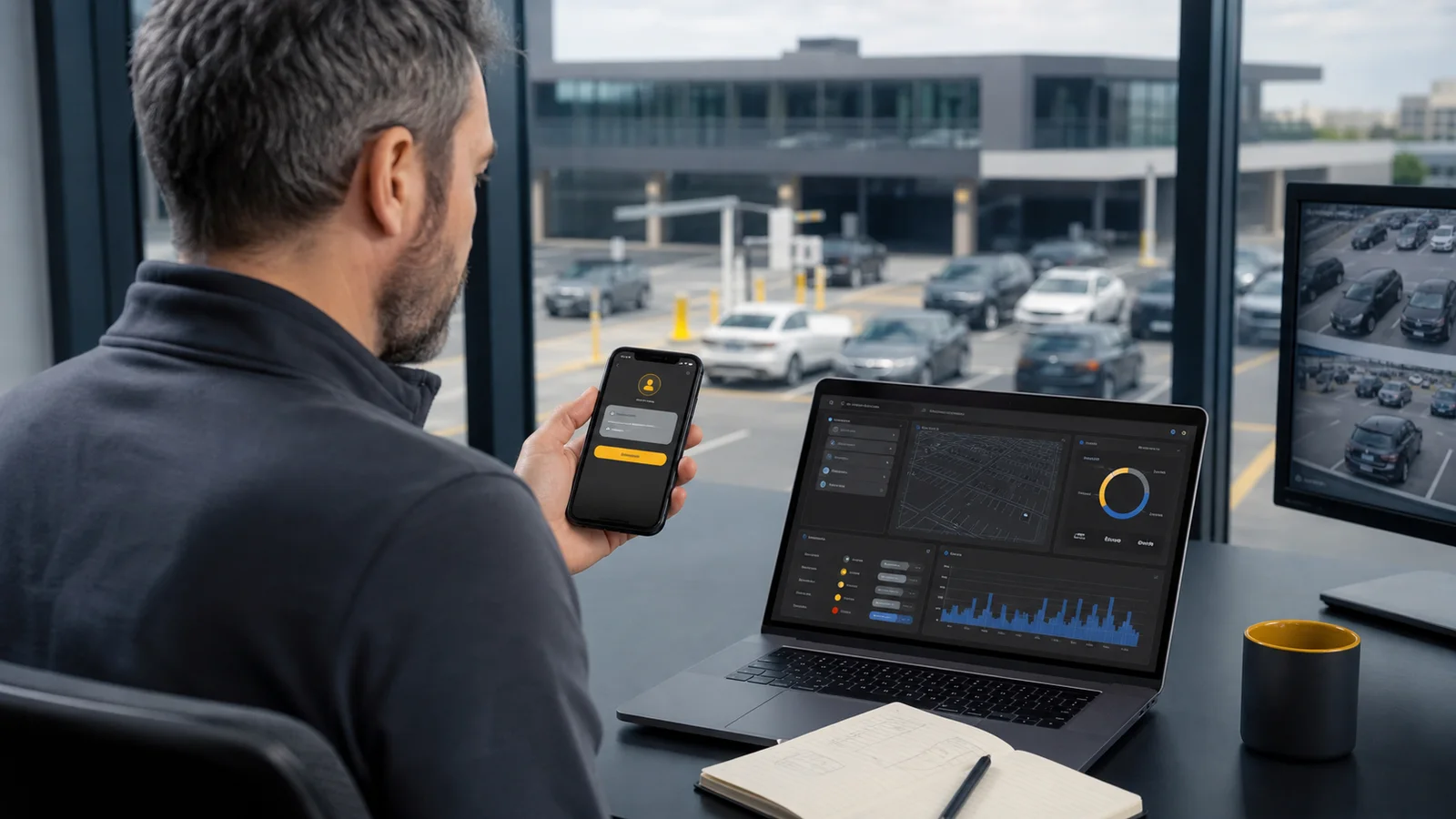
A parking app phishing response workflow should tell drivers how to verify official parking notices, then let the operator reconcile the plate, payment session, notice record, and support report before late fees, citations, collections, or towing escalation continue.
Key Takeaways
- Fake unpaid-parking texts create an operator problem even when the operator did not send the scam message.
- Drivers need a clear official path to check receipts, parking history, citation status, and support contacts without clicking a text link.
- Operators should separate phishing reports from ordinary unpaid-session appeals, then connect both to the same plate and payment record.
- Escalation should pause only when the report is credible enough to review, not whenever a balance is disputed.
- The safest workflow collects minimum evidence, avoids personal data overreach, and leaves legal notice language for human review.
What This Workflow Involves
This process starts before the first support ticket arrives. The operator defines which channels can send official payment reminders, what an official message will and will not ask for, where drivers can verify a session manually, and which team owns suspicious-message reports. Those rules should be visible on signs, receipts, website help pages, and customer-service scripts.
The workflow then moves into reconciliation. When a driver reports a suspicious text, support should not ask the driver to click the link, forward private card data, or prove the entire story with personal screenshots. Support should first search the operator’s own records: plate, state, location, entry and exit time, payment session, issued notice, vendor notice ID, prior support case, and any escalation status.
If the internal record shows no official balance, the driver gets a simple answer and a reporting path. If the record shows a real unpaid session, the support team explains how to pay through the official app, website, or published contact route. If both are possible because a real unpaid session exists and a fake text also circulated, the case goes to review before late fees, collections, immobilization, citation escalation, or tow referral continue.
Why This Problem Is Showing Up Now
Mobile parking made payment easier, but it also made the notice environment more confusing. Many drivers have several parking apps, multiple saved vehicles, old receipts, text alerts, email confirmations, and unfamiliar zone numbers. A fake text that says a small unpaid balance is due can feel plausible because real parking payment flows are already fragmented.
Official RingGo guidance updated on July 22, 2026 describes a wave of fake texts pretending to be from RingGo and claiming an outstanding parking payment or unpaid session. The same guidance tells users to check their official account through the app or website instead of clicking suspicious links.
Fresh reporting from August 2, 2026 described fake parking-fee messages that use enforcement pressure and lookalike websites to capture login or payment details. The report also noted that the scam is not limited to one parking-app brand. For operators, the practical point is not competitor commentary. It is that drivers may now treat any unexpected parking payment message as suspicious, including legitimate notices if the verification path is unclear.
The Core Operational Problem
The core problem is trust in the payment and notice trail. An operator may have a valid unpaid parking record, while the driver may also have received a fake text from someone else. If support treats the phishing report as irrelevant, the driver feels ignored. If support treats every suspicious text as a waiver, repeat nonpayment becomes easier.
The operator needs a middle path: verify whether the message is official, verify whether the vehicle has a real parking balance, and document the decision in one case record. That creates a better answer than telling the driver to ignore all texts or, at the other extreme, asking them to pay anything that appears to use a familiar parking brand.
For teams connecting mobile payment, LPR, and enforcement, the parking operator payment and enforcement workflow hub is the right planning center. The phishing response should sit beside payment reconciliation, plate review, citation rules, and customer-service scripts.
Evidence And Source Context
A public Reddit phishing discussion from July 2026 shows the driver-side question clearly: someone received RingGo-style parking scam texts despite saying they did not have a RingGo account. That community post is not used as factual proof about any vendor. It is useful because it captures the public language support teams now hear: I got a parking text, I do not know if it is real, and I do not know how the sender got my number.
The strongest current factual sources are official guidance and fresh reporting. RingGo’s help article on fake texts was updated on July 22, 2026 and describes messages that claim an outstanding payment or unpaid session. A separate RingGo safety page warns users to avoid payment links in emails or texts and to use official app or website routes.
The Guardian’s August 2, 2026 report on fake parking-fee messages adds current public context about why these texts work: drivers recognize parking brands, the amounts can look small, and the threat of enforcement can push quick action. Official reporting guidance from the UK National Cyber Security Centre and the U.S. Federal Trade Commission supports the same general rule: do not click unexpected payment links; verify through a known official route.
Parking App Phishing Response Workflow Checklist
| Step | Operator action | Record to keep |
|---|---|---|
| Define official channels | List the app, website, phone number, email domain, short code, and postal path that can send or verify notices. | Approved channel register and owner |
| Publish verification rules | Tell drivers what the operator will never ask for by text, such as full card details, passwords, PINs, or payment through unfamiliar links. | Website copy, sign copy, receipt copy |
| Search internal records first | Check the plate, zone, payment session, notice ID, balance, and escalation status before responding. | Case lookup timestamp and reviewer |
| Classify the message | Mark it official, likely phishing, unknown, duplicate, or unrelated to the operator’s lot. | Disposition code and reason |
| Hold escalation when needed | Pause late-fee, citation, collection, tow, or boot escalation only when the report creates a credible review issue. | Hold start, hold end, and resolution |
| Close the loop | Explain the outcome and direct the driver to the official payment or reporting route. | Driver-facing response template |
How To Tell Drivers What Is Official
Drivers should not need to decide whether a link is real while standing in a lot or reading a threat on their phone. Give them a durable verification route: type the official domain directly, open the official app, call the posted number, or use the help link printed on the original receipt or sign.
The public rule should be simple. If a message demands urgent payment through an unfamiliar link, asks the driver to reply to activate a link, requests full bank details, or comes from a personal-looking sender, the driver should stop and verify through a known channel. Do not require the driver to use the suspicious message as the path to resolution.
For operators comparing vendors, the mobile parking payment processing guide should be reviewed alongside support requirements. Fast payment matters, but verified notices, receipt lookup, and exception review matter when scams imitate the payment flow.
When A Support Hold Is Appropriate
A hold is appropriate when the driver’s report could affect the fairness or accuracy of escalation. Examples include multiple drivers reporting the same fake domain at the same facility, a known vendor alert during the same period, a real unpaid session that overlaps with a phishing message, or a support agent who cannot confirm whether the operator actually sent the notice.
A hold is not the same as a waiver. It is a pause while the operator checks the facts. The review should answer four questions: Did we issue a real notice? Does the plate have a real unpaid balance? Did the driver attempt to verify through an official route? Is there any sign that a fake message, fake website, or impersonated sender affected this case?
If the answer supports enforcement, the operator can proceed with a clearer explanation. If the answer supports confusion or fraud risk, the operator can waive, warn, reset the payment window, correct a notice, or route the driver to fraud reporting without letting the case become a public complaint.
Privacy, Security, And Limits
Support teams should not ask drivers to provide more personal information than the review needs. A privacy-safe report may include the suspicious sender, the visible domain, the time received, and whether the driver entered payment details. It should not require full card numbers, full bank statements, passwords, or unnecessary personal identifiers.
Operators also need to be careful with legal language. A private parking invoice, municipal citation, campus notice, apartment enforcement warning, tow authorization, and collection notice may each have different rules. This article gives an operations framework; a human editor and local counsel should review any notice language before publication or customer use.
Finally, phishing reports should not be used as fear marketing. The point is to reduce uncertainty. A good operator can say: here is the official route, here is what we found in our records, here is why the case is paid, unpaid, on hold, or closed, and here is how to report the suspicious message.
Worked Example: Real Balance, Fake Text
A driver parks in a private garage, enters the plate in a mobile app, but accidentally chooses a saved vehicle from an old account. Two days later, the driver receives a fake text claiming an unpaid parking fee and linking to a lookalike payment page. The driver contacts the garage because the message feels plausible.
Without a clear process, support might tell the driver the operator did not send the text while enforcement continues separately. The driver then receives a real notice, assumes it is another scam, and the case escalates into late fees or a complaint.
With a better process, support records the phishing report, tells the driver not to click the suspicious link, and checks the official plate and payment records. The garage sees a real unmatched LPR visit, a payment under a different saved plate, and no official SMS notice. The case is placed on a short hold, the payment is manually matched or reviewed under the operator’s wrong-plate policy, and the driver receives a response that separates the fake text from the real parking record.
Frequently Asked Questions
Should parking operators stop sending SMS payment reminders?
Not automatically. SMS can be useful when it is expected, branded consistently, and easy to verify outside the message. Operators should publish which notices are official, avoid unfamiliar payment links, and give drivers a direct account or receipt lookup path.
What should support ask for when a driver reports a fake parking text?
Ask for the minimum useful details: when the message arrived, the visible sender, the visible domain, the lot or app involved, and whether the driver clicked or paid. Do not ask for full card numbers, passwords, or unrelated personal records.
Does a phishing report mean the parking balance should be waived?
No. It means the case should be checked. If the operator has a valid unpaid session and a clear official notice path, enforcement may still be appropriate. If the fake message plausibly affected payment or verification, a hold, warning, or correction may be fair.
How can LPR help with fake unpaid-fee text reports?
LPR can anchor the vehicle timeline: entry, exit, plate, state, lot, and payment match. It cannot prove whether a text is real, but it helps support separate the official parking record from the suspicious message.
What should operators publish on signs and receipts?
Publish the official payment domain, app name, support URL, and warning signs for fake messages. Tell drivers to verify through the official app or typed website rather than using links from unexpected texts.
Related PLACA Resources
- Start with the parking operator payment and enforcement workflow hub when mapping official payment, notice, and support paths.
- Use the mobile parking payment processing guide when payment sessions, receipts, and vendor handoffs affect enforcement decisions.
Next Step
Review the last ten support cases where a driver questioned a parking text, payment link, unpaid-session notice, or app balance. If staff cannot quickly tell whether the message was official, whether the plate had a real balance, and whether escalation should pause, write the rule before sending more automated notices.