
Permit Parking Enforcement with License Plate Recognition
Use license plates as digital permits for apartments, HOAs, commercial lots, schools, and towing patrols.
Who This Page Is For
Properties that manage resident, visitor, employee, student, contractor, or paid parking permissions.
The Workflow
Import or configure authorized plates, capture plate events, check status in the cloud, and keep audit records for violations or disputes.
Capture
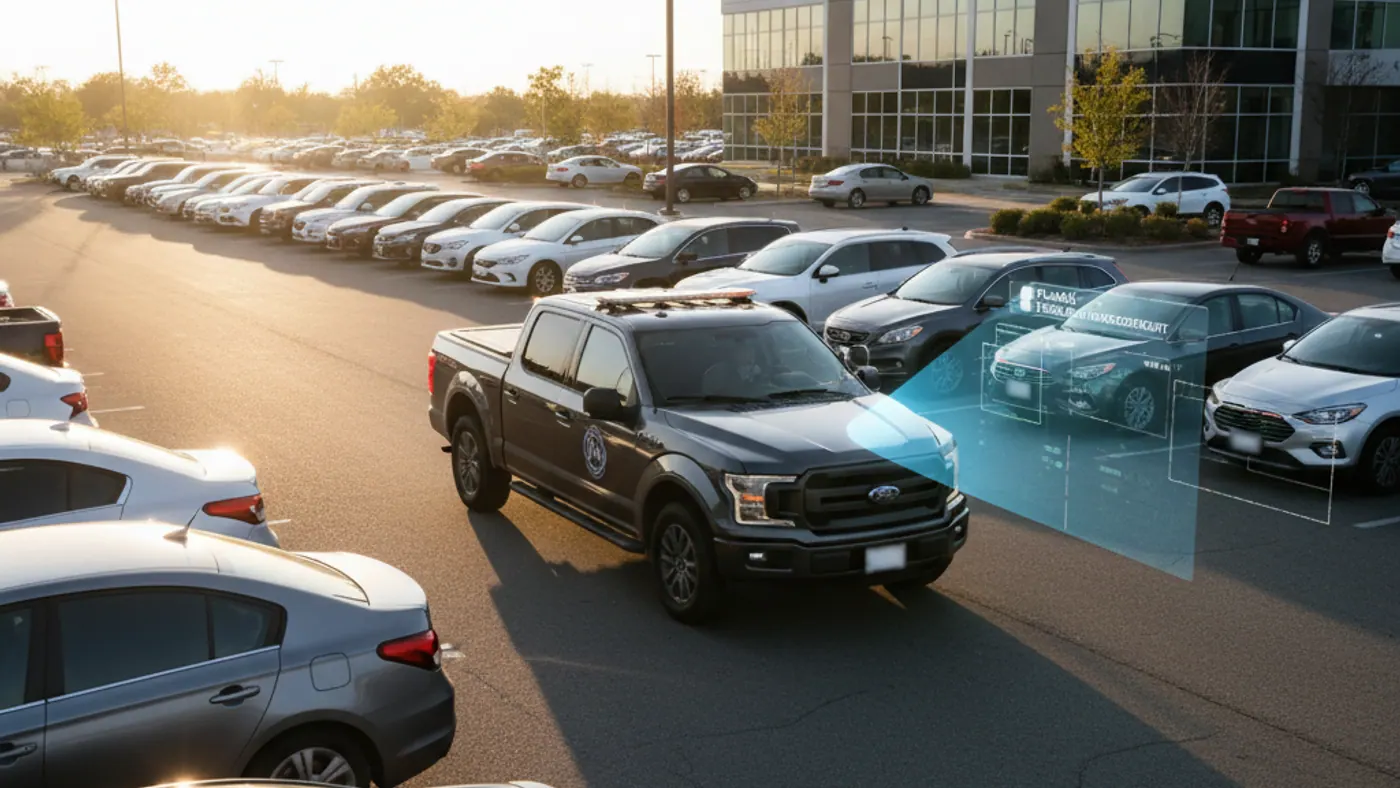
Read plates from cameras or patrol vehicles.
Check
Compare events against permits, access lists, and property rules.
Review
Keep staff or operator review in the loop before enforcement action.
Report
Use timestamps, locations, and evidence records for managers and disputes.
What to Configure Before Launch
Define property rules, user permissions, retention windows, escalation policies, signage, and the exact data source that determines whether a vehicle is authorized.
Related Placa.ai Resources
Start with TowCam parking enforcement software, then review towing enforcement systems, parking enforcement license plate scanners, and the towing profitability calculator.
Comparison
| Approach | Pros | Cons |
|---|---|---|
| Manual patrol | Low software setup | Hard to scale and hard to audit |
| Sticker or hangtag permits | Visible and familiar | Can be missed, copied, or forgotten |
| Cloud LPR workflow | Searchable plate events and stronger records | Requires camera and policy setup |
FAQ
What is permit parking enforcement?
Permit parking enforcement with LPR uses the license plate as the permit credential, letting staff or patrol vehicles verify authorization without relying only on stickers or hangtags.
Who needs permit parking enforcement?
Properties that manage resident, visitor, employee, student, contractor, or paid parking permissions.
How does Placa.ai support permit parking enforcement?
Placa.ai turns compatible camera reads into authorization checks, alerts, and searchable plate event records.
Is permit parking enforcement fully automatic?
No. Placa.ai supports alerts, records, and review workflows. Final enforcement decisions should follow customer policy and applicable rules.
Plan the Next Step
Tell Placa.ai about your property type, camera layout, access workflow, patrol process, and reporting needs. We will map the right cloud LPR workflow before hardware decisions are made.
Optimization benchmarks
Parking Enforcement Optimization Benchmarks
Placa.ai continually optimizes its cloud LPR code, camera workflow, dashboard speed, and customer-success process toward high standards for accuracy, reliability, evidence access, and patrol efficiency.
| Metric | Strong benchmark | Elite benchmark |
|---|---|---|
| Plate read accuracy in good conditions | 98%+ | 99%+ |
| Plate read accuracy at night or mixed lighting | 94%+ | 97%+ |
| False-positive plate matches | under 1% | under 0.5% |
| Plate event latency to dashboard | under 5 seconds | under 2 seconds |
| System uptime | 99.5% | 99.9% |
| Plates scanned per patrol hour | 500+ | 1,000+ |
| Manual permit-check time saved | 50%+ | 70%+ |
| Patrol route completion time saved | 25%+ | 40%+ |
| Unauthorized parking reduction | 20%+ | 35%+ |
| Parking dispute reduction | 25%+ | 50%+ |
| Evidence retrieval time | under 1 minute | under 30 seconds |
| Properties managed per patrol driver | +25% | +50% |
| Time to activate a new property | under 3 days | same day to 24 hours |
| Payback period for towing operators | under 6 months | under 90 days |
How Placa.ai uses these benchmarks: These benchmark ranges guide how Placa.ai tunes LPR recognition, cloud event processing, patrol workflow, permit checks, evidence retrieval, and property onboarding.
The goal is simple: help operators scan more confidently, review enforcement events faster, reduce manual permit checks, and deliver clearer records to property managers.