

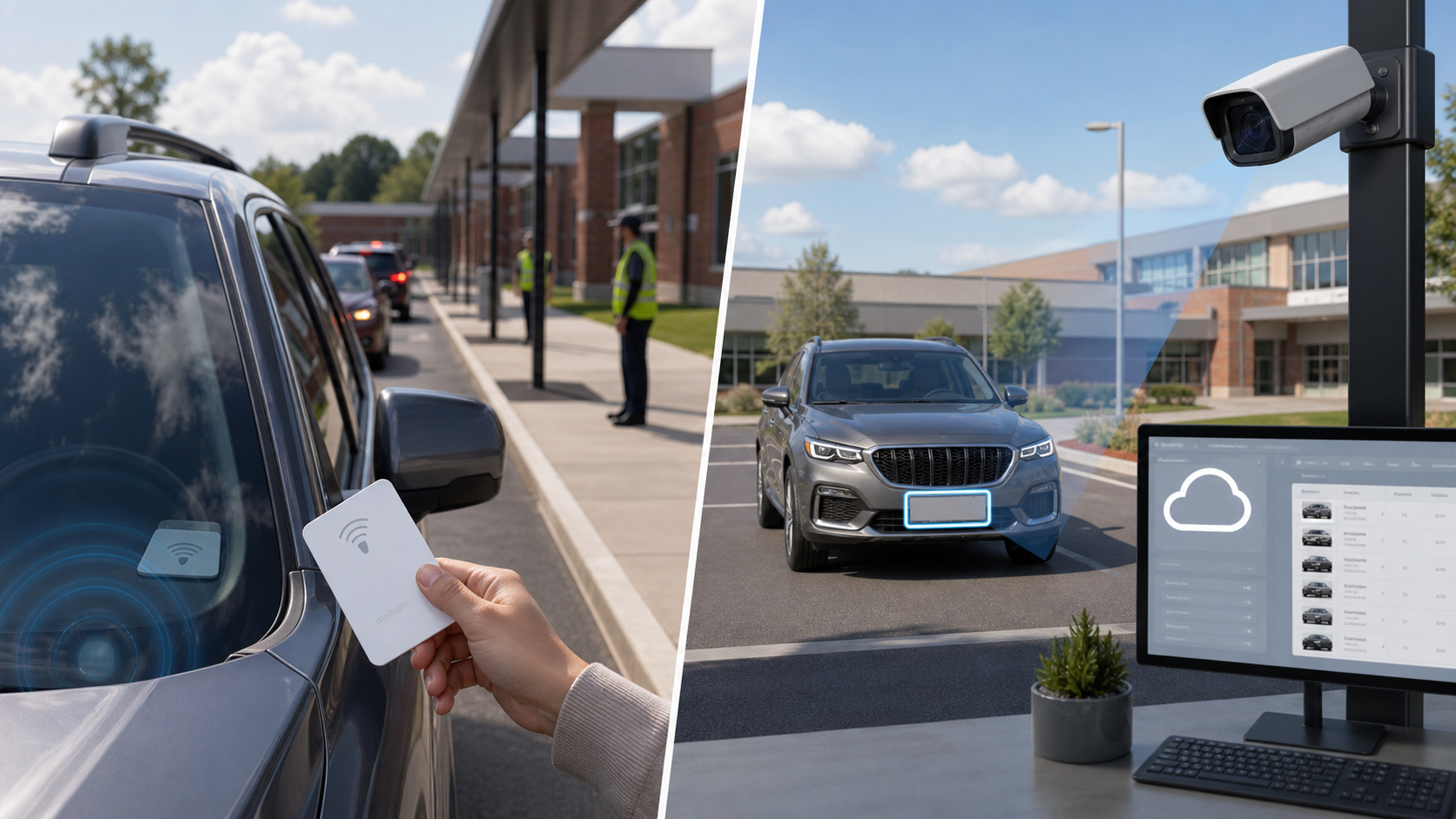
RFID vs LPR for school dismissal comes down to adoption, maintenance, and how reliably the school can detect an authorized pickup vehicle during carline.
Request a School Pickup Assessment
Use PLACA calculators
RFID vs LPR for School Dismissal: Quick Comparison
| Factor | RFID | LPR |
|---|---|---|
| How it works | Reads a tag, card, or sticker. | Reads the vehicle license plate with a camera. |
| Parent adoption | Requires tag distribution and consistent use. | Uses existing vehicle plate data. |
| Lost item risk | Tags and cards can be lost, forgotten, or moved. | No tag for parents to manage. |
| Maintenance | Ongoing tag inventory and replacements. | Camera placement, plate database quality, and cloud workflow. |
| Best fit | Controlled fleets or communities with strong tag compliance. | Private schools, charter schools, and campuses with repeat carlines. |
RFID Strengths and Weaknesses
RFID can be fast when every authorized vehicle has a working tag. The downside is tag management: distribution, replacement, forgotten tags, alternate vehicles, and exceptions.
LPR Strengths and Weaknesses
LPR uses the plate already on the vehicle. It can reduce parent adoption friction, but it needs clean authorized vehicle data, camera placement, and privacy policy review.
Cost, Maintenance, and Parent Adoption
RFID costs are not only hardware. Schools also manage tag issuance, replacements, exception handling, and parent reminders. LPR costs center on camera setup, cloud software, data quality, and staff training.
For carline campuses, school carline automation should reduce steps for parents and staff. If parents must remember a tag or app action every day, the workflow can break at peak traffic.
Which Works Better for Private, Charter, and Carline Schools?
LPR is often the stronger fit for schools with predictable repeat pickup vehicles, multiple pickup lanes, and staff who need vehicle information before the car reaches the curb. RFID can still work when a campus already has strong tag compliance.
Compare this with SchoolPass alternatives and Pikmykid alternatives when reviewing the full vendor market.
Want help choosing RFID or LPR?
PLACA.AI can evaluate pickup volume, lane layout, parent behavior, and staff workflow to recommend a practical approach.
Frequently Asked Questions
-
Is RFID or LPR better for school dismissal?
LPR is often better when schools want passive vehicle recognition without issuing, replacing, and enforcing use of tags. RFID can work well when tag adoption is high.
-
What is the biggest weakness of RFID school pickup systems?
Lost tags, forgotten tags, damaged tags, untagged alternate vehicles, and parent compliance can weaken RFID performance.
-
What is the biggest weakness of LPR for school dismissal?
Schools need accurate plate records, good camera placement, and privacy-conscious policies for collection, access, and retention.
-
Which option has lower maintenance?
LPR can reduce tag replacement work, while RFID may require ongoing tag management. Actual maintenance depends on hardware, installation, and workflow.
-
Can private schools use LPR pickup automation?
Yes. Private schools with repeat carline traffic are strong candidates because authorized vehicles can be registered and matched.
-
Can schools combine RFID and LPR?
Some campuses may combine methods, but many prefer one primary signal so staff do not manage multiple parallel pickup workflows.
Request a Dismissal Automation Demo
Share your carline setup and current pickup process.
Data reference: National Center for Education Statistics
Frequently Asked Questions: RFID vs LPR for School Dismissal
What is the main cost difference between RFID and LPR systems?
RFID systems require every participating family to receive and carry a physical tag. For a school with 500 students, that means purchasing and distributing 500 or more RFID cards or key fobs, plus managing replacements for lost tags throughout the year. LPR systems read license plates automatically, requiring no per-family hardware. The upfront investment in LPR cameras is higher than a basic RFID reader, but the ongoing cost per family is zero once the system is installed.
How accurate are LPR cameras compared to RFID readers?
Modern LPR cameras achieve read accuracy rates of 95 to 99 percent in controlled conditions such as school driveways, where vehicles move slowly and lighting is consistent. RFID reader accuracy is essentially 100 percent when the tag is presented correctly, but family compliance varies – parents forget their fob, borrow a different vehicle, or hold the tag at the wrong angle, causing misses. In practice, LPR systems often outperform RFID setups once initial configuration is complete.
Can LPR systems handle multiple authorized vehicles per student?
Yes. Most LPR-based school dismissal platforms allow administrators to link multiple authorized plate numbers to each student record. Parents who drive more than one vehicle, grandparents, and regular carpool drivers can all be enrolled. The system displays the student name and dismissal status when any authorized plate is detected, regardless of which family vehicle is in the pickup lane.
What happens if a parent gets a new vehicle?
With LPR, a parent updates their profile or contacts the school office to add the new plate. The change takes effect immediately. With RFID, a new tag must be issued and delivered to the family, which can take several days and requires staff to process the update manually.
What data does an LPR dismissal system store?
Placa.ai stores the timestamp, plate number, camera ID, and matched student record for each detected vehicle. This log is accessible to authorized administrators and serves as an audit trail if questions arise about pickup timing. Data is encrypted in transit and at rest, with retention policies configurable to meet district requirements.
Is LPR suitable for schools with high enrollment?
LPR scales well with enrollment size. A single camera can process vehicles arriving in sequence, and multiple cameras cover parallel pickup lanes simultaneously from a unified dashboard. Schools with 800 or more students regularly use LPR to manage large afternoon dismissal volumes without increasing staffing. RFID systems also scale, but reader infrastructure must expand to cover additional lanes, adding hardware cost. Placa.ai supports multi-camera configurations from a single management interface, making it practical for campuses of any size.
How does weather affect LPR camera performance?
Modern LPR cameras are designed for outdoor use and perform reliably across a wide range of conditions. Infrared illuminators maintain plate readability after dark and in heavy rain. Fog and heavy snow can reduce read rates, but most school pickup operations occur in daylight with manageable weather. Cameras should be mounted with a clear sightline to the license plate area, angled to minimize glare from low-angle sunlight during morning and afternoon pickup hours.