
stop unauthorized parking on private property
Unauthorized parking costs property managers thousands in lost revenue, damages tenant relationships, and creates legal exposure. This guide covers every method — from signs to full automation — ranked by effectiveness and cost.
Step 1: Make the Rules Impossible to Miss
Before enforcing anything, ensure your parking rules are clearly communicated at every entry point. Visible signage is both a legal requirement for towing and a practical deterrent.
- Post signs at every entrance: “PRIVATE PROPERTY — PERMIT PARKING ONLY — UNAUTHORIZED VEHICLES WILL BE TOWED AT OWNER’S EXPENSE”
- Include your authorized towing company name and phone number on all signs (required by many states)
- Ensure minimum sign dimensions meet local ordinances (typically 17” x 22”)
- Add signs at each section of a large property, not just the entrance
Step 2: Implement a Permit System
A permit system creates a clear record of authorized vehicles. Traditional systems use hang tags or stickers; modern systems use license plate registration.
| Permit Type | Cost | Fraud Risk | Admin Effort |
|---|---|---|---|
| Physical hang tags | Low | High (shared/forged) | High (manual checks) |
| Window stickers | Low | Medium | High (manual checks) |
| License plate registration | Low | Low | Low (auto-checked by LPR) |
Step 3: Establish a Towing Partnership
Work with a licensed towing company on a pre-authorization agreement that allows them to remove unauthorized vehicles without calling you each time. This is the fastest path to enforcement but requires:
-
Verify your towing company is licensed
Check with your state’s motor vehicle or transportation authority for licensing requirements.
-
Sign a written authorization agreement
Document which lots they can tow from, under what conditions, and the fee structure.
-
Notify local law enforcement
Many states require reporting all private property tows to local police within 30 minutes.
-
Keep records of every tow
Document the plate, date, time, photos, and reason for each tow to defend against wrongful towing claims.
Step 4: Add License Plate Recognition
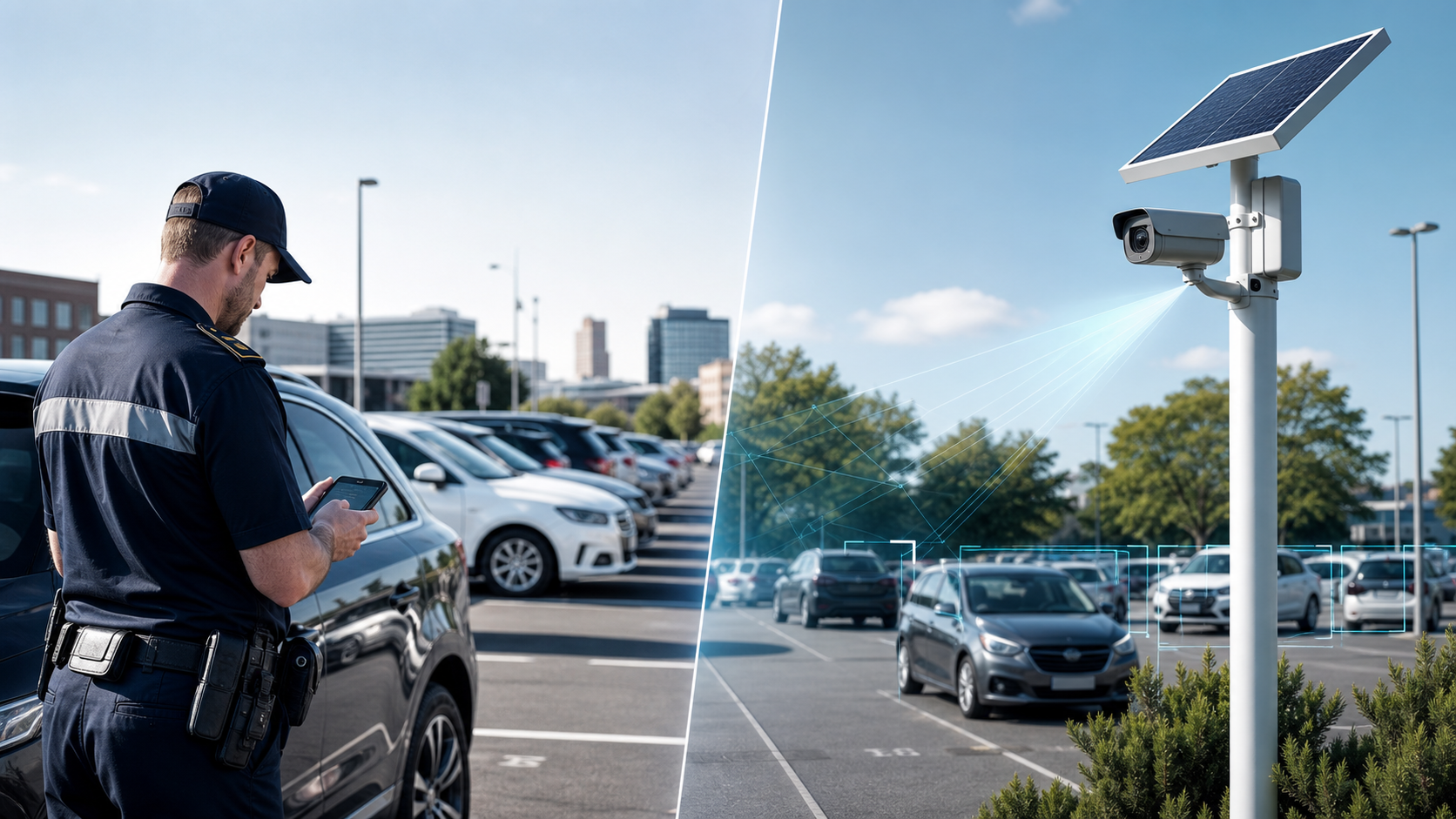
LPR cameras eliminate the manual component of every step above. Instead of staff walking lots to check permits, cameras continuously scan every plate and cross-reference against your registered vehicle database.
When an unauthorized plate is detected, the system:
- Logs the plate number, vehicle make/model/color, and timestamp
- Captures photo evidence automatically
- Sends an instant alert to your phone or enforcement staff
- Builds a documented violation history for each unauthorized plate
PLACA.AI’s GuardCam and Solar Sight cameras are solar-powered and 4G LTE connected — they mount anywhere without wiring and are active within the hour. The PLACA.AI dashboard lets you manage permits, review violations, and generate reports from any device.
Step 5: Automate Notifications and Follow-Through
The most common enforcement failure is inconsistency — violations go unaddressed because staff don’t have time to patrol. Automation fixes this:
- LPR systems alert staff the moment a violation occurs, not after a patrol discovers it hours later
- Violation history in the PLACA.AI dashboard shows repeat offenders for escalated action
- Photo evidence eliminates disputes over whether a vehicle was actually unauthorized
Frequently Asked Questions
Can I tow someone’s car from private property without calling police first?
In most US states, you can tow from private property without contacting police beforehand, provided you have proper signage posted and use a licensed towing company. However, many states require notification of police after the tow occurs (typically within 30–60 minutes). Check your specific state’s requirements before implementing a tow program.
What signage is required to legally tow from private property?
Requirements vary by state but typically include: signs at all entrances with clear “unauthorized vehicles will be towed” language, the name and phone number of the authorized towing company, and minimum sign dimensions (often 17” x 22”). Some states require additional information like the property owner’s contact information.
How do I handle unauthorized parking without confronting the driver?
The most conflict-free approach is automated enforcement: LPR cameras detect violations and either alert a towing company directly or document violations for later action. This removes the confrontational element entirely. For properties without LPR, leaving a formal notice on the vehicle (not a handwritten note) keeps interactions professional and documented.
What is the fastest way to stop recurring unauthorized parkers?
LPR technology with towing integration. When PLACA.AI detects a repeat unauthorized plate, it alerts your enforcement contact immediately with full documentation. Consistent, documented towing stops repeat offenders within 1–2 incidents. Communities that implement active LPR enforcement see 60–80% violation reduction within 30 days.
Stop Unauthorized Parking Automatically
PLACA.AI detects unauthorized vehicles 24/7 and alerts you instantly — with photo evidence ready for towing or dispute resolution.
Talk to PLACA.AI
Need help choosing the right LPR workflow?
Send your property, parking, or access-control question through the PLACA.AI contact form. Dr. Suhayb and the team can help map the right camera, software, and enforcement setup.
Internal Resources
- Flock Safety Alternatives for HOA Communities
- Why Standard Security Cameras Miss Plates on Moving Vehicles
Related Resources
Data reference: U.S. Department of Transportation