

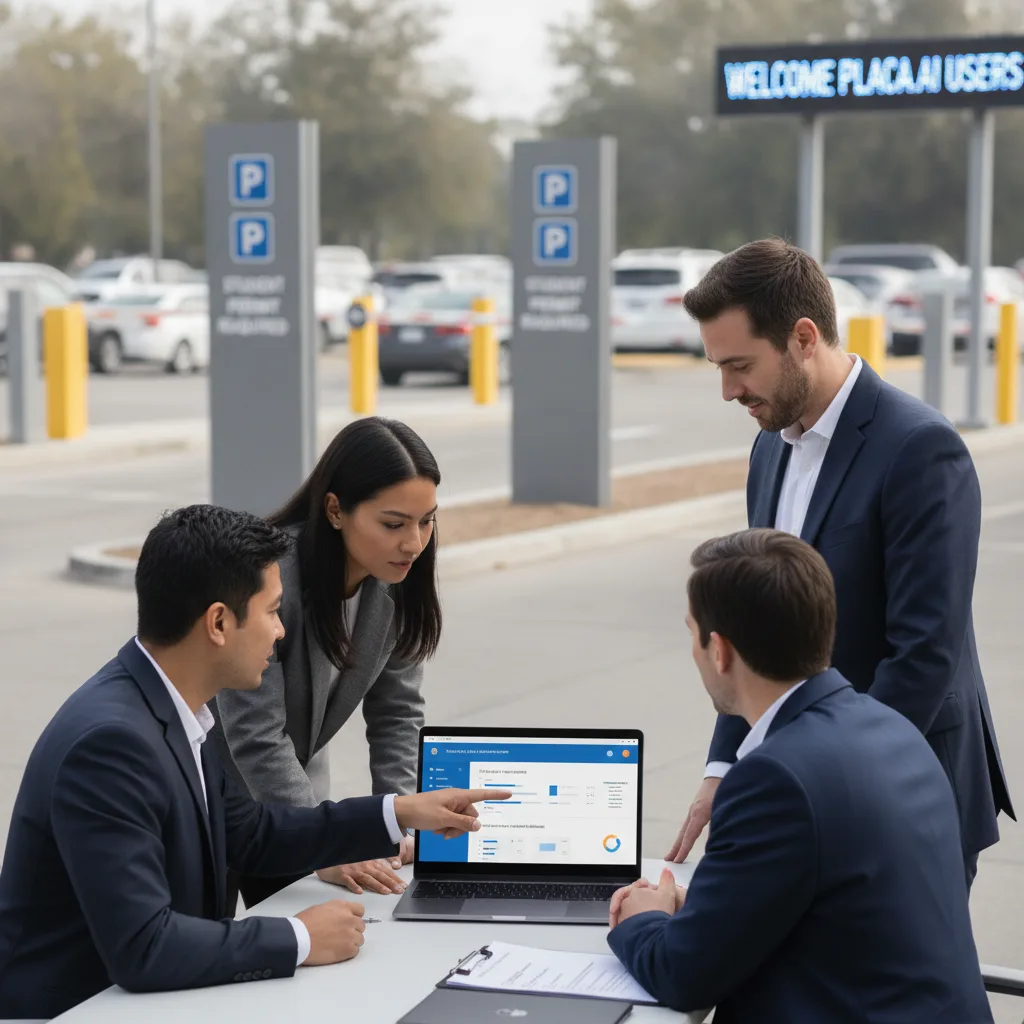
A virtual permit LPR rollout should launch in stages: announce the timeline, keep a temporary permit bridge, clean up plate records, teach plate-facing rules, publish privacy answers, route visitor payments clearly, and hold first-week citations that depend on uncertain registration data.
Key Takeaways
- Virtual permits change the driver workflow before they change enforcement technology.
- The highest-risk launch issues are plate typos, temporary plates, second vehicles, back-in parking habits, unclear visitor payment, and unanswered privacy questions.
- A temporary credential bridge reduces confusion while the operator confirms that portal records and field reads match.
- First-week citation holds should apply to registration-dependent cases, not blocked access, fire lanes, accessible routes, or reserved operational spaces.
- Campus parking teams should define go-live criteria before patrol staff issue ordinary permit citations from LPR reads.
What This Workflow Involves
A plate-based permit launch starts before the first enforcement vehicle scans a lot. Drivers must know when permits go on sale, whether they still need to display anything, how to enter the plate, what to do with a temporary tag, how to handle more than one vehicle, and which direction the vehicle must face when parked.
Operators also need a staff workflow. The parking office, public safety team, enforcement vendor, visitor-payment provider, and support desk should agree on one timeline. That timeline should say when records are imported, when warning messages begin, when temporary display ends, when full enforcement starts, and what cases go to review instead of immediate citation.
The most important discipline is separating launch confusion from ordinary noncompliance. A student who entered a plate with a harmless formatting issue needs a different response from a driver parked in a restricted fire lane. A staff member who has not received virtual enrollment instructions needs a different response from a visitor who ignored all payment routes. The rollout plan should make those differences easy for patrol teams to apply.
Why This Problem Is Showing Up Now
Fresh August 2026 campus parking updates show how common this transition has become. Penn State Harrisburg announced on August 12, 2026 that it is moving to virtual permits and LPR enforcement this fall, while using a temporary printed dashboard permit until LPR enforcement begins. The same notice tells students to register plates online, keep license plate information current, and park with plates facing the drive aisle.
James Madison University’s July 27, 2026 student parking update uses similar operational language: check plate and vehicle information carefully, remember that the license plate becomes the permit, and park so the plate is visible from the travel lane. Orange Coast College’s Fall 2026 parking page frames virtual permitting through public FAQs about how the system works, how a driver verifies the plate on record, how multiple vehicles are handled, and why correct plate information prevents avoidable violations.
Those examples are useful because they are not vendor slogans. They are the kinds of instructions drivers actually see during a permit season. When those instructions are incomplete, support demand rises quickly: Did my permit order go through? Do I still need a paper permit? Can I back into a space? What if my plate changed? How is my plate data used? The launch plan has to answer those questions before enforcement starts.
The Core Operational Problem
The hard part is not reading a license plate. The hard part is making the permit database, driver instructions, visitor payment route, privacy policy, and patrol decision all line up on the same day. If one part lags, the operator can create a wave of citations that are technically explainable but operationally avoidable.
A virtual permit launch usually creates five predictable failure points. First, drivers enter the wrong plate, state, special character, temporary tag, or old vehicle. Second, drivers park with the plate facing away from the patrol lane. Third, staff, visitors, residents, or students follow different credential rules during the transition. Fourth, privacy questions arrive after the system is already active. Fifth, enforcement staff see a failed permit match but do not know whether the case is a launch issue, a payment issue, or a valid violation.
That is why the rollout should be managed from the parking operator LPR workflow hub mindset: payment, permitting, plate reads, exceptions, notices, and support records are one operating system. A launch is successful only when those pieces work together without forcing drivers or staff to guess.
Evidence And Source Context
Penn State Harrisburg’s August 12, 2026 parking update is the strongest fresh evidence for a staged approach. It describes virtual permits and LPR enforcement coming later in the fall, a temporary printed display requirement after student online purchase, plate registration, license-plate-facing rules, and visitor payment through a mobile option or existing pay station.
James Madison University’s July 27, 2026 student parking update reinforces the same launch risks: accurate plate entry, virtual permits, class-year and lot changes, plate visibility from the travel lane, and text notifications when a vehicle receives a citation or a permit is expiring. These are practical communication details, not abstract technology claims.
Orange Coast College’s Fall 2026 campus parking FAQ shows the questions a driver-facing launch page should answer: how virtual permitting works, how LPR verifies a permit, how to verify the plate on record, how multiple vehicles are handled, what happens after a plate change, and how collected plate information is used. SDSU’s LPR and ALPR privacy policy adds examples of access-role definitions, audit records, training expectations, retention language, and temporary or specialized plate handling. UNF’s parking FAQ shows why retention, patrol frequency, nose-in parking, permit verification, and wrong-plate entry need plain-language answers.
Virtual Permit LPR Rollout Checklist
| Checkpoint | Decision to make | Launch record to keep |
|---|---|---|
| Permit timeline | When can each group buy or claim a permit, and when does full enforcement begin? | Published dates, email copy, portal status |
| Temporary bridge | Will drivers display a printed receipt, dashboard permit, hangtag, or warning notice until LPR is live? | Bridge rule, start and end date, affected groups |
| Plate registration | What fields are required, and how should drivers enter temporary, specialty, or changed plates? | Portal instructions, accepted formats, support override path |
| Vehicle orientation | Must plates face the drive aisle, and is there an option for front display plates? | Signage, map notes, citation start date |
| Visitor payment | Which app, QR code, pay station, validation desk, or web payment route is official? | Visitor instructions, zone list, receipt lookup method |
| Privacy FAQ | What data is collected, who can access it, how long it is retained, and how misuse is audited? | Public policy, role list, audit cadence, retention note |
| First enforcement hold | Which launch-period cases go to review before citation or fee escalation? | Hold window, exception codes, reviewer |
| Go-live review | What must be true before ordinary permit citations resume? | Portal match rate, support volume, test reads, staff signoff |
Build The Driver Message Before The Enforcement Rule
The driver message should be short, repeated, and specific. A good launch notice tells each group what to do now, what changes later, and what will trigger a citation. For students, that may mean buy online, register the plate, display a temporary permit for two weeks, and park with the plate facing the drive lane. For staff, it may mean keep using the current hangtag until a virtual enrollment email arrives. For visitors, it may mean pay through the official app, QR zone, or pay station and save the receipt.
Avoid treating privacy as a footnote. The public FAQ should state the operating purpose, what the system reads, who can access plate records, whether the data is shared, how long it is retained, how access is logged, and who owns correction requests. If a school or campus operates under a state ALPR law, institutional privacy policy, or public-records rule, the launch page should point to the approved language instead of summarizing loosely.
The tone matters. Drivers do not need a dense technical explainer before they park. They need enough clarity to avoid an avoidable citation and enough governance detail to trust that the parking office is not using the transition as a surprise enforcement trap.
What To Hold During The First Enforcement Window
The first enforcement window should not be a free-for-all, but it should route uncertain records to review. Hold cases where the vehicle appears linked to a newly purchased permit but the plate format does not match, where a temporary plate was entered and a permanent plate arrived, where a driver followed the temporary display rule, or where a visitor payment appears pending in the official route.
Continue action on rules that do not depend on virtual permit confusion. Fire lanes, accessible spaces without proper credentials, blocked gates, restricted service areas, loading docks, no-parking zones, and safety hazards still need ordinary enforcement. The citation note should explain why the action was not a registration-transition issue.
For normal enforcement after launch, use an LPR exception queue before parking enforcement so staff can review low-confidence reads, wrong-lot matches, payment timing, and plate-format issues before escalation. The launch hold is temporary; the exception queue is the long-term control.
Visitor And Daily Payment Rules
Visitor payment can become the messy part of a campus rollout because guests do not read student permit emails. The launch page should put visitor instructions on signs, maps, payment pages, event notices, and confirmation receipts. It should also explain whether a visitor can pay by app, QR code, web page, pay station, attendant, validation code, or license-plate-linked session.
If the property supports mobile or QR payment, verify that the payment record can be searched by plate, zone, and time before enforcement relies on it. The mobile parking payment processing guide is relevant here because speed is not enough; the operator also needs clean receipt lookup, processor status, refund handling, and support visibility.
Daily permits and visitor sessions should have their own support path. A student permit typo, a staff hangtag transition, and a visitor payment mismatch should not all arrive in the same unstructured inbox.
Risks, Limits, And Privacy Review
This article is operational guidance, not legal advice. Campus parking rules, student records rules, state ALPR statutes, public-records obligations, retention periods, citation procedures, accessibility rules, and appeal rights vary by institution and jurisdiction. A human editor should verify every legal or policy statement before publication.
The privacy limit is also practical. Do not collect or display more data than the parking decision needs. A support workflow can usually resolve a permit issue with plate, permit account, approximate time, lot, and receipt reference. It should not ask drivers for full payment-card screenshots, unrelated account history, or identity documents unless an approved policy requires them.
Finally, do not promise perfect reads or zero appeals. LPR can make permit enforcement faster and more consistent, but it still needs readable plates, accurate account records, clear signage, staff review, and a correction process.
Worked Example: Two-Week Campus Launch
A campus parking office plans to replace decals with virtual permits before the fall term. Student permits open on August 18. For the first two weeks, students print a dashboard receipt while the operator tests LPR reads against the permit database. Staff keep current hangtags until their virtual enrollment email arrives. Visitors can pay by mobile app, QR code, or credit-card pay station.
The operator posts a plate-facing rule on the permit page, lot signs, purchase confirmation page, and student email. Drivers with no front plate can buy a front display plate or park nose-in. The privacy FAQ explains what plate data is collected, who can use it, the authorized purpose, the retention rule, and how access is audited.
During week one, registration-dependent citations go to review. A vehicle in a student lot with a likely plate typo receives a correction notice. A visitor who paid in the wrong zone receives support review. A vehicle blocking an accessible route is cited immediately because the violation is safety-related, not a virtual-permit launch issue. At the end of week two, support volume has dropped, portal match issues are resolved, and ordinary permit enforcement begins.
Frequently Asked Questions
Do drivers still need a physical permit during the transition?
Sometimes. A campus may use a temporary printed permit, dashboard receipt, hangtag, warning period, or no display bridge at all. The important point is to publish the bridge rule and end date before LPR-based citations begin.
What plate-entry mistakes should the launch page prevent?
Call out state selection, temporary plates, changed plates, specialty symbols, spaces or hyphens, old vehicles, rentals, and shared vehicles. Tell drivers exactly where to update the record and how quickly the update takes effect.
Should the first week use warnings instead of citations?
For registration-dependent issues, a warning or hold window is often safer operationally. Safety, access, accessible-space, and restricted-zone violations may still need immediate enforcement.
What privacy questions should operators answer publicly?
Answer what is collected, why it is collected, who can access it, whether it is shared, how long it is retained, how access is logged, and who can correct an account record.
How should visitors be handled differently from students and staff?
Visitors need instructions at the lot, not only in campus email. Signs and receipts should show the official payment route, zone, plate-entry requirement, support contact, and receipt lookup process.
Related PLACA Resources
- Use the parking operator LPR workflow hub to map permit records, plate reads, payments, support, and enforcement decisions.
- Review the mobile parking payment processing guide when visitor payments need to connect cleanly to plate-based sessions.
- Build a durable LPR exception queue before parking enforcement for low-confidence reads, plate typos, and payment or permit mismatches.
Next Step
Before the first LPR-based citation, run a launch tabletop with parking, public safety, support, IT, and communications. Use five test cases: wrong plate entry, temporary plate, back-in parking, visitor payment mismatch, and restricted-zone violation. If staff cannot route each case consistently, the launch is not ready for full enforcement.