

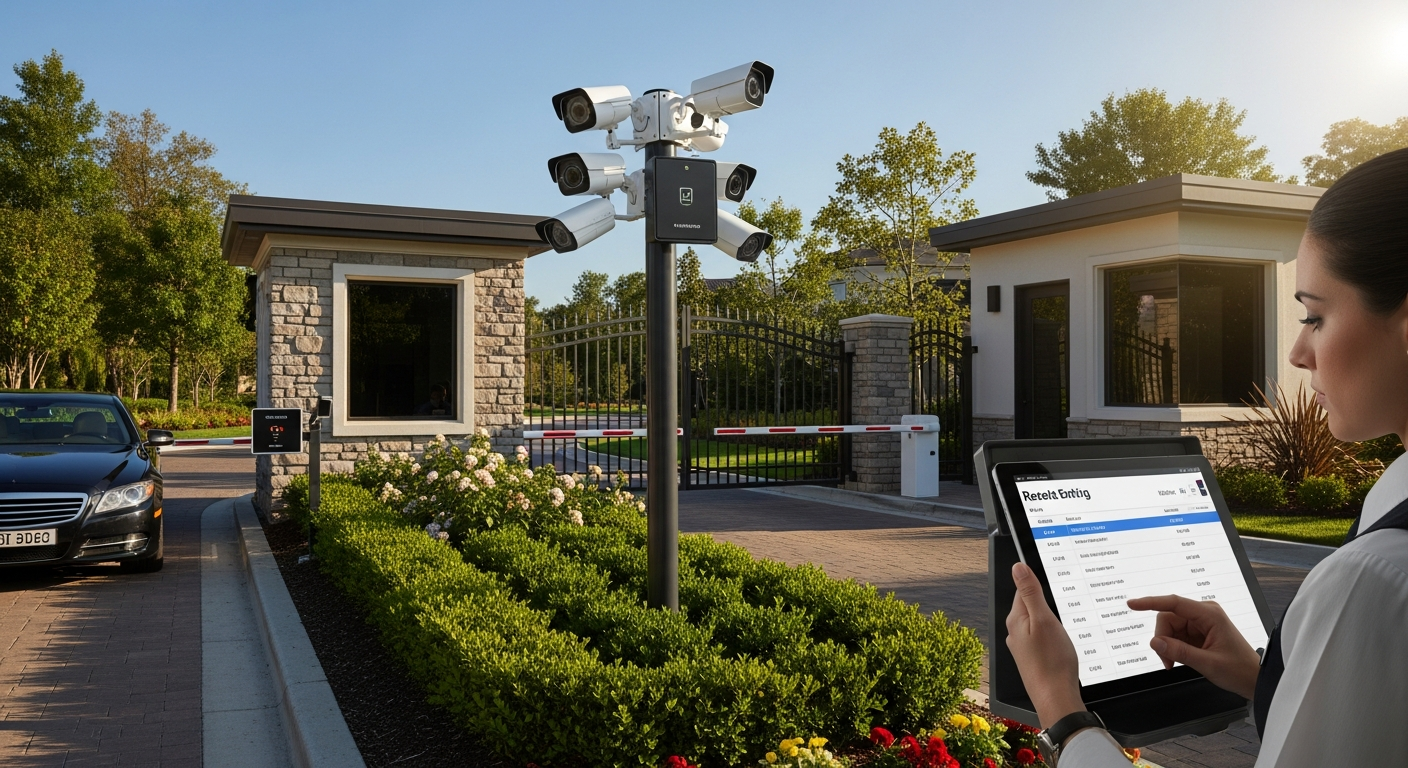
How HOA License Plate Recognition Helps Replace Manual Gate Logs
A practical guide from Placa for buyers comparing camera placement, LPR workflows, and private-property vehicle recognition options.
Why This Matters
License plate recognition is rarely solved by buying a camera at random. The camera must see the plate clearly, at the right angle, in the right lighting, at the expected speed. Then the software must turn that read into a useful vehicle event: a searchable log, access decision, alert, report, or evidence record.
Capture First
Check lane geometry, mounting height, distance, approach angle, glare, and whether cars stop, crawl, or pass at speed.
Workflow Second
Decide what should happen after a plate is read: open a gate, flag a vehicle, search history, notify staff, or document a parking event.
Recommendation Last
Only after those conditions are known should a camera tier be selected.
What to Compare
- Lane count and whether each lane needs its own capture zone.
- Vehicle speed and whether radar-assisted or radar-triggered capture is useful.
- Night performance, IR behavior, and headlight glare.
- Power and network access, including cellular and wireless options.
- Gate controller or parking workflow integration.
- Privacy policy, retention rules, user permissions, and search access.
How Placa Helps
Placa is a cloud AI LPR platform, not a generic camera storefront. The goal is to match the camera to the site, connect the camera to cloud LPR workflows, and help teams use the resulting vehicle events for safer, cleaner operations.
Related Placa Resource
Related Placa Resource
Camera Recommendation
Related Placa Resource
Related Placa Resource
Image Recommendations
Hero image: realistic private-property entrance with a visible LPR camera and subtle Placa dashboard overlay. Diagram: camera angle, capture zone, plate read event, and cloud dashboard. AI prompt: Create a clean modern SaaS-style image showing a private-property entrance with vehicles entering, an LPR camera mounted near the lane, subtle plate recognition overlay, and a Placa cloud dashboard UI. No police, no citations, no third-party logos.
FAQ
What should I know about HOA license plate recognition gate logs?
How HOA License Plate Recognition Helps Replace Manual Gate Logs should be evaluated around plate capture conditions, camera placement, lighting, vehicle speed, lane count, and how the result connects to Placa cloud LPR workflows.
Is software or hardware more important?
Both matter. Software organizes plate events, search, alerts, and permissions, but the camera still needs a usable view of the plate.
What should the next step be?
The next step is a site assessment that reviews entrance geometry, speed, lighting, power, network access, and gate or parking workflow needs.
See Which Camera Fits Your Site
Share your entrance layout, speed, lane count, and current gate or parking workflow.
Data reference: EFF: Automated License Plate Readers
Data reference: EFF: Automated License Plate Readers
Data reference: EFF: Automated License Plate Readers
FAQs: HOA License Plate Recognition Gate Logs
What information is captured in an HOA LPR gate log?
A typical HOA license plate recognition gate log captures the license plate number of each vehicle, the date and time of the read, the gate or access point where the read occurred, the access decision (entry granted or denied), a photographic image of the vehicle and plate, and whether the plate matched an authorized resident or guest record. More advanced systems also log the vehicle make, model, and color derived from the image, as well as the identity of any resident whose plate triggered the entry (associating the vehicle entry to the resident account). All of this information is timestamped and stored in a searchable database that HOA managers can access through a web or mobile dashboard.
How long should an HOA retain LPR gate log data?
HOA boards should establish a written data retention policy for LPR gate logs before deploying the system and ideally before selecting a vendor. The appropriate retention period balances operational needs with privacy considerations and any applicable state regulations. For most HOA use cases, a retention period of 30 to 90 days is sufficient for investigating access incidents, resolving gate tailgating complaints, and reviewing patterns in unauthorized access attempts. Some HOAs retain data longer for specific investigative purposes, but longer retention increases privacy exposure and may trigger compliance obligations under state privacy laws. The retention policy should be disclosed to residents in community documentation and the annual HOA meeting.
Can HOA residents request access to their own LPR gate log records?
Some HOAs provide residents with the ability to view their own vehicle entry and exit history through a resident portal or mobile application. This transparency feature builds community trust by allowing homeowners to verify their own access history and quickly identify any anomalies that might indicate a security issue. It also demonstrates that the HOA is managing the data responsibly rather than maintaining a secretive surveillance record. HOA boards considering implementing resident-accessible gate log portals should review the legal implications with HOA counsel, as data access rights for residents can vary by state and by the specific provisions in the community’s governing documents.
About Placa.ai
Placa.ai is an artificial intelligence platform specializing in vehicle access control and property automation for schools, homeowners associations, parking facilities, self-storage operators, and commercial campuses. Our license plate recognition technology delivers fast, accurate, and privacy-respecting vehicle identification that helps property managers streamline operations, improve security, and reduce dependence on manual processes. Unlike traditional surveillance vendors, Placa.ai is designed from the ground up to keep data within your control, with transparent retention policies and no mandatory third-party data sharing. Our customers include school districts across the United States, HOA communities, parking operators, and corporate campus managers who rely on Placa to make their properties safer and more efficient every day. Learn more about how Placa.ai can transform your vehicle access workflow by requesting a free demonstration from our team.