
President Trump Weighs Flock Safety Cameras Amid Citizen Privacy Uproar

President Trump Flock Safety cameras review highlights public-safety benefits, privacy risks, security flaws, and local HOA-controlled alternatives.
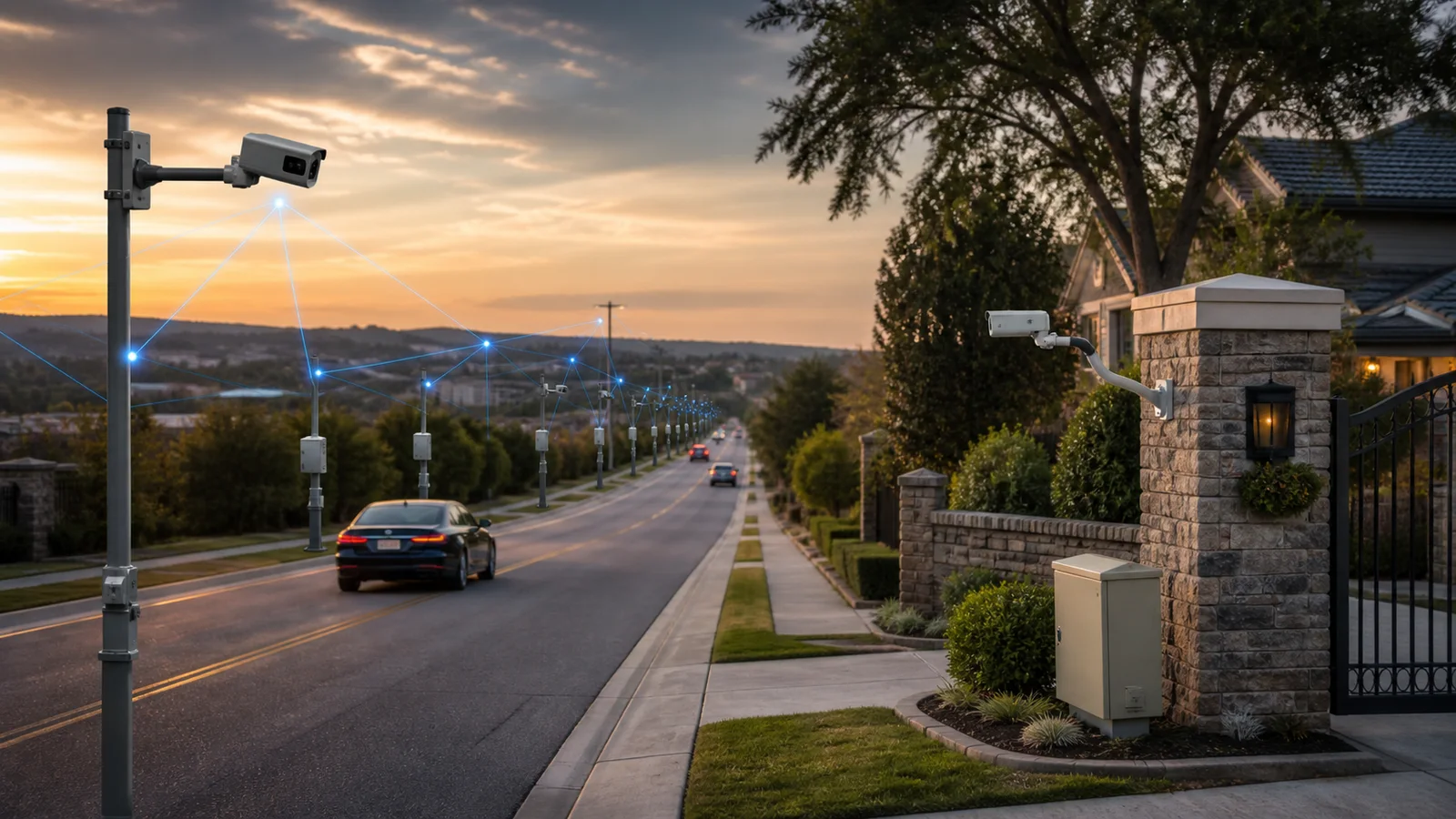
Nationwide networked license plate cameras compared with a locally controlled HOA entrance camera
Table of Contents

President Trump Flock Safety cameras scrutiny has put a long-overdue national question on the table: can Americans keep the public-safety benefits of license plate recognition without creating a searchable map of ordinary citizens’ movements? President Donald Trump said on August 17, 2026, that his administration was studying Flock Safety cameras and that the technology has “pros and cons.” PLACA.AI is grateful that the president has acknowledged both sides of a concern now shared by citizens, civil-liberties advocates, police leaders, and lawmakers across the political spectrum.

Editorial disclosure: PLACA.AI provides license plate recognition software and camera solutions, including systems for private communities. This is a sourced opinion and news-analysis article, not legal advice. Competitor statements are attributed, and PLACA’s policy recommendations are identified as its own position. Published August 19, 2026.

Key Takeaways

  • President Trump did not announce a ban or a final position. He said Flock Safety has “pros and cons,” is being studied, and that his administration expects to state its views soon.
  • Automated license plate readers can help recover stolen vehicles, locate missing people, identify vehicles connected to violent crimes, and preserve objective evidence.
  • The privacy question is not merely whether a camera sees a plate on a public road. It is whether billions of observations become a persistent, cross-jurisdictional movement-intelligence system.
  • Current law does not make every plate read unconstitutional. However, large-scale aggregation and warrantless tracking raise serious Fourth Amendment questions that courts, lawmakers, and communities are still confronting.
  • HOAs can choose a narrower model: cameras at defined private-property entrances, purpose-limited searches, community-approved users, short retention, audit logs, and no automatic participation in a nationwide data-sharing network.

What President Trump Said About Flock Safety Cameras

During an Oval Office event on August 17, President Trump was asked about Flock Safety. According to Associated Press reporting on the president’s remarks, he said the cameras have “pros and cons,” that the matter was being studied, and that the administration would have an answer soon.

That wording matters. It would be inaccurate to say the president has already condemned the company, declared the technology unconstitutional, or committed to a specific federal action. What he did was validate the need for scrutiny. In PLACA’s view, that is an important first step. A system capable of revealing where vehicles travel should not expand on autopilot simply because each individual camera appears ordinary.

The president’s review follows growing public attention, including the MS NOW opinion roundup that prompted this editorial and reporting that citizens and officials in both parties are questioning the scope, sharing, and possible misuse of networked plate data.

What This Workflow Involves

An automated license plate reader, or ALPR, photographs a passing vehicle and extracts information such as the plate number, time, location, vehicle make, model, color, and distinguishing features. A single observation can help answer a limited question: did a particular vehicle enter this gate or pass this intersection at a particular time?

A networked system changes the scale. When many agencies and private customers contribute records that can be searched across jurisdictions, the result can become a historical vehicle-location database. The same tool that helps an investigator find a stolen car can also reveal patterns around a home, workplace, medical office, place of worship, political meeting, or family visit.

This distinction—between a defined camera purpose and broad movement intelligence—is the heart of the debate. Americans do not have to choose between having no useful cameras and placing every driver inside a nationwide AI intelligence network.

The Pros: Why Police and Communities Use License Plate Readers

A serious privacy argument should acknowledge the technology’s legitimate value. Police agencies and public officials report that ALPR systems can shorten investigations and generate leads when time matters. The Associated Press’s August 2026 review of Flock’s benefits and controversies notes that police credit the technology with helping locate missing people and track vehicles associated with violent crimes.

Public-safety benefit Why it can help Privacy-first limit
Stolen-vehicle recovery A verified plate alert can help officers locate a reported stolen vehicle faster. Require a current, validated hot-list match and human confirmation before enforcement.
Missing and endangered people A vehicle associated with an Amber Alert, Silver Alert, or missing-person case can provide a time-sensitive lead. Use a documented case purpose, limited search window, and supervisory review.
Violent-crime investigation Time-and-location records may corroborate witness accounts or identify a suspect vehicle. Tie searches to a case number; preserve relevant evidence rather than every unrelated trip.
Private-community incident review An HOA can review a defined entrance after a burglary, gate strike, or vehicle-related safety incident. Keep searches within the community’s approved purpose, users, cameras, and retention policy.
Operational efficiency Automated indexing can reduce hours spent manually reviewing ordinary video. Efficiency should narrow an investigation, not eliminate warrants, approvals, or human judgment.

These are meaningful advantages. PLACA does not argue that all LPR cameras are inherently wrong. The more useful question is whether the architecture is proportionate to the problem. A camera used to review a defined HOA entrance is not operationally equivalent to a system that lets distant agencies search a person’s travel across thousands of camera networks.

Why This Problem Is Showing Up Now

The public backlash is about scale, access, and trust. AP reported that thousands of law-enforcement agencies in 49 states can search and share Flock data across jurisdictions. It also reported more than 50 agency or jurisdiction decisions in 2026 to cancel, suspend, reject, or deactivate systems, based on a tracker maintained by the anti-surveillance group DeFlock.

Flock has responded with changes scheduled to become mandatory for law-enforcement customers. According to AP, the company says it will shorten its standard retention period from 30 days to seven, require an audit tool intended to detect abnormal searches, require a records-management case code, flag emergency overrides, and let customers restrict which outside offense categories may be used to search their data. These are real improvements if they work as described.

They also confirm an essential point: privacy cannot depend only on what a user remembers to configure. The U.S. Government Accountability Office found that selected Department of Homeland Security agencies accessed third-party ALPR systems providing nationwide data and that agency policies did not always address key privacy protections. Technology policy, permissions, audits, and enforcement must travel together.

The Core Operational Problem

The core problem is not the existence of a camera. It is the quiet conversion of local observations into centralized intelligence. That conversion can happen step by step:

  1. A city, police department, business, or HOA installs cameras for a specific safety purpose.
  2. Records become searchable through a vendor platform and may be shared with neighboring users.
  3. Cross-jurisdiction access expands the geographic range of a search.
  4. AI analytics make it easier to infer travel patterns, associations, and routines.
  5. A system assembled from local purchases begins to function like national tracking infrastructure—without a single national vote authorizing it.

This public-private structure deserves special attention. Government can gain access to capabilities built by corporations, while corporations can point to customers as the owners or decision-makers. If responsibility is diffuse, accountability can become diffuse too. Americans should not have to discover the practical scope of a surveillance network only after misuse, a public-records investigation, or a contract dispute.

Is Flock Safety Unconstitutional?

A categorical answer would overstate current law. The Congressional Research Service’s review of ALPR legal issues explains that courts generally treat the initial reading of a plate in plain view as an observation that ordinarily does not trigger the Fourth Amendment. A visible license plate on a public road is different from the interior of a home.

But aggregation can change the constitutional analysis. In Carpenter v. United States, the Supreme Court held that people do not surrender all Fourth Amendment protection by entering public space and recognized the privacy implications of technology that cheaply catalogs a person’s movements over time. Carpenter concerned cell-site records, not Flock cameras, so it does not automatically decide every ALPR case.

PLACA’s editorial position is direct: warrantless, suspicionless, nationwide tracking of ordinary Americans should be treated as constitutionally unacceptable, even though the precise legal boundary for every ALPR deployment remains contested. A democracy should set the boundary before a national movement database becomes permanent infrastructure—not afterward.

The China Surveillance-State Warning—And the Important Difference

Comparisons to China should be made carefully. The United States is not China. America has constitutional rights, independent courts, elections, a free press, state privacy laws, public-records processes, and citizens who can challenge government action. Those differences are fundamental.

The warning is about architecture and mission creep. Human Rights Watch has documented China’s integration of artificial intelligence, facial recognition, number-plate recognition, camera networks, and other personal data to track, monitor, and profile people. The danger is not that one American HOA entrance camera instantly creates a Chinese police state. The danger is that combining ubiquitous sensors, centralized search, pattern analysis, and government access creates the same technical building blocks that an authoritarian state uses for social control.

Free societies usually do not lose privacy in one dramatic vote. The shift occurs incrementally: a useful camera here, broad sharing there, a longer retention period, a new analytics feature, an emergency exception that becomes routine. Each step may appear defensible alone. Together they can create a power that Americans never knowingly approved.

The Constitution begins with “We the People”. Lincoln later described democratic government as of, by, and for the people. Public-safety systems must therefore remain answerable to the people they watch. Safety is important. So are the privacy, association, movement, and due-process rights of American citizens.

Camera and Platform Vulnerabilities Deserve Equal Attention

Any connected camera system has at least three security surfaces: the roadside device, the user account, and the data-sharing configuration. A weakness in any one can undermine the whole program.

  • Device security: The National Vulnerability Database lists CVE-2025-47824, affecting Flock Safety LPR firmware through version 2.2 and involving cleartext storage of code. NVD recorded physical access as part of the attack path and partial technical impact. Flock published a vendor advisory, and communities should verify patch status rather than assume either that no flaw existed or that every deployed device remains vulnerable.
  • Authorized-user misuse: A technically valid login can still be used for an invalid purpose. AP reported cases in which public employees were accused of searching for friends, relatives, or romantic partners. Mandatory auditing and case-linked searches can help, but only if agencies review alerts and impose consequences.
  • Sharing and configuration: A local owner may believe its records are limited while a platform setting or partner access expands availability. Contracts should specify default sharing, administrator authority, audit access, exports, subpoenas, incident notification, retention, deletion, and offboarding.
  • False or stale alerts: Plate reads and watch lists require human verification. A system should never turn an uncertain match into an automatic detention, accusation, fine, or denial of access.

For a deeper technical discussion, see PLACA’s earlier review of a reported Flock Safety camera security flaw and HOA access risk. Cybersecurity is not a one-time certification. It is a continuing process of patching, access review, logging, testing, and transparent incident response.

A Localized Alternative: Community Security Without a Nationwide Tracking Network

Before cloud-wide data sharing, communities commonly owned and operated CCTV and LPR systems for their own entrances, gates, and private roads. That older model was not automatically perfect—local cameras can still be abused—but its scope was easier to see and govern.

A modern localized alternative can keep the benefits of searchable vehicle events while restoring that bounded purpose. For an HOA, that means designing the system around private-property needs instead of joining a default national intelligence layer. PLACA’s privacy-first HOA LPR framework emphasizes local governance, retention control, audit logs, private-property workflows, defined sharing rules, and resident-facing clarity.

Design question Nationwide network model Localized HOA-controlled model
Camera scope Public-road observations across many jurisdictions Defined community entrances, gates, and private roads
Primary purpose Broad investigative search and cross-agency alerts Access control, visitor records, and local incident review
Search access Potentially many approved agencies or network partners Named community-approved roles under a written policy
Sharing Configured platform or network sharing No automatic outside sharing; documented review of lawful requests
Retention Vendor or agency default, subject to configuration Shortest period justified by the HOA’s stated purpose
Ownership and exit Depends on vendor contract and subscription model Community-owned equipment and a documented data-export/deletion plan

These controls must be written into the contract, policy, and configuration; a “privacy-first” label is not enough. Boards can start with PLACA’s broader guide to Flock Safety alternatives for HOA communities and its comparison of Flock versus private HOA LPR systems.

Ten Safeguards Every HOA or City Should Require

  1. Public purpose statement: Identify the specific crimes, safety events, or private-property workflows the system may address.
  2. Geographic boundary: List every camera and prohibit unapproved expansion.
  3. Data minimization: Collect only the fields needed for the approved purpose.
  4. Short retention: Automatically delete non-evidentiary records on a clearly stated schedule.
  5. Named access roles: Use individual accounts, least privilege, and multi-factor authentication.
  6. Case or incident reason: Require a documented purpose before each search.
  7. Human verification: Confirm every alert and plate match before consequential action.
  8. Audit and disclosure: Review search logs, publish aggregate use reports, and notify residents of material policy changes.
  9. Outside-request rule: Define how warrants, subpoenas, emergencies, and voluntary sharing requests are reviewed and recorded.
  10. Security and exit plan: Require patching, incident notification, breach response, data export, deletion certification, and hardware ownership terms.

PLACA’s Position: Safety With Constitutional Restraint

PLACA is grateful that President Trump is studying the pros and cons of Flock Safety cameras. We hope the review asks a broader question than whether one company’s newest settings are sufficient. The national issue is whether any corporation or government should be able to assemble an always-on map of innocent people’s travel without individualized suspicion, judicial oversight, democratic approval, and enforceable limits.

American communities can have modern vehicle security without copying the architecture of state-wide social control. Keep cameras close to the problem they are meant to solve. Keep data access narrow. Keep retention short. Keep searches auditable. Keep outside sharing deliberate. Most importantly, keep decision-making accountable to residents.

That approach respects both halves of the public trust: government and community leaders have a duty to protect people from crime, and they also have a duty to protect the freedom of people who have done nothing wrong.

Frequently Asked Questions

Did President Trump say he opposes Flock Safety?

No. He said the cameras have pros and cons, that the issue is being studied, and that his administration expects to state its views soon. Claims beyond that would go past the reported remarks.

What are the main benefits of Flock Safety cameras?

Police and supporters cite faster stolen-vehicle recovery, leads in violent-crime cases, help locating missing or endangered people, and searchable time-and-location evidence. Those benefits are strongest when alerts are current, searches are documented, and people verify results.

Are all automated license plate readers unconstitutional?

No settled rule makes every plate read unconstitutional. Courts generally permit observation of a visible plate in public. Persistent, aggregated movement tracking raises more difficult Fourth Amendment questions, particularly when a search reveals a detailed history without a warrant.

How is a localized HOA LPR system different from a national network?

A localized system can restrict cameras to private entrances, searches to approved community purposes, access to named users, retention to a short policy period, and sharing to documented lawful requests. The board should confirm each limitation in writing and in the actual configuration.

Does local control eliminate every privacy risk?

No. Local administrators can misuse data, devices can have security flaws, and policies can be weak. Local control reduces scope and makes accountability more direct, but it still requires auditing, security updates, resident notice, human review, and enforceable rules.

Next Step for Privacy-Conscious Communities

Before renewing or replacing a camera system, write down the exact safety purpose, locations, users, retention period, sharing rule, audit schedule, and exit terms your community will accept. Then require every vendor to show how its contract and live configuration satisfy that policy.