

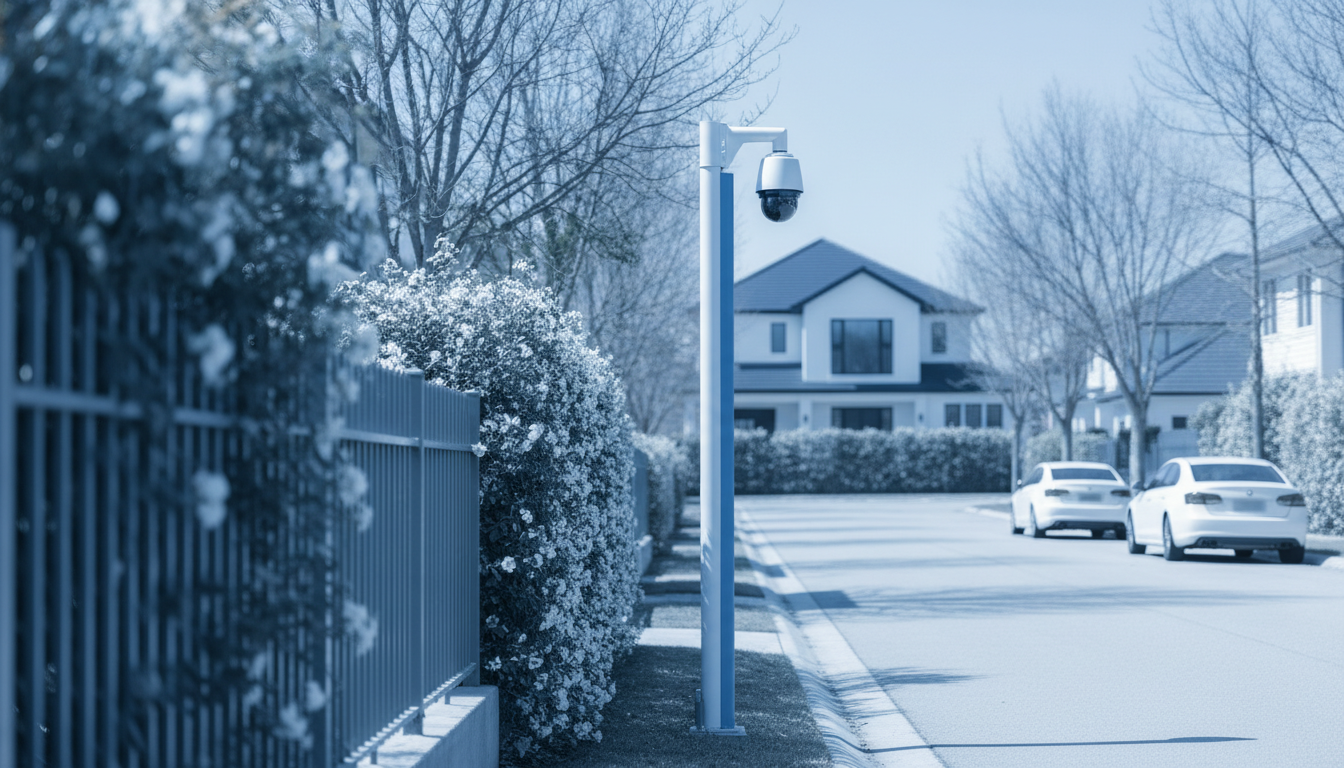
HOA license plate cameras sit at the intersection of private-property security, resident trust, vendor data practices, and changing automated license plate recognition laws. The safest board posture is simple: define the purpose, minimize collection, limit retention, control access, and explain the policy before there is a resident dispute.
Direct Answer
There is no single national HOA license plate camera law. Instead, ALPR rules vary by state and often distinguish between public agencies, law enforcement, private operators, parking/access-control uses, and vendor data sharing. That means an HOA should treat LPR as both a security decision and a data-governance decision.
Do not buy cameras before approving a written purpose, retention period, access roles, and external-sharing rule.
Ask what is collected, who can search it, how long it is kept, and whether data leaves the association.
Make the workflow practical: access logs, role permissions, vendor controls, signage, and documented exceptions.
Why ALPR Law Matters for HOAs
Automated license plate recognition does not only identify a vehicle. It can create a searchable record of where and when that vehicle appeared. The National Conference of State Legislatures notes that ALPR data can help investigations, but also raises concerns about inaccuracy, unrestricted sharing, excessive retention, and privacy abuse.
A plate read becomes sensitive when it is stored, searchable, shared, or combined with other location records.
NCSL’s state-statute summary says at least 16 states expressly address ALPR use or data retention. The rules are not uniform. Some states focus on law enforcement. Others define privacy policies, retention periods, public access, sharing, audits, or limits on private databases.
What California Shows About the Direction of ALPR Privacy
California Civil Code Section 1798.90.5 defines an ALPR system as a searchable computerized database created by cameras combined with algorithms that read license plates. That definition matters because it frames ALPR as a data system, not merely a camera.
California SB 274, enrolled in September 2025 for the 2025-2026 session, shows the direction privacy rules are moving. The bill addresses public-agency ALPR use, vendor access, national database defaults, purpose limits, privacy policies, training, audit trails, and retention of non-matching ALPR information.
Private HOAs should not assume California public-agency rules apply to every private community deployment. But boards should learn from the direction of the law: purpose limitation, retention limits, transparency, access controls, and data-sharing governance are becoming the center of the ALPR debate.
Resident Privacy Rights Questions
| Resident Question | What the HOA Should Be Ready to Explain |
|---|---|
| Can my HOA record my license plate? | The board should explain camera locations, common-area/private-road authority, governing documents, state-law review, and the purpose of collection. |
| How long is data kept? | The policy should state a retention period and deletion process. |
| Who can search records? | The policy should identify authorized roles and explain audit logs or review controls. |
| Can data be shared with police? | The policy should define whether sharing is allowed, what process is required, and who approves the release. |
| Can data be shared with vendors or towing partners? | The vendor contract and HOA policy should limit use to documented association purposes. |
Privacy-First HOA Camera Policy Framework
Use cameras for defined community needs such as gated access, visitor parking, private-road monitoring, incident review, or parking compliance.
Capture the least information needed for the workflow and avoid camera angles that collect unrelated activity.
Set short, documented retention windows unless a record is needed for a specific incident or enforcement matter.
Use role-based permissions, audit logs, export limits, and board-approved external-sharing rules.
How This Connects to PLACA
PLACA’s position is that private communities need vehicle accountability without turning ordinary resident movement into an uncontrolled surveillance asset. Start with the privacy-first HOA security systems pillar, then review HOA license plate recognition cameras for the vehicle-management workflow.
Sources Reviewed
- NCSL: Automated License Plate Readers: State Statutes
- California Civil Code Section 1798.90.5
- California SB 274: Automated license plate recognition systems
This article is for general education and is not legal advice. HOA boards should consult qualified counsel for state-specific requirements.
Build the Policy Before the Camera Program
For HOA boards, the winning sequence is purpose, policy, resident communication, vendor controls, and then deployment. PLACA can help communities design private-property LPR workflows around that order.
HOA Privacy-First Security Resource Center
For board-level planning, data ownership, vendor renewal, camera ownership, resident benefits, and contract-exit questions, see the HOA Privacy First Security Resource Center.